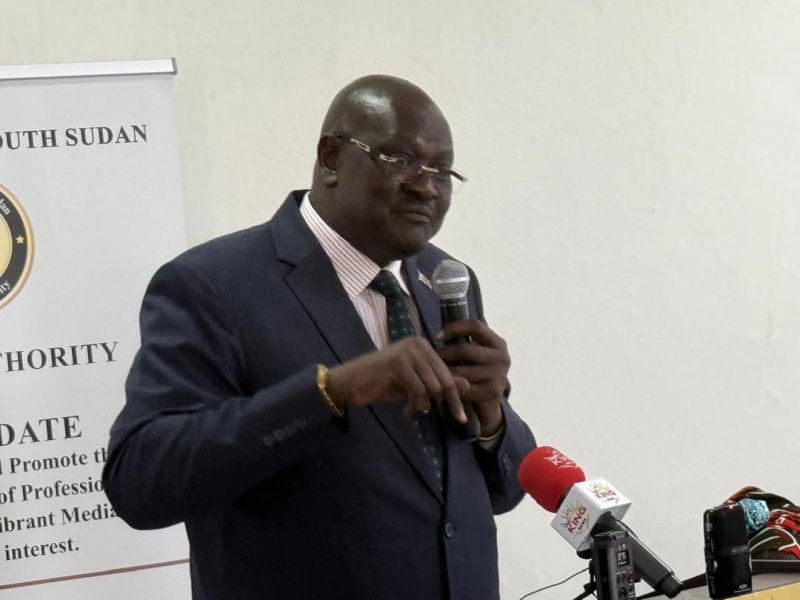
South Sudan has convened a three-day national conference aimed at combating hate speech and strengthening social cohesion, bringing together leaders from all 10 states, the three administrative areas, civil society, media practitioners, and international partners.
Held under the theme “Beyond the Painful Divides,” the event is organized by the Media Authority in collaboration with Journalists for Human Rights (JHR).
The conference seeks to address the growing impact of hate speech, misinformation, and disinformation on peace, unity, and democratic processes, particularly as the country prepares for upcoming elections.
Opening the conference, Ateny Wek Ateny, Minister of Information, Communication Technology and Postal Services, warned that hate speech whether expressed in public discourse, traditional media, or online platforms poses a serious threat to national cohesion and stability.
He reaffirmed the government’s commitment to freedom of expression while stressing the need for responsible communication guided by ethics and professionalism.
“Hate speech can inflame tensions and reverse peace gains. The media, when used responsibly, is a pillar of unity and peace,” Ateny said.
He also underscored the protection of journalists, warning that harassment or intimidation of media personnel would not be tolerated.
International partners attending the forum echoed the minister’s concerns. Lothar Jaschke, Deputy Head of the European Union Delegation in Juba, highlighted the destructive power of false information, noting that it is far easier to divide societies than to rebuild trust.
Jaschke called on stakeholders to reject narratives that fuel hatred, social fragmentation, and instability.
Elijah Alier Kuai, Managing Director of the Media Authority, emphasized that misuse of information threatens not only social harmony but also national stability.
He described harmful communication as a serious risk to the country’s sovereignty and urged media practitioners to uphold professionalism and ethical reporting standards.
From the state perspective, Nyarsuk Patrick, Central Equatoria State Minister of Information and Communication, highlighted how hate speech and misinformation exacerbate local tensions, including land disputes, disasters, and communal conflicts.
Patrick called for stronger collaboration between government institutions, media, and development partners to promote social cohesion at the community level.
The legislative framework supporting the fight against hate speech was also underscored.
Oliver Mori, Chairperson of the TNLA Committee on Information and ICT, described the conference as timely, citing the recent passage of the Cybercrime and Computer Misuse Bill 2025, which aims to protect citizens while safeguarding freedom of expression.
Media development actors also stressed ethical responsibility. Mary Ajith, JHR Project Manager, reminded journalists that language, accuracy, and framing directly influence whether reporting promotes peace or fuels conflict.
Throughout the three days, participants are engaging in panels, technical sessions, and discussions aimed at promoting responsible communication, countering hate speech, and fostering a more united and peaceful South Sudan.
The conference provides a platform for dialogue among government officials, media practitioners, civil society, and international partners, emphasizing collaboration as key to mitigating misinformation and strengthening national unity.
As South Sudan prepares for upcoming elections and continues its peacebuilding efforts, the conference highlights the critical role of media, government, and communities in ensuring that communication contributes to social cohesion, stability, and national development rather than division.