
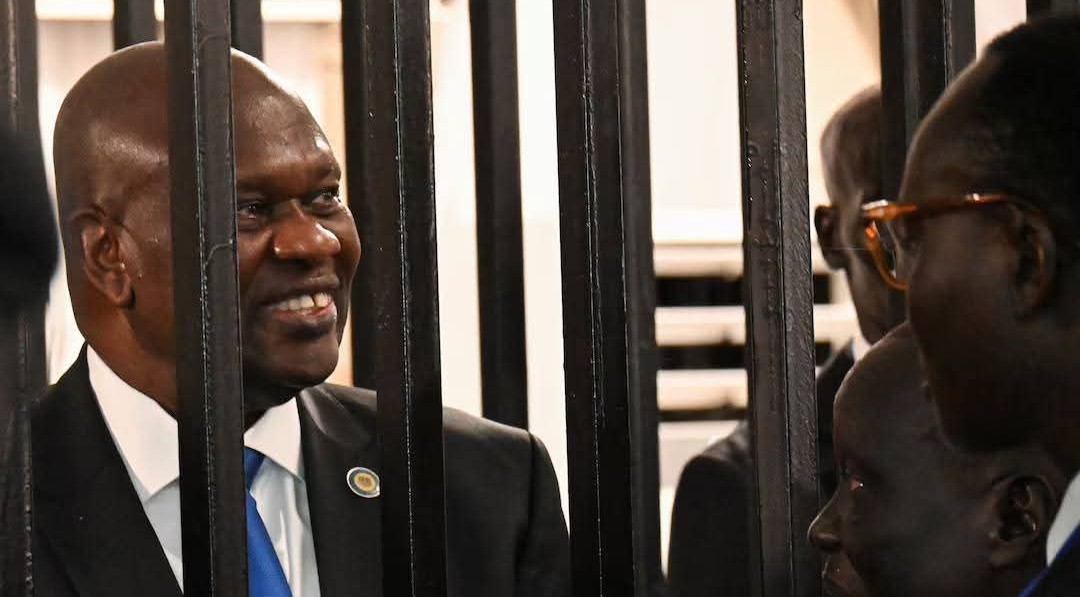
Proceedings in the trial related to the Nasir incident continued on Monday as the Special Court convened its 60th session at Freedom Hall in Juba.
The case involves several members of the Sudan People’s Liberation Movement/Army in Opposition (SPLM/A-IO), including First Vice President Riek Machar, who are facing charges connected to the incident in Nasir.
During the session, the prosecution presented testimony from its final witness, a digital-forensic expert, Peter Rafadi Calvin.
Calvin appeared before the court for further cross-examination after previously submitting a digital forensic report related to data allegedly extracted from mobile phones belonging to the accused.
The court had earlier requested that the expert present hash values associated with the digital data cited in his report.
However, during Monday’s session, the witness presented a multi-page document which he said contained the hash values linked to the extracted data from the mobile devices of seven accused persons.
Defense lawyers questioned the authenticity and completeness of the document.
They argued that the paper presented by the expert did not constitute the original digital hash data and noted that the document lacked formal authentication such as signatures, dates, or official stamps.
The defense also requested the court to allow the opening of the mobile phones belonging to the seven accused persons so that the expert could verify the information directly during cross-examination.
Prosecutors opposed the request.
They argued that the court had previously ruled that the phones would not be opened during the witness’s testimony and maintained that the submitted document was sufficient for evidentiary purposes.
The prosecution also told the court it would not object if the defense presented its own independent forensic expert to examine the digital evidence.
After hearing arguments from both sides, the presiding judge, James Alala Deng, adjourned the proceedings briefly before delivering the panel’s ruling.
The court acknowledged that the document presented did not contain formal signatures or official stamps.
However, the judges ruled that the material could still be admitted as part of the prosecution’s evidence.
The document was subsequently accepted into the court record as part of the digital forensic report previously submitted by the expert witness.
Following the ruling, the court allowed the defense team to continue cross-examining the witness.
During questioning, the defense asked whether the expert had verified information allegedly contained in the digital communications, including reports related to battlefield updates and troop movements.
Calvin told the court that his analysis focused strictly on the digital messages extracted from the devices, including images and videos with corresponding timestamps.
He said he had not independently verified whether some of the information referenced in the communications had also been available through public sources.
At the end of the session, the court adjourned the proceedings to Wednesday, March 18, to allow further cross-examination of the witness as the trial continues.
