
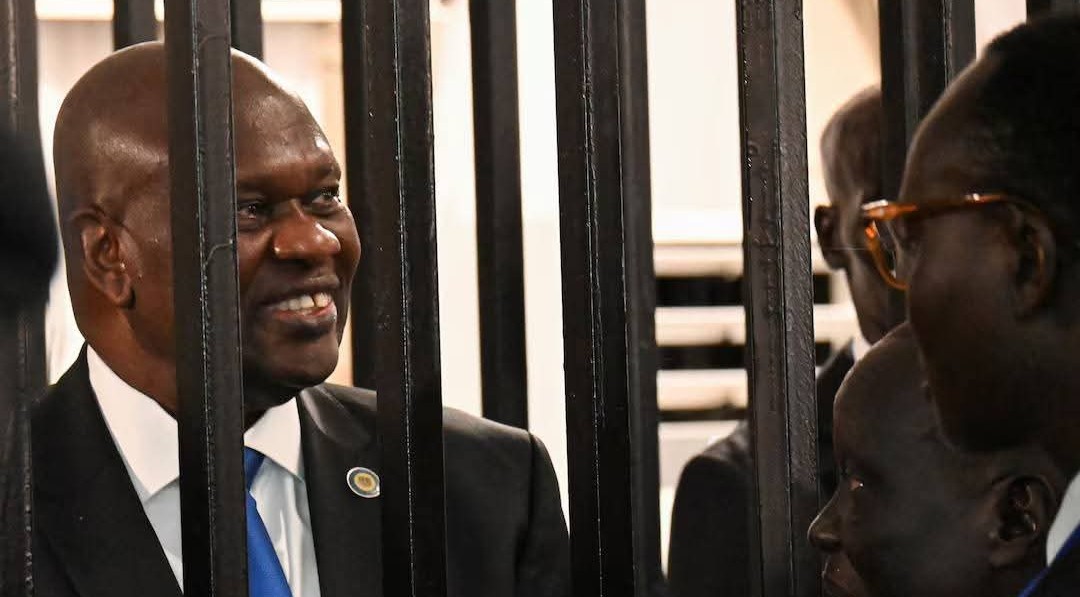
On Monday, Maj. Gen. Basilio Thomas Wani, the lead investigator in the Nasir garrison attack case, accused Dr. Riek Machar, the suspended First Vice President, of failing to prevent a deadly assault that left more than 250 South Sudan People’s Defense Forces (SSPDF) soldiers dead.
Wani told the special court that Machar, as Commander-in-Chief of SPLA-IO, bore ultimate responsibility for the March attack.
“By virtue of his authority, the accused failed to prevent the atrocities committed during the Nasir incident,” Wani said, adding that Machar did nothing to stop the killing of unarmed SSPDF soldiers who had surrendered.
Although Machar was in Juba at the time, he had assured the United Nations Mission in South Sudan (UNMISS) that SSPDF personnel would be safely evacuated.
“He gave a guarantee to UNMISS to provide safe passage by moving the White Army 300 to 500 meters away from the garrison — but that never happened,” Wani said. As a result, Maj. Gen. David Majur Dak and his soldiers were killed.
The investigator also described Machar’s letters to the commissioners of Nasir and Ulang counties, instructing them to form committees of local chiefs, SPLA-IO commanders, and White Army representatives to oversee the safe withdrawal of SSPDF forces.
Wani said those committees “turned out to be mobilizers” who instead organized and led the assault on the garrison.
Machar has maintained that his letters were meant to de-escalate tensions, not authorize an attack.
However, Wani said evidence shows that the seven co-accused provided logistical support, intelligence, and funding for the offensive, contributing to the coordinated assault.
The court also heard that the prosecution seeks to try 13 additional suspects in absentia, but Wani was barred from presenting details pending a court ruling. The case was adjourned to Wednesday, October 22, for further proceedings.
Machar and his co-accused face multiple charges, including murder, conspiracy, terrorism, treason, destruction of public property, and crimes against humanity all stemming from one of South Sudan’s deadliest internal clashes.