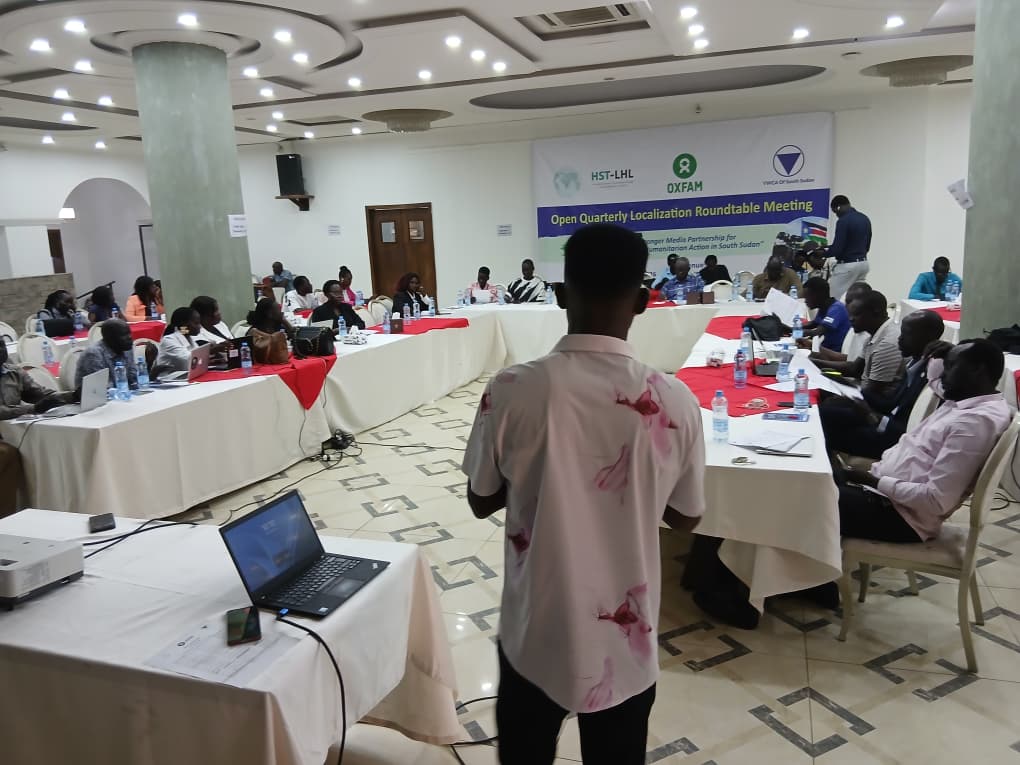
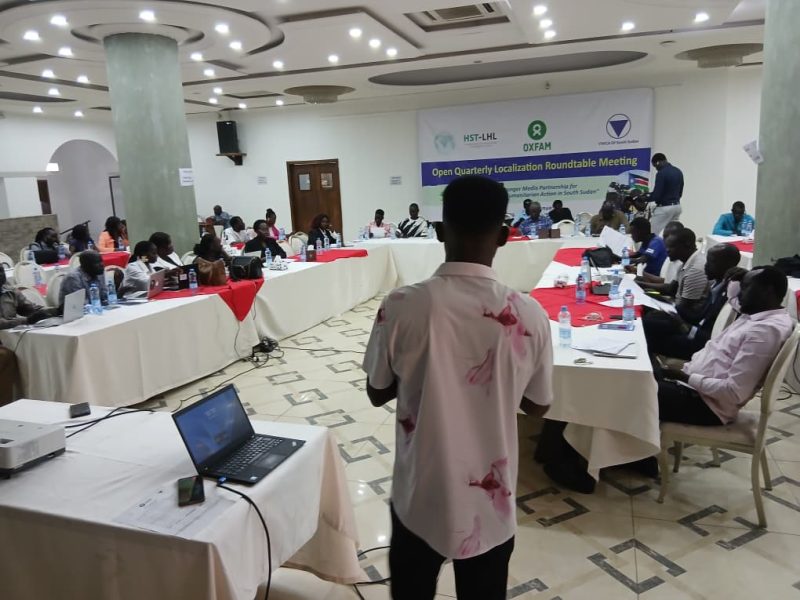
Journalists and humanitarian organizations have met in Juba for a one-day engagement on the localization of humanitarian response, focusing on the role of local organizations and communities in decisions over aid, funding and programme implementation.
The engagement was organized by the Young Women Christian Association (YWCA) of South Sudan and brought together journalists and humanitarian stakeholders to discuss how the media can contribute to a humanitarian system that gives greater recognition to national organizations and community-led solutions.
YWCA Executive Director Namisio Joy Bage said localization should go beyond transferring resources from international organizations to local actors.
“For us, localization is about more than shifting resources,” Bage said. “It’s about ensuring that local actors, communities and meaningful voices are in decision-making, leadership, implementation and accountability.”
She said women and girls should also have opportunities to participate in shaping humanitarian programmes rather than being viewed only as beneficiaries.
Bage encouraged journalists to report on humanitarian issues in ways that capture not only the challenges communities face but also their resilience, leadership and locally developed solutions.
She said greater visibility for community initiatives could help strengthen understanding of the role played by local organizations in responding to humanitarian needs.
The meeting also examined challenges faced by national organizations, particularly access to funding, partnerships and opportunities to participate in humanitarian decision-making.
Ngbadurezere Michael Franco, Project Officer for the Humanitarian System Transformation through Local Humanitarian Leadership (HST-LHL) project, said the engagement was intended to help journalists better understand the localization agenda and their role in supporting locally led humanitarian action.
The HST-LHL project runs from 2024 to 2026 and is funded by the Ministry of Foreign Affairs of the Netherlands.
It is being implemented by Oxfam, YWCA of South Sudan, Serving and Learning Together (SALT), CIDO, CHIDDO and DARD.
Franco said the project focuses on strengthening local humanitarian leadership, improving organizational capacity, supporting humanitarian networks and preparedness, and addressing barriers that prevent national organizations from accessing humanitarian funding.
He said funding remains an important part of the localization debate because local organizations need adequate resources to implement programmes and respond effectively to emergencies.
The discussions also highlighted the importance of changing how communities affected by crises are portrayed in the media.
Participants emphasized that humanitarian reporting can document urgent needs while also giving communities space to explain their experiences, priorities and solutions.
The organizers encouraged journalists to engage more closely with local organizations and humanitarian actors to improve public understanding of localization and increase visibility for community-led initiatives.
The meeting concluded with a call for stronger collaboration among the media, humanitarian organizations and communities to promote accountability and ensure local voices are considered in decisions affecting humanitarian response.
As South Sudan continues to face significant humanitarian needs, participants said strengthening local leadership remains an important part of efforts to make humanitarian assistance more responsive to the communities it is intended to serve.