
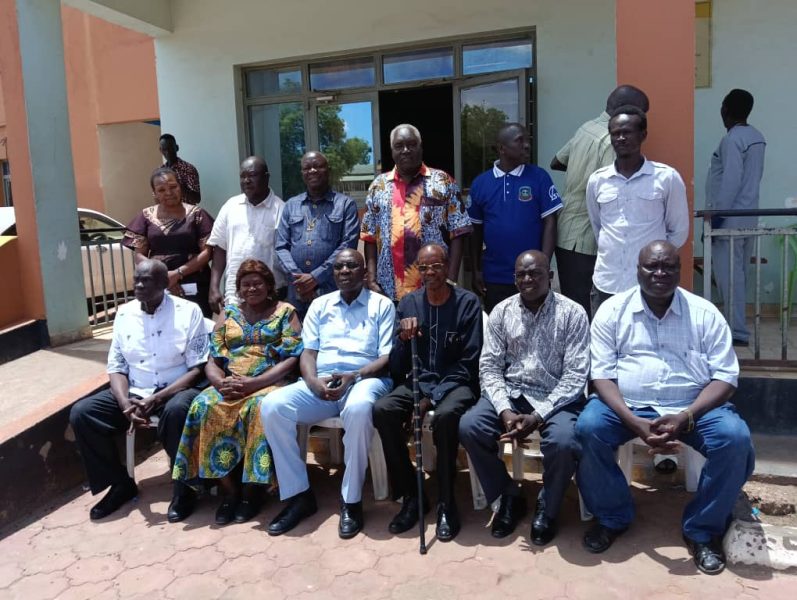
In Juba, members of the Bari community have launched a grassroots initiative to rescue their language from what they describe as a steady and alarming decline, particularly among younger generations growing up in urban areas.
The effort, led by the Bari Language Education Centre under the Bari Community Centre, brings together around 40 volunteers men and women who have stepped forward to teach the language without pay.
The group say the initiative is driven by urgency, warning that Bari could disappear within decades if no action is taken.
A five-day training program, running from March 23 to March 27, is equipping these volunteers with teaching skills and a structured curriculum.
The program is being implemented in collaboration with the Central Equatoria State Ministry of Education, with classes set to officially begin on April 7 and continue through December.
“This is a wake-up call,” said Primo Wani Andrea, Chairman of the Bari Language Education Centre. “We have realised that our language is dying. If nothing is done, it may completely disappear in 20 to 40 years.”
At least ten learning centres have already been identified across the city, including community halls, churches, and primary schools.
The program will cater to both children and adults particularly those who can speak Bari but lack reading and writing skills.
Community leaders say the decline is most visible in homes, where many children now grow up speaking Arabic or English instead of their mother tongue.
“It is only in Juba where Bari is not being spoken in homes,” said Stephen Pitia Loku, Chairperson of the Bari Community, also known as Morlo Bari. “Children speak Arabic and don’t understand their own language.”
For many, the initiative is not just about language, but identity. Organisers stress that restoring Bari in everyday life is key to preserving cultural heritage and dignity.
Hon. Mary Algas Ladu, a member of the Bari Community’s executive office, placed responsibility squarely on families especially mothers.
“We as mothers are the problem because we know the language but are not speaking it to our children,” she said. “The mothers are the first teachers in the house. Let us speak our language to our children so they know who they are.”
Historically, Bari was taught in schools up to Primary Four before the civil war disrupted local education systems.
Organisers now hope the current effort will help restore its place in classrooms and homes alike.
As classes prepare to begin, the initiative marks a rare moment of collective action—one that community leaders hope will turn the tide and ensure the Bari language survives for future generations.