
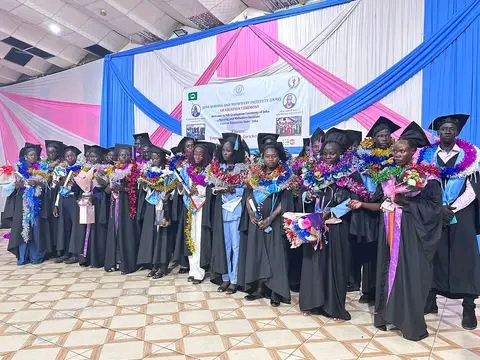
Central Equatoria State has taken another significant step toward strengthening its healthcare system, as 42 new nurses and midwives graduated from the Juba Nursing and Midwifery Institute in a milestone event highlighting the growing investment in health education and workforce development.
The 9th graduation ceremony, officiated by Central Equatoria State Minister of Health Joyce Bakwa Agole, brought together key stakeholders from the national and state ministries of health, Juba City Council, and international partners.
Held under the theme “Empowering Health Enriches Lives,” the event underscored the critical link between quality training and improved healthcare delivery across South Sudan.
The newly qualified health professionals, drawn from Central, Western, and Eastern Equatoria as well as Warrap State, represent a new wave of frontline workers expected to help bridge persistent gaps in service delivery particularly in rural and underserved areas where access to skilled care remains limited.
In her keynote address, Minister Bakwa reaffirmed the government’s commitment to strengthening the health sector through continuous investment in training institutions and human resource development.
She emphasized that producing competent and compassionate health workers is central to improving patient outcomes and building public trust in the healthcare system.
She further revealed plans to deploy the graduates to counties across the state, where they are expected to play a vital role in expanding access to maternal care, reducing preventable deaths, and supporting overstretched health facilities.
“This graduation is not just a celebration of academic achievement, but a strategic step toward improving healthcare services in our communities,” she said.
“You are the backbone of our health system and the bridge between policy and the people.”
The ceremony also highlighted the importance of partnerships in advancing health education.
Representatives from development organizations, including AMREF, UNFPA, and the Canadian Embassy, commended the collaborative efforts that have sustained the institute since its establishment in 2013.
According to Dr. James Wani, Director General at the State Ministry of Health, the institute has now produced a total of 338 health professionals, marking steady progress in building a skilled workforce despite ongoing challenges in the sector.
“These graduates are entering a system that needs them now more than ever,” he noted.
“Their training equips them not only with clinical skills but also with the resilience and ethical grounding required in today’s healthcare environment.”
Speaking on behalf of the graduates, Christine Jerima expressed gratitude to the government and partners for enabling their training and called for expanded opportunities for future students.
She noted that many aspiring health workers still face barriers to accessing education, particularly in remote areas.
The graduation comes at a time when South Sudan continues to grapple with shortages of trained health personnel, high maternal and infant mortality rates, and limited infrastructure.
Officials say scaling up health education remains one of the most sustainable pathways to addressing these challenges.
As the 42 graduates prepare to take up their roles, expectations are high that their contribution will not only ease pressure on existing facilities but also improve the quality and reach of healthcare services across Central Equatoria and beyond.
The milestone signals a broader shift toward prioritizing health education as a cornerstone of national development where investing in people ultimately translates into healthier, more resilient communities.