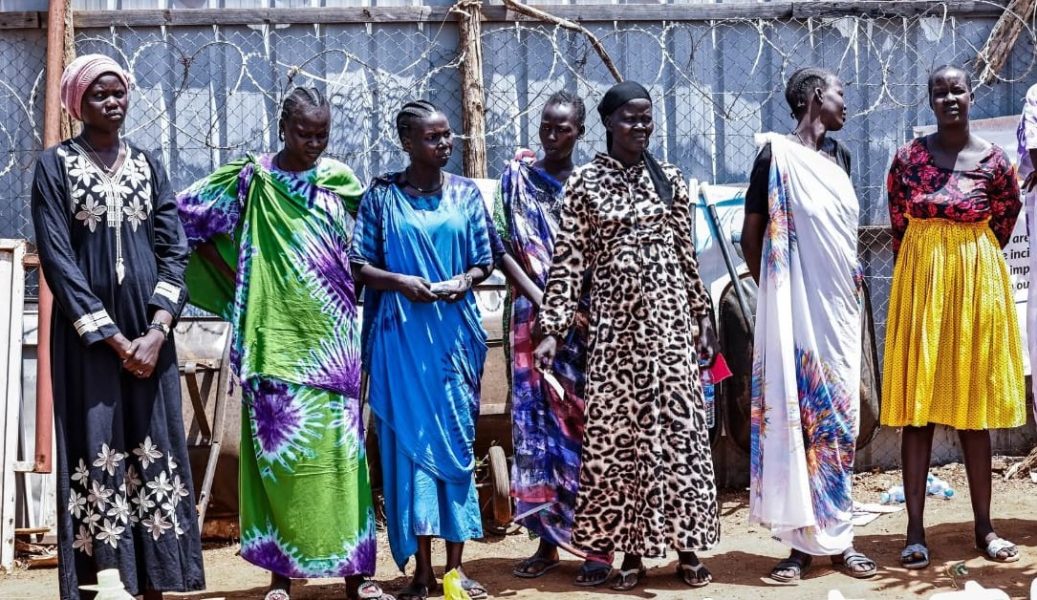
Inside the Protection of Civilians (POC) Camp 3 in Juba, water is no longer a basic right, it is a daily battle. For the women and girls living there, the simple act of filling a jerrycan has become a struggle involving financial hardship, health risks, and the threat of violence.
For 30-year-old mother Nyewech Diu, the water crisis is an inconvenience that shapes every hour of her day.
In the past, water was supplied by UNICEF via tankers and a pipeline system, but technical failures at the water station have left the camp’s taps empty for long stretches.
“Sometimes we spend two to three months without water,” Nyewech says. “So, the only option for us was to get water from the tanker that was being transported from town to the IDP camp”
“However, another major issue is that a number of families here are vulnerable of which some of them are not working which they cannot managed to buy even a single jerrycan.”
Without a functioning pipeline, the most vulnerable residents, are left with no choice but to venture into unsafe territories to collect water.
Nyaluong Garang is another resident at the PoC who had experience the water shortages.
She said women are forced to look outside the camp’s borders to community-dug wells. But leaving the safety of the camp comes with a terrifying price.
“It is dangerous for women and girls to fetch water from the well because of the gang groups. If we go there at late hours, sometimes the gang groups rape us and the young adolescent girls,” she said.
Even when water is secured, the challenges continue. Many families lack the charcoal or firewood needed to boil unsafe water, leaving them exposed to waterborne diseases.
Nyaluong recalls the cholera outbreak two years ago as a reminder of what happens when hygiene becomes impossible.
The water shortage reaches into the most private and critical moments of life. In the camp’s maternity wards, the lack of clean water turns childbirth into a dangerous ordeal.
She said women need water to clean themselves and babies during delivery. Nyaluong added that without clean water, the risk of infection and contamination is everywhere.
She is appealing for help to fix the pipeline system.
Currently, some relief has arrived through the Government of Israel, which provides AquaTabs to the residents.
The purification tablets allow families to treat the water they manage to find, making it safe for consumption.
The support is part of IsraAid’s multi-sectoral work is South Sudan focusing on improving access to essential health services, strengthening nutrition and promoting better water, sanitation and hygiene WASH practices in Central Equatoria and Upper-Nile states.
While the AquaTabs are a vital temporary fix, the women of POC Camp 3 are demanding a permanent, functional water system that restores their dignity and safety.