Residents of Sherikat in Juba County are calling on the government, development partners, and humanitarian organizations to urgently improve road infrastructure, expand access to healthcare and education, and strengthen security in underserved communities, citing worsening living conditions and rising insecurity.
Community leaders and residents from areas including Kadoro, Jebel Amianini, and Gumbo say poor infrastructure and limited public services continue to expose families to hardship, particularly women, children, and other vulnerable groups.
Emmanuel Thon, a community and child leader from Kadoro, said the lack of nearby healthcare facilities remains one of the most pressing challenges facing residents.
According to him, pregnant women and sick patients are often forced to travel long distances to access medical treatment and immunization services.
“We in Sherikat have a lot of problems. One of the major challenges is that we don’t have primary healthcare facilities,” Thon said.
He explained that poor road conditions have made it difficult for ambulances and emergency responders to reach parts of the community, especially during medical emergencies.
“When someone is seriously sick, people are forced to carry them manually or use a rickshaw to reach the main road. At night, community members carry patients on foot because ambulances cannot reach those areas,” he said.
Beyond healthcare concerns, residents say insecurity remains a growing threat.
Thon reported frequent incidents of robbery and assaults, particularly at night, and called for increased police patrols and stronger security measures.
“People are losing phones and are beaten during the night. Some gangs are still attacking people within the localities,” he said.
He also raised concerns about gender-based violence, saying several cases have been reported in the area, including incidents involving young girls.
Another community leader, Okedi Edward Libala, echoed the call for government intervention, saying residents continue to struggle with limited access to hospitals and schools.
“The hospital is far from the people, and the government should build a hospital in Sherikat so that residents can access treatment during emergencies,” Libala said.
He noted that many children walk long distances to attend school, while others are unable to access education altogether due to a lack of nearby learning facilities.
Libala further expressed concern about increasing cases of gender-based violence, including rape, harassment, and domestic abuse, which continue to affect women and girls across the community.
“There are many GBV issues in the community, including rape cases, sexual violence, beating, and harassment,” he said.
Residents say the economic situation has further compounded their challenges. Yasmin Cesar, a resident of Kadoro, said many families are struggling to afford food, school fees, and other basic necessities.
“Many children are suffering because there are no schools. Even government schools are closed,” she said.
According to Yasmin, the high cost of living has left some families unable to provide adequate care for their children, contributing to an increase in vulnerable and street-connected children.
Civil society organizations working in the area have also highlighted concerns over protection challenges.
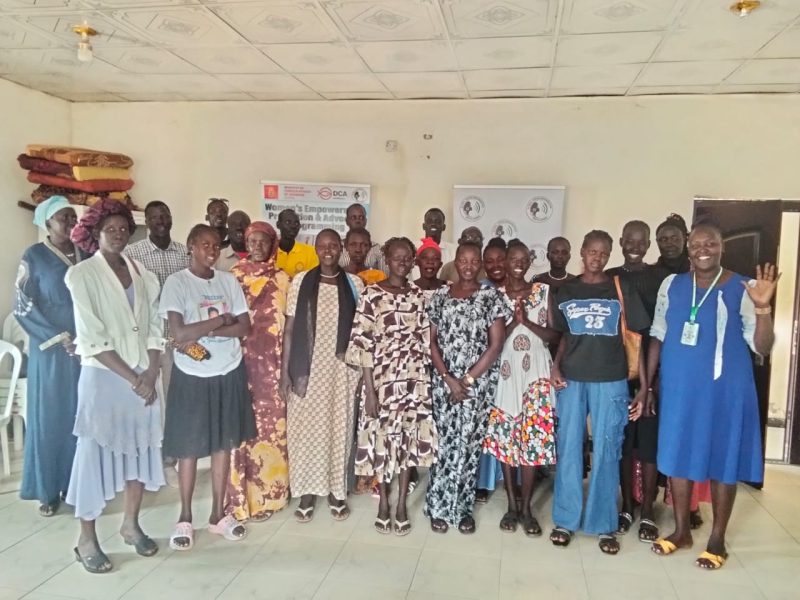
Keji Viola George, Advocacy Officer at Global Voices, said assessments conducted before the launch of a community protection project revealed widespread cases of gender-based violence and limited access to support services.
“Through our assessment, we found out that there are many GBV cases happening in the community,” George said.
She noted that Global Voices, in partnership with Danish Church Aid, is implementing awareness programs, referral pathways, and reporting mechanisms aimed at helping survivors access support and protection services.
Residents are now urging authorities and development partners to prioritize road construction, healthcare facilities, schools, and security services in Sherikat.
They argue that improved infrastructure would not only enhance access to essential services but also strengthen security and improve the overall wellbeing of communities that have long felt neglected.
“No country can develop without proper roads,” Thon said. “Roads can help save lives, improve security, and allow clean water and other services to reach communities.”