
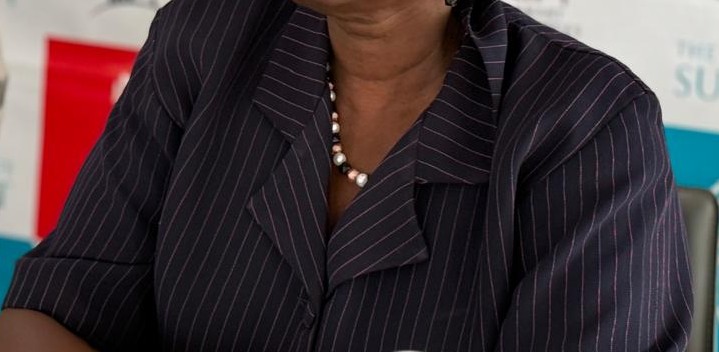
At 56, Agnes Awadia carries the memory of her son’s arrest like a wound that refuses to heal. Ben, unarmed and with no gang ties, was swept up during a police crackdown and pushed into the dim cells where freedom often depends less on justice than on payment.
It began on a humid July evening in Rocky City, just as the last light slipped behind Juba’s skyline. Awadia heard the kind of urgent knock that makes a mother’s heart stop. Neighbors, breathless and shaken, told her police had taken her only son, 17-year-old Ben, a quiet boy walking home from a condolence visit.
He had been only a few meters from their house when officers descended and seized him along with several others.
“When they arrest your child, they know he is innocent, but that is exactly what they want because innocent boys bring them money,” Awadia told Standard Zone News, her voice heavy as she recounted a story, she says she will never forget.
By the time she reached the scene, officers were already loading the boys into a vehicle.
“I begged them to stop and tell me what happened,” she recalls.
She added “One officer just shouted that my son was a gang member. They refused to listen. They told me to find him at Gudele Police Station and drove away.”
It was the period of the Nasir incident, when rumors spread that detained youth were being secretly transferred to military locations or frontlines. Panic gripped parents across the city.
That night, Awadia and her daughter hurried to Gudele 2 Police Station, but officers asked them to return in the morning. She could not sleep. At dawn, she finally saw her son’s swollen eyes, among dozens of other boys who had spent the night in custody.
When Awadia asked for an explanation, the officer said only, “Mama, according to the statement, your son is one of the gangs arrested. She asked the officer for evidence, but he only replied, “You will hear that later, maybe when we transfer them to Buluk.”
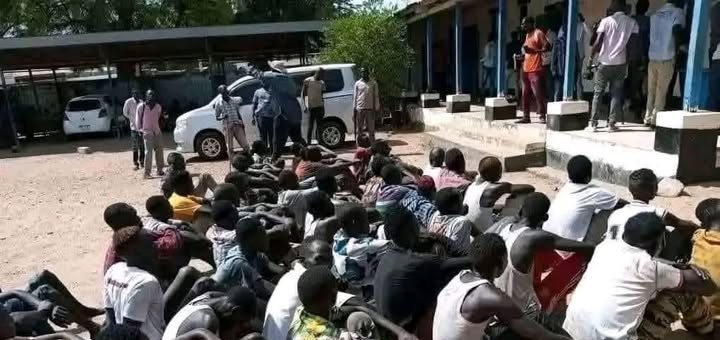
For mothers in Juba, the word “Buluk” carries fear. It is where “gang suspects” are taken often without charge, sometimes for days, occasionally moved to unknown locations.
As she pleaded, the officer returned, tone colder: “Mama, your son is a nigga. The order is that all boys like him should transfer to Buluk. Unless… you have SSP300,000, we will try to help you by removing his name from the list.”
It was not a negotiation. It was a demand, according to Ben’s mother.
Awadia broke down. “That money was far beyond my reach. In my heart, I knew that if I couldn’t raise it, they would take him and the next place might be the frontlines,” she said.
“Another officer overheard her crying and warned her further, “Mama, 300,000 is small. If they transfer your son, you will pay much more. And maybe you will not see him again.”
Minutes later, a Land Cruiser full of soldiers arrived, ready to collect the boys. Officers looked at her one last time.
“This is the car that will take them to Buluk. What is your final words, mama?” Awadia begged them to keep her son inside so she could find the money. They refused.
Neighbors rallied. Some gave what little they had; others borrowed on her behalf. Within hours, Awadia returned with SSP300,000 a sum that could sustain her family for months in Juba.
She handed it over discreetly. No receipts. No records. Minutes later, Ben was quietly removed from the list.
“That is how my son was freed and I will never forget how they looked at me, like someone who must pay to see her child live, “she said softly.
In the courtyard, Awadia was not alone. Many parents were paying, others could only cry as their children were taken. For families living day-to-day, SSP300,000 is impossible. For police officers earning low or irregular salaries, it is temptation. For young men walking in the wrong place at the wrong time, it is danger.
While police frame the operations as anti-gang crackdowns, testimonies from lawmakers, rights defenders, and families expose a deeper reality extortion masked as policing.
For mothers like Nyaleel Gai and Suzan Ladu, the nightmare followed a similar pattern. Their sons were rounded up during police sweep in Juba’s Lemon Gaba as they watched English Premier League football in a local hall.
“They arrested our boys together but we only received the news late at night, when I was already deep asleep,” Nyaleel recalled.
Unable to go out at that hour, she waited keenly until morning fully aware of what awaited her.
In the morning, I went with SSP300,000 because I knew what they will ask for and that was exactly they asked for and I paid immediately, and they released my son,” she said.
But her neighbor, Suzan, did not have that kind of money. As Nyaleel explained, “Suzan had nothing on her. Her son was taken away, and she followed from place to place trying to find him. In the end, she paid SSP500,000.”
Even MPs’ children have been detained, their parents forced to pay for release. “Everyone in Juba knows this,” said Samuel Buhori Lotti, Deputy Chair of the Parliamentary Committee on National Security and Public Order.
Some children are as young as 14. “We have cases where boys died in custody. Two were found dead, locked overnight in a toilet,” Lotti said, warning that such operations fuel child disappearances and forced transfers to frontline areas like Malakal, Bor, or Nasir.
Parliament had summoned the Ministers of Defence and Interior to explain these violations, but hearings were delayed by court disruptions.
Meanwhile, ransom-style arrests have quietly become an epidemic. Families sell livestock, borrow, or take loans to secure their children’s freedom.
Average civil servants earn less than 80,000 South Sudanese pounds monthly, far below the amounts some police allegedly demand.
Oluku Andrew, National Coordinator for Child DDR, acknowledged that child arrests and forced recruitment remain widespread.
South Sudan’s Comprehensive Action Plan to End Six Grave Violations Against Children expired in October 2025, with logistical and funding challenges slowing its renewal.
“Protecting children is urgent. It is a shared national responsibility,” he said.
UNMISS Chief of Child Protection Patricia Njoroge said the mission is helping trace and reunite detained children. “Real change must come from within South Sudan,” she added.
For mothers like Bauda Amina, the scars remain. Her sons are home, thinner, quieter, fearful of police cars. “They don’t smile anymore,” she said.
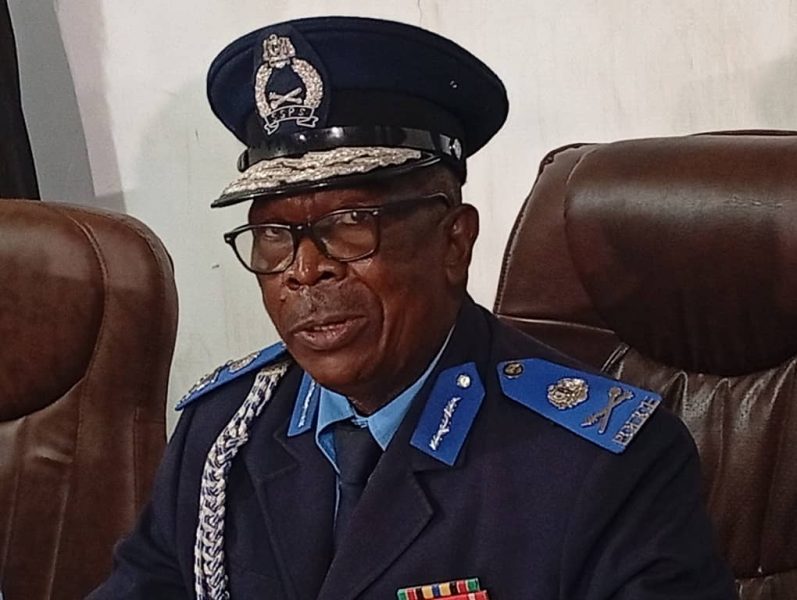
Police Spokesperson James Monday Enoka defended the crackdown, saying it targeted “those actively committing crimes,” including armed assaults and rapes.
“We are not arresting random youths. Those with evidence against them face legal processes; innocent ones, like students, are released,” Enoka said.
He denied the accusations that some of the detainees were being sent to conflict zones.
Brig. Gen. James Dak Karlo, Director of the Special Protection Unit and Child Affairs, emphasized that his office stands ready to act against officers exploiting minors. Yet, he said, action depends on public reporting of violations.
In South Sudan, innocence has become a currency, and freedom, a price few can afford.
This story is reported with a grant from Journalists for Human Rights under the ‘Tackling Mis/Disinformation Project,’ funded by the Peace and Stabilization Program of the Government of Canada.