
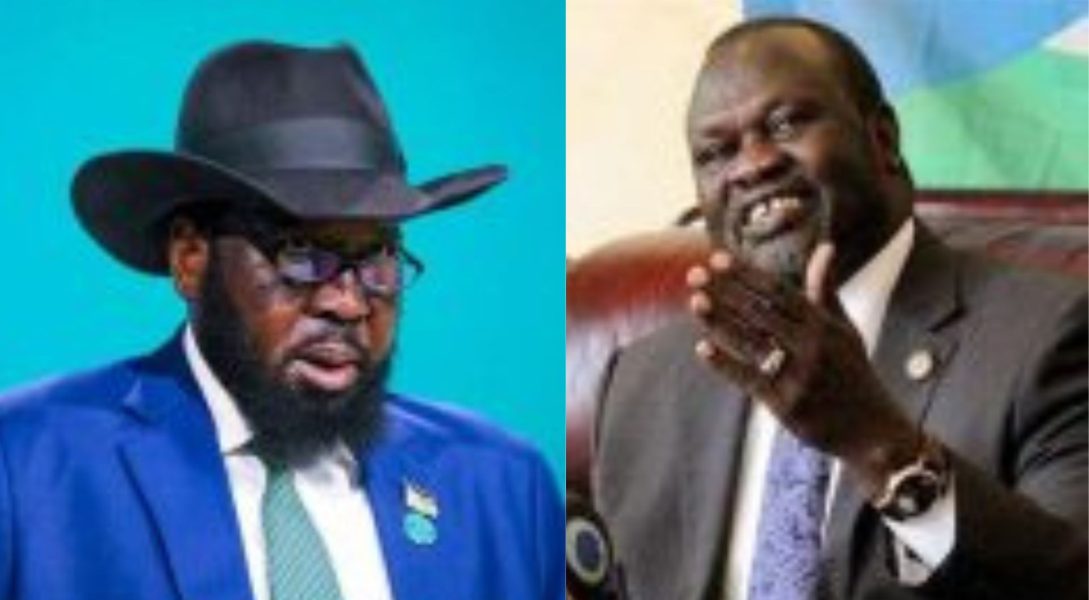
President Salva Kiir’s regime has pushed back against calls by the South Sudan Council of Churches to release First Vice President Riek Machar, insisting that the judicial process must proceed without interference.
In a statement issued on March 17, the government said while it shares concerns raised by the church over the country’s deteriorating political, security, and humanitarian situation, it cannot compromise the rule of law by intervening in ongoing legal proceedings.
“The government remains committed to peace, stability, and the full implementation of the Revitalized Peace Agreement,” the statement said, emphasizing that maintaining law and order is a constitutional responsibility.
The response comes after the church body urged authorities to release Dr. Machar as part of broader efforts to ease political tensions and prevent further escalation of violence.
However, the government warned that such a move could set a dangerous precedent.
“Criminal accountability is a judicial process that must proceed independently and without interference, regardless of an individual’s political status,” the statement noted.
“Releasing Dr. Machar before court proceedings conclude would undermine the rule of law and weaken the very principle of justice.”
Authorities also defended ongoing military operations across the country, particularly in Jonglei and other conflict-affected areas, describing them as necessary measures to restore stability and protect civilians.
According to the government, recent clashes were triggered by attacks from a splinter faction of the Sudan People’s Liberation Movement/Army in Opposition (SPLM/A-IO), which it accused of targeting strategic positions and threatening further violence.
The government reiterated that it did not initiate the hostilities and called on all armed groups to cease military activities and instead prioritize dialogue to reduce civilian suffering.
While acknowledging the church’s moral role in advocating for peace and accountability, officials cautioned against what they described as the “blurring of lines” between religious engagement and political processes.
“It is essential that this role remains constructive and does not inadvertently drift into partisan political positioning,” the statement added.
Despite the tensions, the government reaffirmed its commitment to inclusive dialogue, pointing to earlier resolutions by political leaders to engage in structured discussions on elections and post-election arrangements under the peace agreement framework.
The latest exchange underscores growing friction between state authorities and faith-based institutions, as South Sudan navigates a fragile political transition amid ongoing insecurity and humanitarian challenges.