
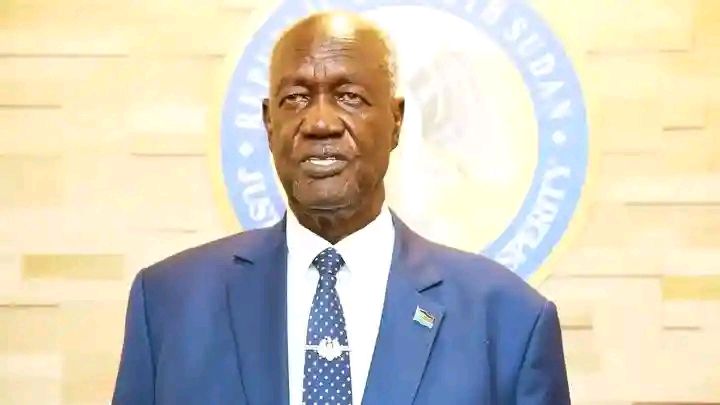
A senior advisor to President Salva Kiir Mayardit has issued a rare and candid admission of government shortcomings, calling for a generational transition in leadership as the country continues to grapple with deepening economic and security challenges.
Speaking in unusually frank terms, Senior Presidential Advisor Kuol Manyang Juuk acknowledged that South Sudan has fallen short of the expectations held at independence, pointing to persistent insecurity, widespread poverty, unemployment, and weak public services.
“We have failed our people,” Kuol said, in what observers describe as one of the most direct acknowledgments of governance challenges from a senior figure within the current administration.
He revealed that he had personally conveyed his concerns to President Kiir, urging him to consider opening space for younger leaders to take charge at a time when the country is facing mounting national difficulties.
“Let young people take over,” Kuol appealed, framing leadership renewal as a necessary step toward national recovery.
Reflecting on the years since independence in 2011, the veteran politician expressed deep disappointment with the country’s trajectory, questioning whether the sacrifices of the liberation struggle had translated into meaningful improvements in the lives of ordinary citizens.
“What did we fight for, if our people are still suffering?” he asked, citing limited access to healthcare, education, infrastructure, and food security as evidence of unmet national goals.
According to Kuol, the realities on the ground including internal conflict, hunger, joblessness, and insecurity—are clear indicators of systemic failure that must be confronted with honesty rather than denial.
“These are signs of failure, and we must accept them,” he stressed. “Without acknowledging where we went wrong, we cannot move forward.”
He further emphasized that accountability must begin with those who led the country through the liberation struggle and into independence, suggesting that accepting responsibility is essential for rebuilding trust and restoring effective governance.
“Accountability should come first even for those of us who fought for this country,” he said.
In a striking personal note, Kuol indicated his own willingness to step aside from public office, saying he would be prepared to return to private life if it meant paving the way for a new generation of leaders.
“I am ready to step aside and go back to farming,” he stated. “This is the only way.”
His remarks have sparked widespread debate across political and public circles, with some praising his comments as a rare moment of honesty and introspection from within the government, while others see them as a reflection of growing frustration inside the political establishment.
The comments also come amid renewed public scrutiny following past controversy over remarks attributed to Kuol regarding coping mechanisms during times of hardship comments he later denied.
The resurfacing of his voice in national discourse has added fresh momentum to ongoing conversations about governance, accountability, and the future of leadership in South Sudan.
More than a decade after independence, Kuol’s statements appear to underscore a critical moment for the country, as calls intensify for reform, transparency, and a new generation of leadership capable of addressing long-standing challenges.
For many observers, the significance of his remarks lies not only in their content, but in their source an influential insider acknowledging failure and openly advocating for change at the highest levels of government.