
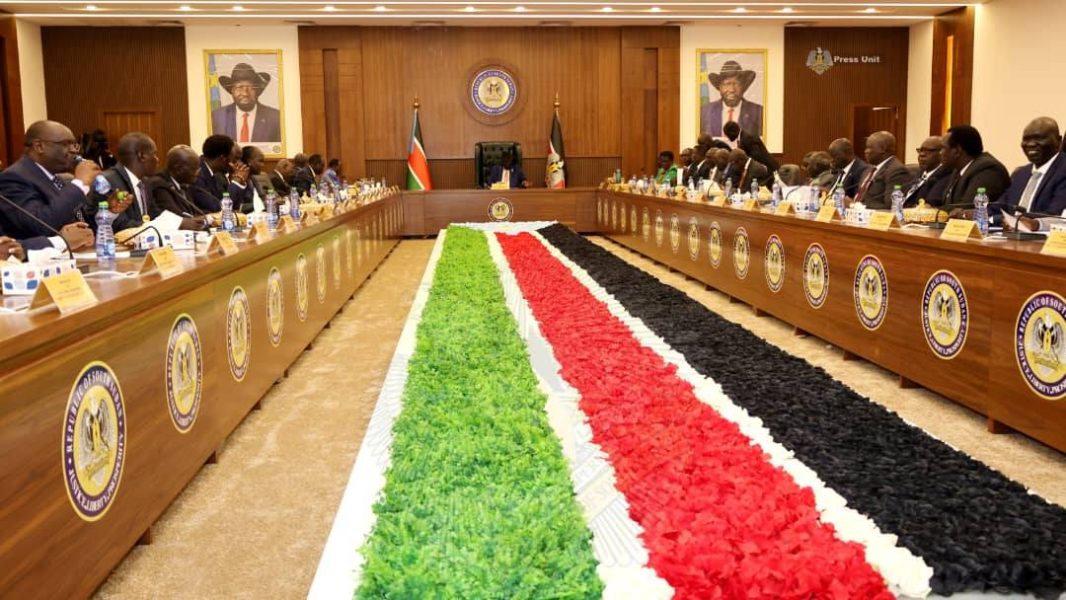
The Council of Ministers has approved a set of amendments to South Sudan’s peace framework, in a move aimed at paving the way for general elections scheduled for December 2026.
The meeting, chaired by President Salva Kiir Mayardit, endorsed changes to the Revitalised Peace Agreement, which underpins the country’s ongoing transitional process.
They say the amendments are intended to address outstanding challenges that have slowed implementation and to align the agreement with the electoral roadmap.
The proposed Amendment Bill 2026 will now be submitted to the National Legislative Assembly for deliberation and approval.
Government spokespersons say its passage will be crucial in ensuring the country transitions from the current unity government to a democratically elected administration within the agreed timeframe.
South Sudan’s elections have been delayed multiple times due to unresolved security arrangements, delays in constitution-making, and logistical constraints.
The Cabinet’s latest decision signals renewed urgency within government circles to meet the 2026 deadline, though questions remain about whether key benchmarks can be achieved in time.
In addition to the political reforms, the Cabinet also approved measures to address growing economic pressures, particularly within the telecommunications sector.
Ministers directed the Ministry of Finance and relevant institutions to develop mechanisms that would allow telecom companies to access foreign currency, a persistent challenge that has affected service delivery and operations.
The Council further endorsed a ten-month progress report from the Ministry of Trade and Industry, which includes plans to clear arrears owed to regional and international organizations.
Meanwhile, the government announced that Boma National Park is ready to receive both local and international tourists.
The development is part of broader efforts to diversify the economy and tap into South Sudan’s tourism potential, particularly its wildlife and natural landscapes.
However, they caution that the success of the roadmap will depend on sustained political commitment, progress in security sector reforms, and the ability of institutions to deliver on key milestones.
As the amendment bill heads to parliament, attention will now shift to lawmakers, whose approval will determine whether the proposed changes can be enacted in time to keep the electoral process on track in South Sudan.
