
South Sudan’s Council of Ministers has endorsed sweeping reforms targeting both national security coordination and economic transformation, in decisions officials say could reshape key pillars of governance and development.
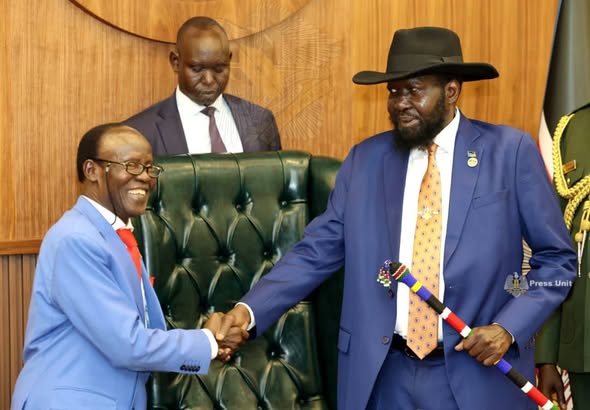
Chaired by President Salva Kiir Mayardit, the Cabinet meeting approved a proposal to amalgamate multiple law enforcement bodies into a single, unified police force an ambitious move aimed at improving command, efficiency, and professionalism across the security sector.
The Minister of Interior, Aleu Ayieny Aleu, presented the memorandum outlining the integration of the police, prison service, civil defence, and wildlife forces under one coordinated structure.
The reform, once implemented, is expected to streamline operations and strengthen response capacity nationwide.
Speaking after the նիստ, Deputy Minister of Information David Yau Yau said the proposal will soon be tabled before the National Legislative Assembly for deliberation and ratification.
He emphasized the government’s commitment to building a disciplined, well-equipped, and accountable police service capable of fulfilling its constitutional mandate.
In a parallel move underscoring its economic priorities, the Cabinet also approved a Memorandum of Understanding on the Livestock Development Policy and Strategic Plan (2026–2030), presented by Minister of Livestock and Fisheries Onyoti Adigo Nyikwec.
The policy aims to modernise and regulate the livestock and fisheries sectors, long considered among South Sudan’s most promising yet underdeveloped economic assets.
According to Adigo the strategy will promote commercialisation, strengthen value chains, and expand market access—positioning the country as a potential regional hub in livestock production and trade.
With security reform and agricultural development moving in tandem, authorities hope to lay the groundwork for sustainable development and improved livelihoods.
If implemented effectively, the reforms could mark a critical step toward enhancing public safety, boosting investor confidence, and diversifying South Sudan’s economy beyond its traditional reliance on oil.