
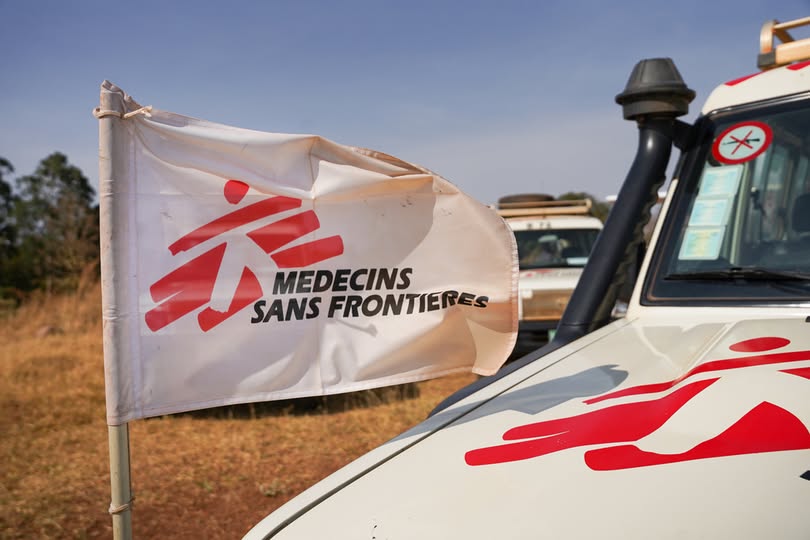
Médecins Sans Frontières (MSF), also known as Doctors Without Borders, has accused the South Sudanese government of deliberately restricting humanitarian and medical access to opposition-held areas in Jonglei State.
In a statement released on January 29, MSF said the restrictions, in place since December 2025, have affected key locations including Lankien, Pieri and Akobo, where all humanitarian flights have been suspended.
The aid agency said the move has made it “difficult or impossible” to deliver essential medical supplies, staff and emergency referrals to vulnerable communities.
As of January 29, MSF reported that at least 23 critically ill patients in Lankien and Pieri urgently require medical referrals, but are unable to access lifesaving care due to the flight suspensions.
“Patients will die if the government continues to block humanitarian and medical access in Jonglei,” said Abdalla Hussein, MSF Desk Manager for South Sudan. He described the restrictions as a “crude political manoeuvre,” adding that civilians including children, pregnant women and people with chronic or life-threatening conditions are paying the price.
MSF also expressed alarm over statements by some authority figures allegedly suggesting the use of mass violence and forced displacement against civilians.
The organisation called on the government to urgently reassure communities of their protection and to lift all restrictions on humanitarian access.
Following the access constraints and growing insecurity, MSF said it was forced to evacuate staff from Lankien and Akobo and scale down services in those areas, as well as in Pieri, to emergency-only care.
On January 29, MSF teams in Pieri were compelled to flee the facility entirely due to the imminent threat of armed conflict, discharging most patients and leaving alongside the local population.
MSF warned that it is the sole healthcare provider for about 250,000 people in Lankien and Pieri, and another 112,000 in Akobo. If access is not restored, nearly 400,000 people could be left without any healthcare services.
“Ongoing conflict and displacement in Jonglei are further increasing the vulnerability of civilians,” said Gul Badshah, MSF Operations Manager for South Sudan.
He urged all armed groups and political actors to respect international humanitarian law and protect civilians, medical personnel and healthcare facilities.
MSF said the situation is compounded by South Sudan’s wider humanitarian crisis, marked by conflict, displacement and limited health infrastructure.
The organisation warned that failure to resupply medical facilities during the dry season when roads are still accessible could lead to catastrophic consequences.
MSF has operated in South Sudan since 1983 and remains one of the country’s largest medical humanitarian agencies.
In 2025 alone, the organisation provided more than 830,000 outpatient consultations, treated over 93,000 inpatients, conducted 12,000 surgeries and screened more than 107,000 children for malnutrition.
The aid agency called on the South Sudanese government to immediately lift restrictions on humanitarian access and allow lifesaving assistance to reach civilians in need.
MSF’s claims could not be independently verified, and the South Sudanese government was yet to comment on the accusations.