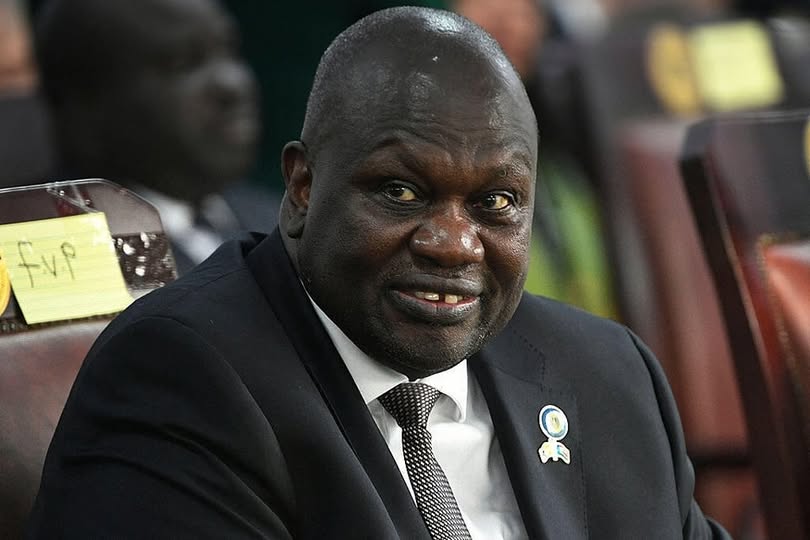
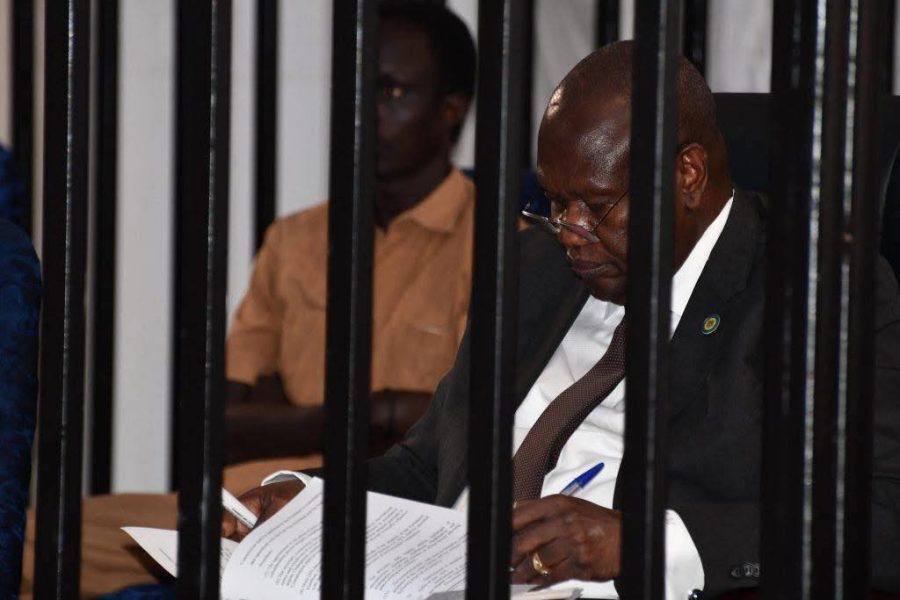
The Special Court on the Incident of Nasir on Monday concluded the re-examination of its final witness, marking a significant procedural step in the ongoing trial involving senior figures linked to the SPLM/A-IO, including First Vice President Dr. Riek Machar.
The 70th session of the court, held at Freedom Hall in Juba, focused on the testimony of Peter Calvin Rafadi, a South African digital forensics analyst whose evidence has been central to the prosecution’s case.
Rafadi was recalled to the stand for re-examination following an extensive cross-examination by defense lawyers in earlier sessions that questioned both his professional credentials and the reliability of his findings.
During the session, the prosecution sought to clarify issues raised by the defense, beginning with Rafadi’s academic and professional background.
The expert told the court that he holds an advanced diploma in cybersecurity and a diploma in policing. He also stated that he has worked on two cases, including a murder trial, and has prior experience appearing in court.
Responding to challenges about the tools used in his investigation, Rafadi maintained that both his hardware and software are properly licensed and compliant with standards set by the International Organization for Standardization (ISO).
The defense had earlier questioned whether the tools met recognized forensic standards.
A key focus of the re-examination was the digital material allegedly extracted from devices belonging to the accused.
Rafadi told the court that data recovered from the phone of the first accused, Minister of Petroleum Puot Kang Chol, included messages and images said to relate to events in Nasir in February 2025.
According to the witness, one message referenced “a list of wounded people in Nasir,” though he acknowledged under questioning that there was no response from the minister recorded in relation to that message.
The expert also addressed questions regarding financial communications allegedly found on the devices.
While he stated that some messages referred to money transfers, including one expressing gratitude for funds received, he confirmed that no supporting bank records or receipts were available to independently verify those transactions.
On the issue of authentication, Rafadi told the court that his report could be verified by another independent digital investigator, even though the original devices were not presented before the court.
The absence of primary devices had been a point of contention raised by the defense.
Rafadi further testified that his analysis suggested the first accused had access to what he described as real-time intelligence during the period surrounding the Nasir incident.
He cited messages allegedly exchanged in mid-February 2025 that, in his view, indicated early awareness and monitoring of developments on the ground prior to the outbreak of fighting in March.
The witness also referred to communications purportedly involving other individuals, which he said pointed to information about helicopter movements and mobilization of armed groups.
However, these claims remain part of the prosecution’s evidence and have not been tested by a court ruling.
In relation to other accused persons, Rafadi told the court that digital evidence was identified on the device of the eighth accused, Dominic Gatgok Riek, while no relevant material was found on the phone attributed to Lt. Gen. Gabriel Duop Lam, the fourth accused.
Addressing suggestions from the defense that his findings were merely personal opinion, Rafadi said his conclusions were based on extracted metadata and technical analysis, which he argued provided an objective basis for his report.
Following the re-examination, the prosecution formally concluded its questioning of the witness.
The court panel was then given the opportunity to raise its own questions, signaling the next stage in the examination of the evidence.
The court adjourned proceedings until Friday, April 24, 2026, when judges are expected to directly question the prosecution’s final witness.
The Nasir case remains one of the most closely watched legal proceedings in the country, given the senior political figures involved and its broader implications for accountability and the rule of law.
The court has yet to make any determinations regarding the credibility of the evidence presented or the guilt or innocence of the accused.