A comprehensive new State of the Basin Report (SoBR) for the Lake Victoria Basin has warned that the Lake is under serious threat from pollution, climate change, and population pressure, undermining the food security and economic stability of 45 million people.
The report released at the sideline event of the COP30 in Brazil, developed by the Lake Victoria Basin Commission (LVBC) with support from the German development agency GIZ, not only detailed severe environmental threats but also provided a science-based blueprint for recovery.
It offers a comprehensive assessment of the ecological, socio-economic, and governance trends in the basin, which is home to over 45 million people across five East African Community (EAC) Partner States.
Lake Victoria, described as the beating heart of East Africa, is the largest freshwater lake in Africa, larger than the world’s largest tropical lake.
Shared by East African Community Partner States and home to over 45 million people, it is a vital source of water, food, energy, and livelihoods. It nourishes smallholder farms, sustains fisheries and industries, and embodies the region’s rich cultural heritage.
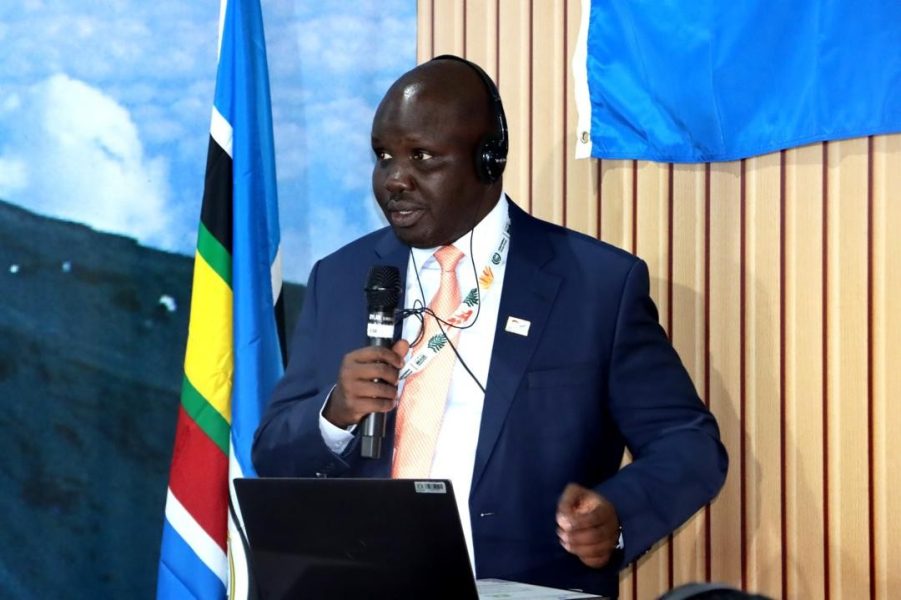
Speaking at the report’s launch, Andrea Ariik, the EAC Deputy Secretary General for Infrastructure, Productive, Social and Political Sectors, stated that, “Despite its immense value, Lake Victoria is under serious threat,” a reality he said is clearly reflected in the detailed findings of the report.
He said the report lays out, in no uncertain terms, interconnected challenges, including rapid population growth and changing land use, which Ariik said are placing increasing pressure on every part of the basin’s ecosystem.
He noted that the report documents a worrying decline in water quality, driven by untreated wastewater, industrial effluents, agricultural runoff, and sedimentation, leading to eutrophication, seasonal oxygen depletion, and the loss of key fisheries and loss of key fisheries.
The report further noted that there has been a marked decline in biodiversity and ecosystem services, endangered by habitat loss, invasive species, and pollution, all compounded by the escalating impacts of climate change, rising temperatures, more erratic and extreme rainfall, droughts, floods, and growing stresses on agriculture, hydropower, and communities across the region.
“This is not just an environmental story but a human story,” Ariik emphasized. “The degradation of the Lake Victoria Basin undermines food security, public health, economic growth, and social stability.”
Call for Action
The report calls for coordinated, well-financed investments in wastewater treatment, sustainable agriculture, and erosion control to restore water quality.
It emphasizes nature-based solutions like wetland restoration and the need to strengthen governance by empowering the LVBC with the authority and resources to harmonize cross-border efforts.
The report further highlights the importance of climate-resilient development, including the expansion of early warning systems, water storage, climate-smart farming, and disaster risk management.
Additionally, the report stresses the need for continued monitoring, recognizing the central role of ongoing data collection and assessment in ensuring long-term progress and accountability.
“We stand at a crossroads. A business-as-usual path will only lead to further decline and escalating costs,” Ariik warned. “The alternative, a sustainable investment pathway—demands commitment, coordination, and courage.”
The EAC, he declared, is fully committed to mobilizing our Partner States, Development Partners, the Private Sector, and Civil Society to translate the insights of the report into tangible action.
The analytical foundation of the report was enabled by a Water Information System (WIS), financed by the German Federal Ministry for Economic Cooperation and Development (BMZ) through KfW development bank.
This system is noted as a cornerstone for the LVBC’s mandate and a result of German technical and financial cooperation totaling 60 million euros.
Ariik expressed gratitude to Germany, BMZ, KfW, and GIZ for their partnership. He appealed to “all stakeholders to rally behind the report’s recommendations and to work together—as one region, with one vision—for the future of our lake and our people.”
For her part, Julia Kronberg, Head of Development Cooperation in Tanzania and EAC, speaking on behalf of BMZ, highlighted the value of the collaboration.
“Germany is proud to partner with the East African Community in promoting data-driven climate action,” Kronberg said. “We hope that the report will provide a sound basis for selecting and financing demand-driven investments in green and sustainable infrastructure projects, cross-border water resource management, and climate change adaptation measures that are tailored to actual needs and challenges.”