A new nationwide survey has revealed deep and persistent inequalities affecting children and women across South Sudan, underscoring major gaps in health, education, nutrition and access to basic services despite modest progress in some areas.
Findings from the 2025 Multiple Indicator Cluster Survey (MICS), conducted by the National Bureau of Statistics (NBS) in partnership with UNICEF and other stakeholders, draw on data from more than 10,000 households, making it one of the most comprehensive social assessments since independence.
Officials say the data provides a critical benchmark for policy and planning, while also exposing the scale of challenges facing vulnerable populations.
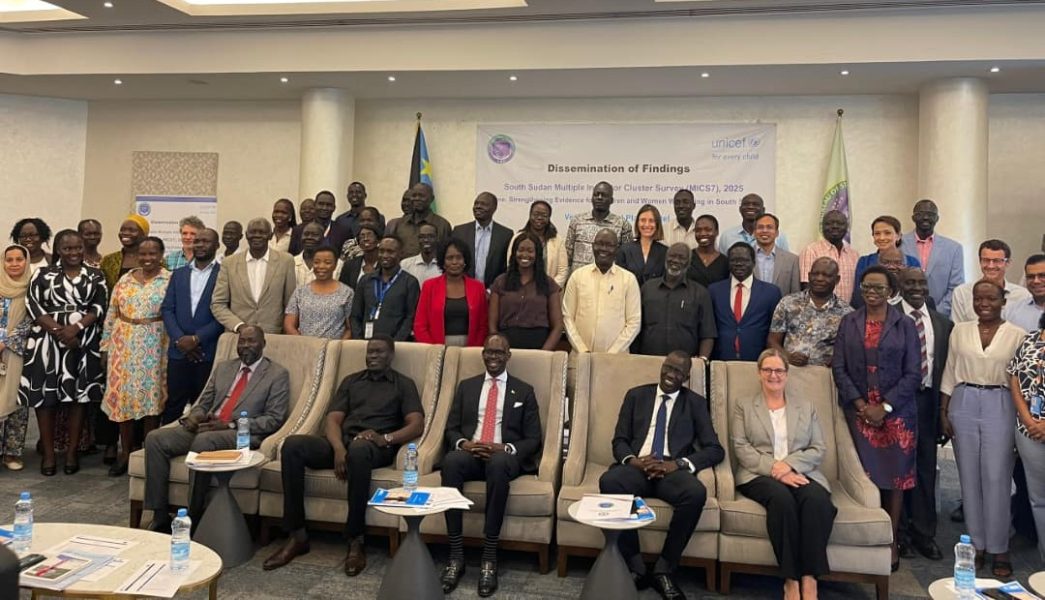
“This data is a national mirror. It tells us where we are succeeding and where we are failing,” said NBS Director General Dr. Augustino T. Mayai during the dissemination event in Juba.
The report, released under the theme “Strengthening Evidence for Children and Women Well-being in South Sudan,” highlights serious concerns across key sectors.
In health, the survey paints a stark picture. Under-five mortality remains high at 101 deaths per 1,000 live births, while maternal mortality is estimated at 692 per 100,000.
Access to essential maternal services remains limited, with only 51 percent of births attended by skilled health personnel and just 35 percent of women completing the recommended four antenatal visits. Postnatal care coverage is also described as weak.
Dr. Michael Mahin, Director General for Reproductive Health Services, said the findings reflect the reality on the ground, particularly in rural areas where access to formal healthcare remains low.
“This is a true picture of our health system,” he said, noting that service coverage remains below 46 percent in many areas. He added that nearly 30 percent of women have an unmet need for family planning.
The government says initiatives such as the Boma Health Initiative are being scaled up to expand community-level healthcare, especially in underserved regions.
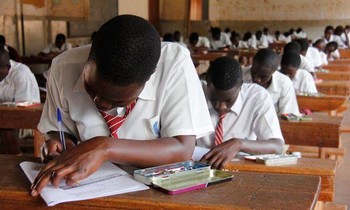
Education indicators are equally concerning. According to the survey, only 42 percent of children attend primary school, while secondary school enrollment stands at just 6 percent.
Learning outcomes are also critically low, with fewer than 10 percent of children demonstrating basic literacy and numeracy skills.
Nutrition remains a major challenge. The report shows that 19 percent of children are stunted and 17 percent suffer from wasting, while only 5 percent receive a minimum acceptable diet, raising concerns about long-term developmental impacts.
Child protection issues also feature prominently. The survey found that 43 percent of girls are married before the age of 18, while nearly 80 percent of children experience violent discipline at home or in school.
Access to water, sanitation and hygiene (WASH) services remains severely limited. Only 3 percent of households have access to improved sanitation, while open defecation is practiced by 79 percent of the population. Access to basic hygiene services stands at just 6 percent.
The data also highlights stark inequalities between urban and rural areas, as well as between the richest and poorest households, with the most vulnerable populations consistently facing the worst outcomes.
UNICEF South Sudan Representative Noala Skinner said the findings should serve as a call to action for both government and partners.
“Every indicator here is a child’s future. We must turn evidence into action,” she said.
Deputy Minister for Finance and Planning Thok Turuk Thok emphasized the importance of using the data to guide national priorities and investments.
“Numbers guide us to where we must act and invest,” he said, calling for stronger alignment between evidence and budgeting.
The MICS 2025 report will inform planning and resource allocation across sectors, with a renewed focus on improving service delivery in health, education, nutrition, water and sanitation, and child protection.
Development partners also stressed the need for coordinated and sustained investment to address the root causes of inequality and ensure that progress reaches the most marginalized communities.
As South Sudan moves toward a critical transition period ahead of planned elections in 2026, the report is expected to play a key role in shaping policies aimed at improving the well-being of women and children nationwide.