The head of the United Nations Mission in South Sudan (UNMISS) has warned that the country’s worsening crisis cannot be resolved through force, urging leaders to urgently recommit to dialogue and a political path to peace.
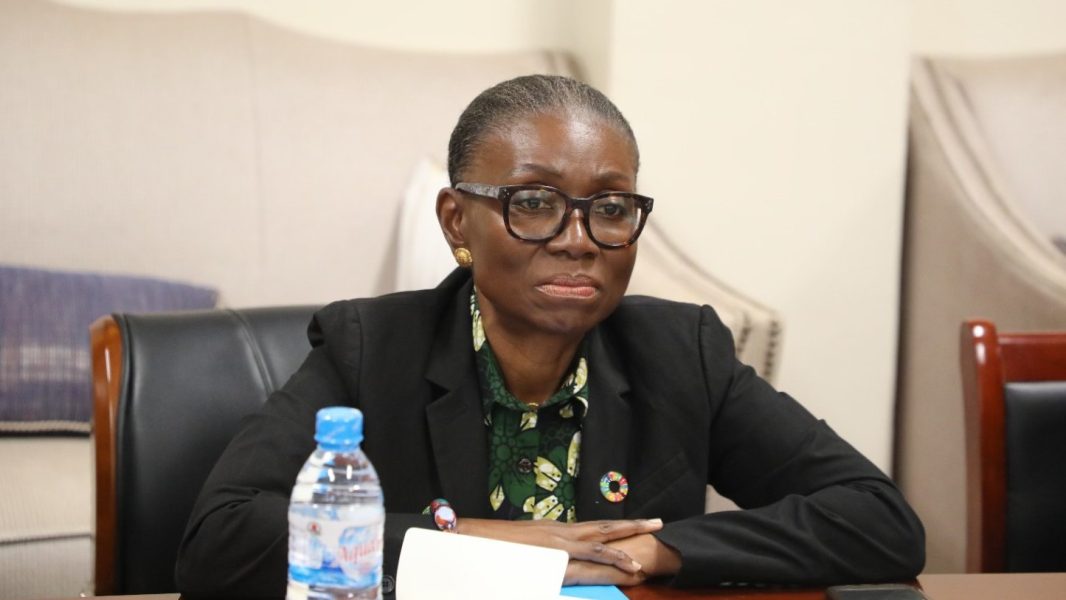
Briefing the United Nations Security Council for the first time since her appointment, Special Representative of the Secretary-General and UNMISS chief Anita Kiki Gbeho said escalating violence, political tensions, and humanitarian pressures are converging to deepen instability across South Sudan.
“The challenges facing South Sudan cannot be resolved through military means,” she told Council members. “A sustained political pathway, anchored in inclusive dialogue, remains essential.”
Gbeho’s remarks come amid a deteriorating security situation, particularly in Jonglei State, where clashes between the South Sudan People’s Defence Forces (SSPDF) and the Sudan People’s Liberation Movement/Army in Opposition (SPLM/A-IO) have intensified. Civilians, she warned, continue to bear the brunt of the violence.
According to UNMISS human rights reporting, deaths and injuries rose by 40 percent in 2025 compared to the previous year.
She cited the aerial bombardment of a hospital in Lankien as a stark example of the mounting human cost, alongside persistent intercommunal violence in parts of the Equatorias, Bahr el Ghazal, and Warrap.
The humanitarian situation is equally alarming. Nearly 10 million people across the country now require some form of assistance, while insecurity continues to hamper aid delivery.
Since late December, more than 276,000 people have been displaced in Jonglei alone, with over 110,000 fleeing across the border into Ethiopia.
Gbeho also highlighted the compounding effects of economic hardship, climate-related shocks, and spillover from the conflict in neighboring Sudan, warning that these pressures are further straining already fragile institutions and communities.
At the same time, she pointed to signs of progress where political will has been demonstrated, including the completion of civic education and public consultations by the National Constitutional Review Commission in most parts of the country, with support from United Nations Mission in South Sudan.
However, the UN envoy cautioned that unilateral political decisions continue to undermine the functioning of transitional institutions, slowing momentum toward a stable political transition.
Her briefing also underscored growing challenges facing UNMISS itself. The mission has undergone a significant reduction in operational capacity estimated at between 25 and 30 percent forcing it to scale back its geographic presence and prioritize key areas of intervention.
Despite these constraints, Gbeho said UNMISS remains central to protecting civilians and enabling humanitarian operations.
She cited recent deployments in Akobo and Abiemnhom, where the mission temporarily extended its presence to prevent further violence and facilitate aid access during critical periods.
But she warned that such interventions are becoming increasingly difficult to sustain under current resource limitations, raising concerns about the mission’s ability to respond effectively to emerging crises.
The envoy welcomed renewed regional efforts to revive the peace process, including the appointment of Jakaya Kikwete as the African Union’s High Representative for South Sudan.
She said coordination under the AU-IGAD-UN trilateral framework remains key to advancing inclusive dialogue and reducing fragmentation among stakeholders.
As the Security Council considers the renewal of UNMISS’s mandate, Gbeho urged sustained international support and investment to match the scale of the crisis, warning that gaps in engagement risk prolonging instability.
She also called on South Sudanese leaders to take concrete steps toward peace, including implementing the peace agreement and creating conditions for credible elections as the country approaches another milestone in its post-independence transition.
“The responsibility ultimately lies with the leaders of South Sudan,” she said, urging them to “embrace peace” and meet the expectations of their citizens.
With violence rising and humanitarian needs growing, the UN’s message was clear: without inclusive dialogue and renewed political commitment, the path to lasting peace in South Sudan will remain out of reach.