
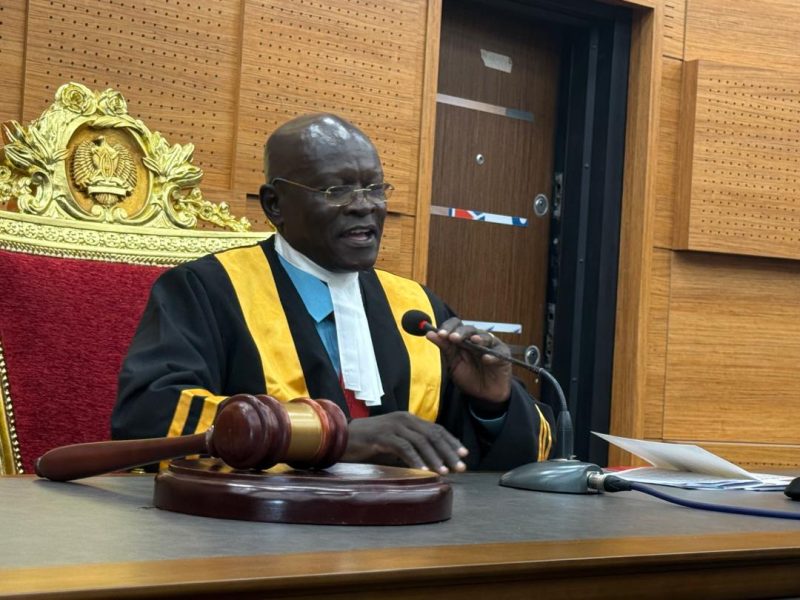
South Sudan’s new parliamentary speaker, Joseph Ngere Paciko, stepped into office on Tuesday with a message anchored in unity, reform, and urgency, as the country edges closer to a pivotal phase in its transition.
Addressing lawmakers for the first time at the Transitional National Legislative Assembly (TNLA) in Juba, Paciko struck a tone of cautious optimism, calling for cooperation across political divides while urging the executive to honour its commitments under the 2018 peace agreement.
His remarks framed the moment not just as a routine leadership change, but as a test of the country’s resolve to deliver long-promised reforms.
“I encourage the executive to fully implement the agreements,” he said, underscoring the legislature’s role in holding government accountable while also working in tandem to stabilise the nation.
Paciko, a senior figure within the ruling SPLM, takes over from Jemma Nunu Kumba following a parliamentary reshuffle he described as a “normal process.”
But the challenges ahead are anything but routine. With elections scheduled for December 2026, the new speaker inherits a parliament under pressure to fast-track critical legislation and help steer the country toward the end of its transitional period.
He made clear that unity within parliament would be essential not only to pass laws, but to manage political tensions and strengthen oversight of the executive.
Calling on lawmakers to set aside differences, Paciko positioned cohesion as the foundation for both effective governance and national stability.
“Our unity will enable us to better manage conflicts, legislative processes and oversee the government,” he said.
Beyond politics, Paciko turned attention to the daily realities facing South Sudanese citizens, linking widespread economic hardship to corruption and financial crimes.
He called for stronger action against money laundering and other illicit practices, warning that such issues pose a threat not only to the economy but to national security.
“We must join efforts to fight economic crimes threatening our national security,” he said.
His agenda also extends inward, acknowledging institutional gaps within parliament itself.
From improving legislative efficiency to addressing welfare concerns for lawmakers and staff, Paciko signalled a willingness to confront internal challenges that have long hampered effectiveness.
He pledged to serve as an impartial presiding officer, ensuring parliament remains a platform for inclusive debate while accelerating the passage of laws critical to governance and reform.
As the session drew to a close, the message was one of shared responsibility.
Paciko called for closer cooperation among the executive, legislature, and judiciary, emphasising dialogue and reconciliation as essential tools in navigating the road ahead.
Deputy Speaker Abuk Piati Ayiik, who also took the oath of office, echoed that sense of duty, pledging to uphold the constitution and serve citizens with integrity.
Together, their swearing-in marks not just a смена of leadership, but a renewed attempt to steady South Sudan’s fragile institutions at a time when expectations—both at home and abroad are steadily rising.