
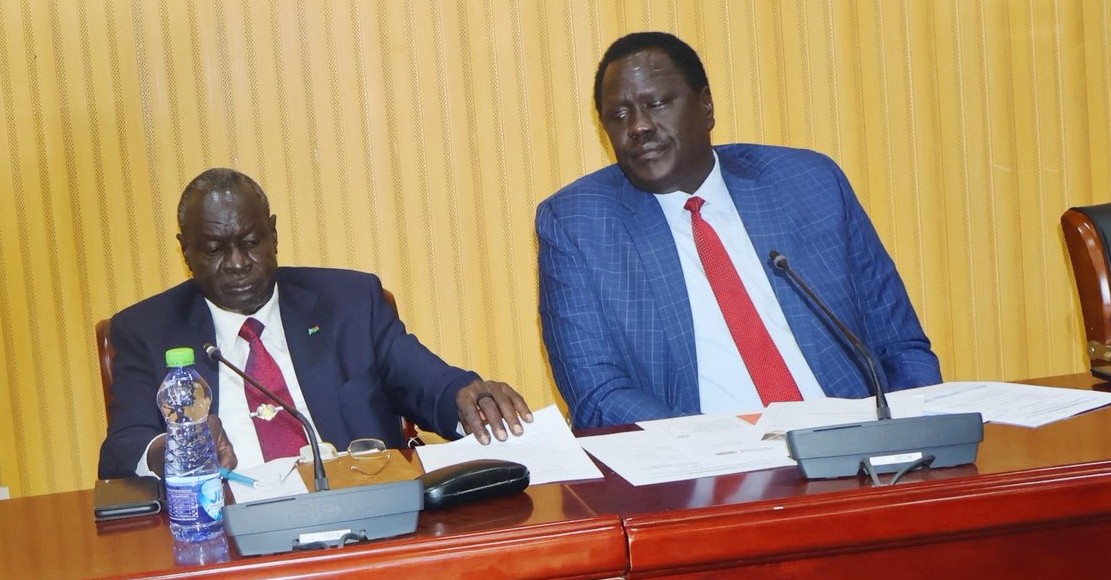
Lawmakers in Juba have summoned the ministers responsible for finance and public service to explain persistent concerns over pension remittances, in a move that signals growing parliamentary pressure on the government’s handling of retirement funds.
The decision was announced on Monday during a sitting of the Transitional National Legislative Assembly, presided over by Speaker Joseph Ngere Paciko.
According to the Speaker’s office, the House resolved to call the Minister of Finance and Planning, Salvatore Garang Mabiordit, and the Minister of Public Service and Human Resource Development, Ezekiel Lol Gatkuoth, to provide formal clarification on the status of pension remittances.
The summons comes amid mounting concerns over delays, inconsistencies, and a lack of transparency in the management of pension contributions for public servants.
Lawmakers have increasingly raised alarm over the uncertainty facing retirees and civil servants, many of whom depend on timely and reliable pension payments.
While details of the specific concerns were not fully outlined during the session, the move suggests that Parliament is seeking accountability over whether funds deducted or allocated for pensions are being properly managed and remitted.
Pension management has long been a sensitive issue in South Sudan, with recurring complaints about delayed payments, gaps in records, and weak institutional oversight.
The involvement of both the finance and public service ministries reflects the cross-cutting nature of the issue, which spans budget allocation, payroll systems, and human resource administration.
By summoning the two ministers, lawmakers are expected to demand clarity on how pension funds are collected, managed, and disbursed, as well as the reasons behind any delays or discrepancies.
The appearance of the ministers before Parliament is likely to provide the first detailed official account of the current status of pension remittances, and could set the stage for further legislative scrutiny or policy action.
The development underscores Parliament’s increasing willingness to assert oversight over key government functions, particularly those directly affecting the welfare of public servants and retirees.