
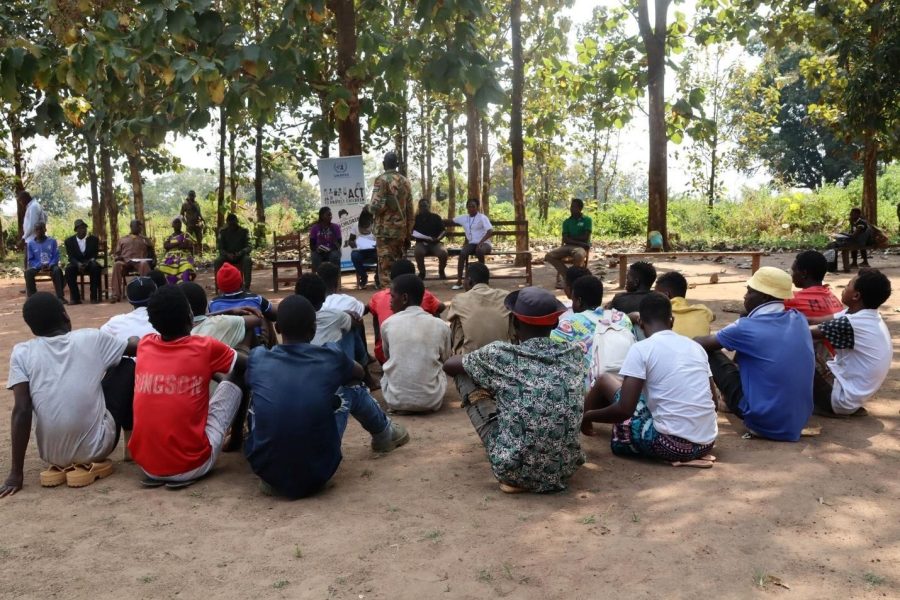
Christine was 17 when she stood among a group of 22 children released from the South Sudan People’s Defense Forces in the village of Rimenze, about 30 kilometres from Yambio, in Western Equatoria State. Christine is not her real name.
For years, her life had revolved around survival rather than childhood. Recruited as a child, she carried responsibilities no child should ever bear. Freedom, when it finally came, did not erase the memories.
“All I need is psychological support and support to enroll in a vocational school,” she says quietly. “I want to study driving and simple mechanics to help myself and my family.”
Christine and her peers were released in early December as part of national efforts to end the recruitment and use of children in armed conflict. Among them are two girls aged 13 and 17. Their presence in military ranks tells a troubling story, one of promises repeatedly made and repeatedly broken.
Broken pledges
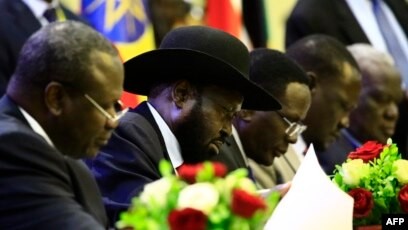
In September 2018, rival leaders signed the Revitalised Agreement on the Resolution of Conflict in the Republic of South Sudan (R-ARCSS), aimed at ending a five-year civil war that killed an estimated 400,000 people and displaced millions more.
At the heart of the peace agreement (Chapter 2) is an obligation by all parties to end the recruitment and use of children, demobilize those already in their ranks and reintegrate them into civilian life.
Seven years on, those commitments remain largely unfulfilled.
According to the 2025 Annual Report to the UN Secretary-General on Children and Armed Conflict, armed actors aligned with both government and opposition forces continue to recruit and use children.
The UN verified 126 grave violations affecting 109 children, mostly boys, in 2024 alone. These abuses were attributed to the State forces, Sudan People’s Liberation Army-in-Opposition (SPLA-IO) and other armed opposition groups.
While dozens of children are periodically released, the UN Country Task Force on Monitoring and Reporting continues to verify hundreds of new violations against children each year.
The report warns violations remain alarmingly high despite repeated political commitments.
Samuel Buhori Lotti, a member of parliament, describes the continued recruitment and use of children as a national failure, bordering on deception.
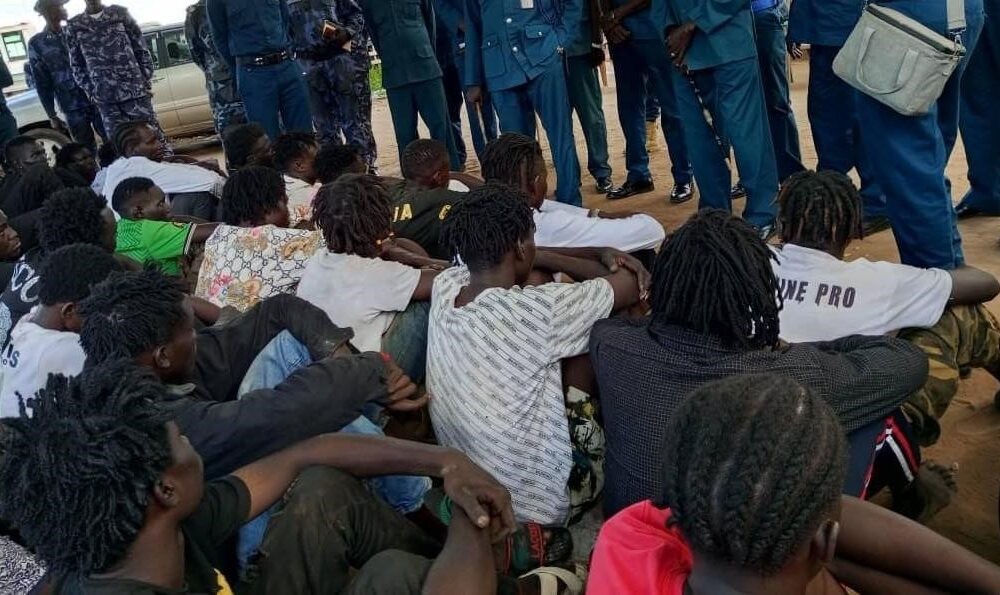
He points to a pattern in which street gangs are rounded up by the Government Joint Operation Force under the pretext of crime prevention, only to be forcibly recruited into the army.
“When we talk about our legislative role in child protection, a number of motions have been moved in the House; we have never turned a blind eye,” Buhori states. “What puzzles me recently is this so-called conscription of street gang members. Apart from arresting them, it has graduated into forcibly recruiting them.”
Parliamentary investigations, he says, revealed that children were taken to training centres in the towns of Malakal and Nasir in Upper Nile State. Some died, others remain missing.
Buhori says others fled Nasir and are now displaced, while some are sheltering at the UNMISS protection site in Malakal.
“We cannot continue lying to ourselves by passing good laws and doing nothing. In every society where the truth is left behind, lies are dressed up. We need to walk the walk and protect our children from any form of conflict.”
Denial and explanation
A senior representative from the South Sudan People’s Defense Force (SSPDF), rejects claims that recent crackdowns were aimed at recruiting children.
Instead, he cites a loophole in the integration of opposition forces. He argues that the process prioritized unification over proper vetting.
He states that rapid integration of various factions into the military has eroded accountability and that there have been incidents of recruitment and use within the SSPDF.
“Most of these commanders came from the opposition… and once they join the SSPDF, you will not be able to actually take them to court,” he says.
He further argues that the Revitalized Peace Agreement (R-ARCSS) has failed to deliver the promised security and economic stability. This has created conditions where joining the army becomes a survival strategy.
He states that with the peace deal failing to quell intercommunal violence, children in areas like Unity State join armed opposition groups seeking protection.
“They want to join and defend themselves. Others also feel they need to be defended in the garrison,” he explains.
As the country’s economy crumbles, a failure of the transitional government, the army is viewed as the only viable financial safety net.
Despite these pressures, he insists the army maintains child protection units across all divisions and operates in line with the 2008 Child Act.
He says children identified during recruitment or those expressing willingness to join the army are turned away and reunited with their families.
The politics of impunity
Civil society leaders say these explanations obscure a deeper truth of a political system that tolerates the recruitment and use of children. A human rights defender, says the issue is less about capacity and more about political will.
“There are structural challenges, yes,” he says. “But this persists because the leadership at the highest levels tolerates it, if not implicitly encourages it.”
Fragmented command structures, weak oversight, and a lack of accountability have created space for recruitment and use of children in armed conflict to continue.
Those responsible, he says, are rarely punished, despite national and international laws prohibiting the practice.
“Those who recruit go without punishment, and this gives them leverage,” he states, adding that there is negligence at the top levels.
Delays in unifying armed forces under the peace deal have left competing chains of command intact.
“More advocacy is needed at the leadership level,” he adds. “Once the leadership shows the will to implement the peace agreement, the army will be under one central command.”
International sanctions and public naming have done little to change behaviour. Domestic accountability, he argues, remains elusive.
“There is a perception that peace is a paradox of injustice, and this allows perpetrators to operate within the scope of immunity because holding them accountable is seen as a threat to the peace agreement,” the human rights defender says.
He says this logic entrenches impunity and calls for stronger national institutions, including the Human Rights Commission and the Disarmament, Demobilisation and Reintegration (DDR), backed by genuine political support.
He also urges greater investment in civil society and community-based monitoring to create early warning systems and bottom-up pressure on armed groups.
Meanwhile, the UN urges the government to strengthen prevention in conflict hotspots, fully implement the 2020 Comprehensive Action Plan to End & Prevent All Grave Violations Against Children, uphold child protection provisions in the peace agreement, and finalize transitional security arrangements, including the deployment of trained unified forces, to curb ongoing abuses.
For Christine and thousands like her, peace remains something promised on paper but unevenly delivered in life. Freedom from the army is only the first step. Without protection, accountability, and reintegration, the cycle threatens to repeat one child at a time.
This story is reported with a grant from Journalists for Human Rights and Dallaire Institute for Children, Peace and Security.