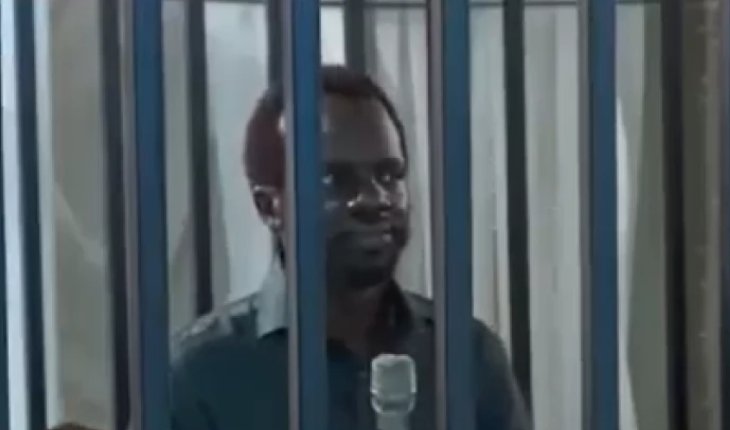
South Sudan’s detained Petroleum Minister, Puot Kang Chol, has told a special court in Juba that he was repeatedly pressured to abandon First Vice President Riek Machar and join a rival political camp in exchange for his freedom.
Mr Puot made the allegations on Monday during the 81st session of ongoing court proceedings involving Machar and several detained members of the opposition SPLM/A-IO.
The minister, who is one of the accused in the case, said security officials and individuals claiming to represent senior government figures approached him several times while in detention and urged him to distance himself from Machar.
He told the court that the requests began shortly after the appointment of former vice-president Benjamin Bol Mel in February 2025.
According to Mr Puot, Bol Mel allegedly informed him that President Salva Kiir Mayardit was unhappy with Machar and suggested that he persuade the opposition leader to step aside and allow him to take over leadership of the SPLM/A-IO ahead of elections.
“On February 12, 2025, the day when former Vice President Dr. Benjamin Bol Mel took the oath of office, I went to his reception where he warned me by telling me to tell the elders of Nasir to stop the fighting, this statement is out there on social media, and it is important to note that there was no fighting at that particular time.”
Mr Puot said he rejected the proposal, arguing that the peace agreement did not allow such an arrangement and insisting that Machar remained the legitimate leader of the movement.
“After the function, we went to his house where he told me that the President was not happy with Dr. Riek Machar. On that note, he asked me if I could talk to Dr. Riek Machar to wait for elections while I (Puot) took over from him (Dr. Riek Machar). My response was that I was not ready for that and that the Agreement does not allow such a program. I also added that the choice of the SPLM/A (IO) for a leader was none other than Dr. Riek Machar,” he said.
The petroleum minister further alleged that while being held at a National Security Service detention facility, he received warnings from security officers who suggested that his safety depended on cooperating with the government.
He claimed one officer advised him to “join the government before it is too late” following tensions linked to violence in Nasir County earlier that year.
Mr Puot also told the court that investigators later questioned whether he was prepared to “forget about Riek Machar” and work directly with President Kiir.
He said he responded by affirming his loyalty to Machar as chairman of the SPLM/A-IO while maintaining that he had always worked with the president in his role as minister.
In another allegation, Mr Puot said a man identifying himself as a security officer later informed him that Machar had been arrested and asked whether he was prepared to publicly denounce him as leader of the SPLM/A-IO.
According to the minister, he refused the request despite being warned that he could “die in detention”.
He also accused authorities of denying him proper medical treatment during his detention, telling the court that he suffered from ulcers and at one point vomited blood while access to medication was restricted.
Mr Puot claimed he was only taken to hospital after the court ordered that detainees be allowed medical attention.
The minister further alleged that he was later approached over a proposal to work with senior SPLM/A-IO figure Stephen Par Kuol after he reportedly declared himself interim chairman of the movement.
Mr Puot said he again rejected the proposal and insisted he would not abandon Machar.
During his testimony, he described the case against him and other detainees as politically motivated and accused prosecutors of attempting to portray him as the main architect of alleged offences linked to the ongoing trial.
He told the court that his detention was connected to his refusal to “betray” his political party and community.
The proceedings were later adjourned until 1 June after Mr Puot reportedly fell ill and requested time to receive medical treatment before continuing his testimony.