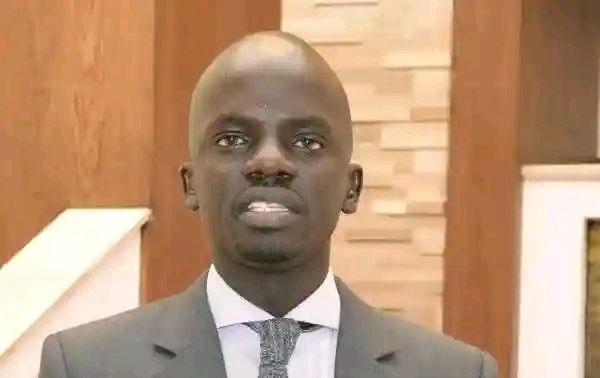
After more than seven months of listening to the prosecution and its witnesses, suspened Petroleum Minister Puot Kang Chol has finally taken the stand, delivering his first detailed defence statement before the Special Court sitting at Freedom Hall in Juba.
Appearing as the first accused in the high-profile case linked to Riek Machar and several other SPLM/A-IO detainees, Puot Kang addressed the court during the 73rd session of proceedings, marking a significant turning point as the trial gradually shifts from prosecution to defence.
Opening his remarks, Puot Kang struck a respectful tone, acknowledging the court’s endurance and what he described as its “commitment to due process” throughout one of the longest trials in South Sudan’s judicial history.
He noted the complexity and duration of the case, commending the bench for sustaining proceedings over an extended period.
However, he quickly pivoted to challenge the prosecution’s case, arguing that despite the length of time taken, it had failed to produce “cogent, credible, and legally sufficient evidence” to substantiate the charges against him.
According to the minister, the evidentiary record presented so far remains fundamentally weak and does not meet the required legal threshold.
Puot Kang outlined the structure of his defence, indicating that his submission would be anchored on the Revitalized Agreement on the Resolution of the Conflict in South Sudan (R-ARCSS), his role in its implementation, the circumstances surrounding the Nasir incident of March 2025, and a direct response to the allegations against him.
He emphasized his longstanding involvement in the peace process, detailing his roles since the signing of the agreement in 2018.
These include serving on the National Pre-Transitional Committee, acting as a liaison between the presidency, and later holding senior responsibilities within implementation mechanisms of the peace deal.
He also referenced his role in regional negotiations under the Tumaini Initiative in Nairobi.
Based on these responsibilities, Puot Kang argued that he has consistently been at the center of implementing the peace agreement and, by extension, committed to its success.
He suggested that this record contradicts the accusations leveled against him.
Turning to the broader context of the case, he told the court that the Nasir incident should not be treated in isolation.
He cited several previous incidents across the country including in Kajo Keji, Maiwut, and Tambura as part of a pattern of ceasefire violations that have historically been addressed through mechanisms established under the peace agreement.
Puot Kang further argued that such incidents fall under the mandate of monitoring and investigative bodies established by the agreement, and in serious cases, should be handled by the Hybrid Court for South Sudan.
He questioned why this framework had not been fully utilized, suggesting that delays in establishing the hybrid court rest with those now bringing accusations.
In a more pointed assertion, he described the case as politically driven, alleging that the Nasir incident is being used as a pretext to undermine the peace agreement and target political opponents.
The session was adjourned by Presiding Judge James Alala Deng to Wednesday, May 6, 2026, when Puot Kang is expected to continue his testimony as the defence phase gains momentum.
The proceedings remain closely watched, with observers viewing the defence’s arguments as a critical test of both the prosecution’s case and the broader credibility of the judicial process in politically sensitive matters.