
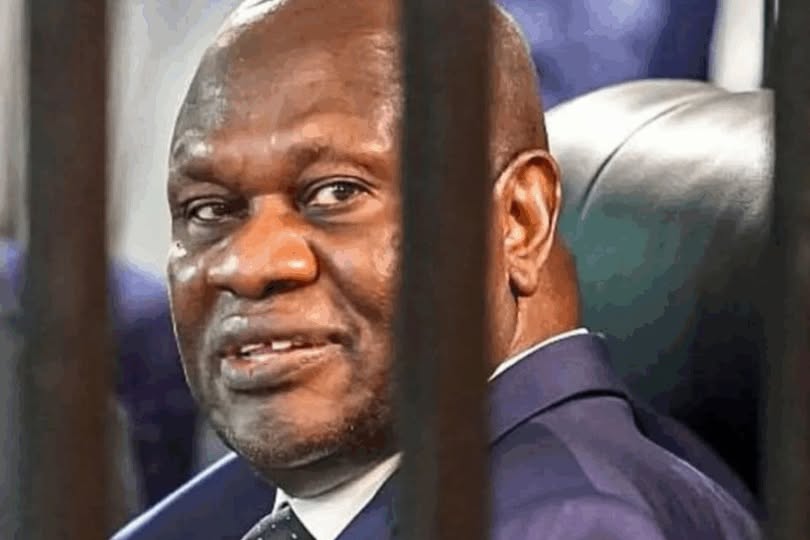
The Reconstituted Joint Monitoring and Evaluation Commission (RJMEC) has demanded the immediate release of First Vice President Dr. Riek Machar, renewed high-level political dialogue, and strict compliance with the Permanent Ceasefire.
Briefing the African Union Peace and Security Council on Friday, RJMEC Interim Chairperson, Amb. Maj. Gen. George Aggrey Owinow (rtd), said the political and security situation in South Sudan has continued to deteriorate, while the implementation of the Revitalised Agreement on the Resolution of the Conflict in the Republic of South Sudan (R-ARCSS) has been severely undermined.
Owinow told the Council that persistent violations of the peace agreement, including renewed armed clashes between the South Sudan People’s Defence Forces (SSPDF) and the SPLA-IO in several parts of the country, pose a grave threat to the Permanent Ceasefire.
According to reports from the Ceasefire and Transitional Security Arrangements Monitoring and Verification Mechanism (CTSAMVM), fighting has been recorded in six of the ten states and three administrative areas, in clear breach of the ceasefire provisions.
He further raised alarm over unilateral political actions taken by the leadership in Juba, including the removal and replacement of opposition-nominated officials from executive and legislative positions at national and state levels without consultation or consensus.
Such actions, he warned, are eroding the power-sharing framework established under the R-ARCSS and weakening political trust among the parties.
RJMEC also expressed deep concern over the arrest, detention and prosecution of Dr. Machar and other senior SPLM/A-IO officials before an ad-hoc Special Court, describing the move as incompatible with the spirit and letter of the peace agreement.
Owinow noted that the continued detention of the First Vice President has effectively excluded a key party from critical national decision-making processes, including discussions on proposed amendments to the peace agreement and the Transitional Constitution.
“These developments risk an irretrievable breakdown of the Permanent Ceasefire if urgent steps are not taken to halt hostilities and resume inclusive dialogue at the highest political level,” Owinow warned.
He stressed that the release of political detainees is essential to restoring confidence and enabling meaningful engagement among the parties.
The RJMEC chairperson also highlighted the worsening humanitarian and economic situation in the country, attributing it to renewed conflict, climate shocks, currency depreciation and cross-border displacement from Sudan.
He said ordinary citizens continue to bear the brunt of political and military confrontations, with millions facing food insecurity and limited access to basic services.
On the political transition, Owinow informed the Council that the Revitalised Transitional Government of National Unity (RTGoNU) has submitted proposals to amend the R-ARCSS, including the delinking of the permanent constitution-making process and the national census from the 2026 elections.
He said RJMEC is conducting consultations with parties, stakeholders, partners and guarantors to determine whether there is sufficient consensus to endorse the proposed amendments.
However, he noted that several RJMEC members have questioned the credibility of such far-reaching decisions in the absence of the SPLM/A-IO leader and amid ongoing unilateral actions against opposition representatives.
In its recommendations to the African Union Peace and Security Council, RJMEC called on the AU to prevail upon the parties to cease all hostilities, embrace inclusive dialogue, and fully adhere to the Permanent Ceasefire and transitional security arrangements.
The Commission also urged the AU to assist in securing the release of Dr. Machar and all political detainees, restore the composition of the government in line with the R-ARCSS, and mobilise financial and logistical support to accelerate the implementation of outstanding peace tasks.
RJMEC further appealed for renewed efforts to establish the Hybrid Court for South Sudan and for measures to hold peace spoilers accountable, warning that continued violations could derail the transition and plunge the country back into widespread conflict.
The Commission urged the African Union to remain seized of the situation, stressing that urgent, coordinated action is required to salvage the peace agreement and steer South Sudan toward a stable and democratic end to the transitional period.