
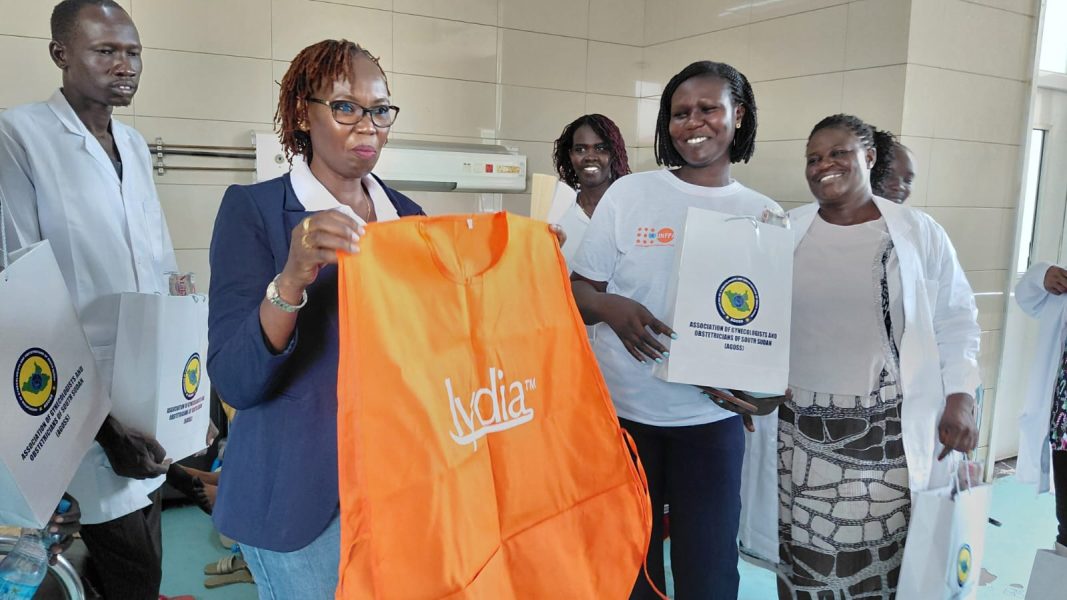
Doctors in Juba are raising alarm over what they describe as a persistent and largely preventable maternal death crisis, as the country continues to record some of the highest rates of women dying during pregnancy and childbirth.
Health specialists warn that despite some progress in recent years, South Sudan remains among the worst-affected countries globally, with hundreds of women dying for every 100,000 live births.
Recent estimates suggest the maternal mortality ratio still ranges between roughly 692 and over 1,200 deaths per 100,000 births far above global targets.
Medical experts say the crisis is driven not only by weak health systems but also by persistent gaps in access to care, particularly for women in rural and conflict-affected areas.
One of the biggest challenges remains the low number of women delivering in health facilities.
Studies and UN data indicate that only a small proportion of births in South Sudan are attended by skilled health personnel, with many women still relying on home deliveries often without trained assistance.
Doctors warn that this significantly increases the risk of complications such as bleeding, infection, and obstructed labour conditions that are largely preventable or treatable in equipped facilities.
“Most maternal deaths can be avoided if women access skilled care before, during and after childbirth,” one clinician at Juba Teaching Hospital said.
Health workers point to a combination of structural and social barriers limiting access to maternal healthcare.
Long distances to facilities, high transport costs, insecurity, and poor road networks continue to prevent timely access to care.
In some cases, seasonal flooding and displacement further isolate communities from essential services.
Negative perceptions of healthcare services also play a role, with some women reportedly avoiding hospitals due to fear of mistreatment or lack of trust in the system.
At the same time, low awareness of reproductive health remains a major concern.
Many women do not attend antenatal or postnatal care, only seeking help when complications arise often too late.
The shortage of trained personnel is another critical factor.
Decades of conflict and underinvestment have left the country with a limited number of specialists, midwives, and obstetricians, severely weakening the healthcare system’s ability to respond to emergencies.
Experts say increasing the number of skilled birth attendants is essential to reducing deaths, alongside improving training and retaining healthcare workers.
Doctors are also warning against practices such as “hospital shopping,” where expectant mothers move between facilities to avoid medically advised procedures like caesarean sections.
Health professionals say such delays in receiving appropriate care can quickly turn manageable complications into life-threatening emergencies.
Combined with late referrals and poor emergency response systems, these delays contribute significantly to preventable maternal deaths.
Despite the grim statistics, officials report gradual improvements in some urban centres, including expanded maternal services and increased availability of skilled staff.
However, experts caution that progress remains uneven and fragile, particularly outside major towns.
Globally, most maternal deaths are preventable with timely and adequate care—but in South Sudan, systemic gaps continue to put women at risk.
Doctors and health advocates are now calling for sustained investment in maternal healthcare, including strengthening primary health systems, expanding community outreach, and improving awareness among women.
They stress that reducing maternal mortality will require coordinated efforts between government, health institutions, and communities.
“Maternal death is not just a health issue it reflects the overall strength of a country’s health system,” one health official said.
For many families across South Sudan, the stakes remain high.
Until access to safe and skilled care becomes universal, doctors warn, childbirth will continue to carry life-threatening risks for thousands of women.