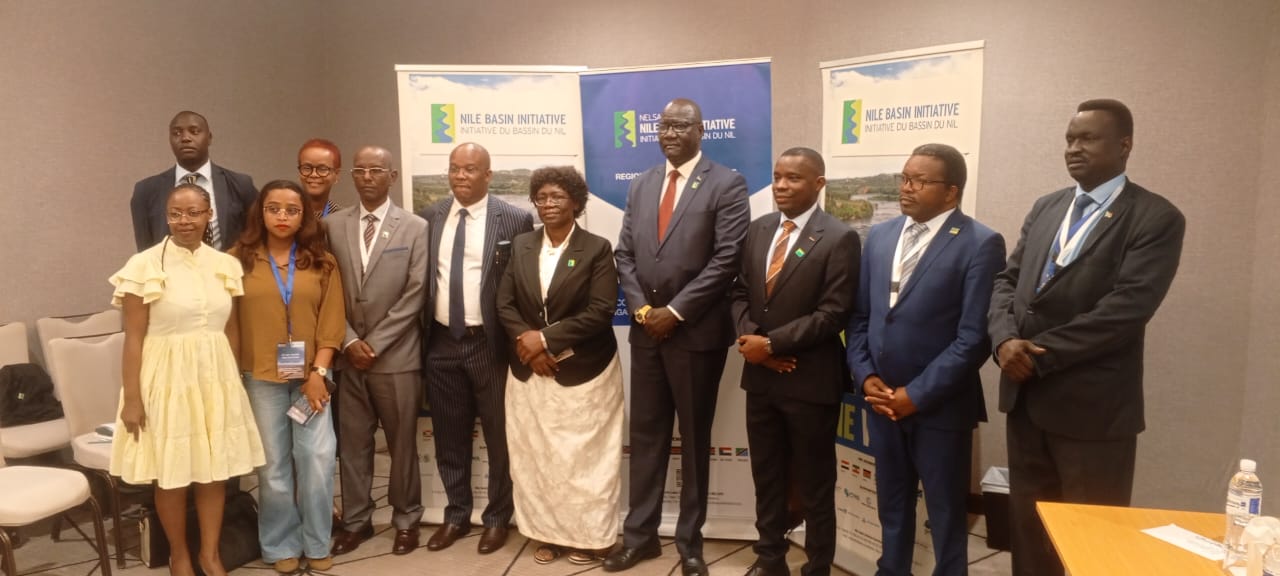
South Sudan is set to host the 20th Regional Nile Day on February 22, 2026. This event, under the theme “Voices of the Nile: Community, Youth and Women Engagement in Water Governance,” marks the first time the country has hosted the celebration since joining the Nile Basin Initiative (NBI) in 2012.
Leaders from across the 11-member regional bloc are in Juba to reaffirm their commitment to the equitable and sustainable management of the world’s longest river.
For a country that holds one of the most strategic sections of the Nile system through the White Nile and Sudd wetlands, hosting this event is more than a diplomatic gesture; it is a celebration of national identity.
South Sudan’s Minister of Water Resources and Irrigation,James Mawich Makuac, described the event as a reflection of South Sudan’s constructive engagement in regional and international water forums, particularly in advancing water diplomacy and cooperation within the basin.
“This is a historical milestone since our country joined the NDI initiative on 5th July 2012. Hosting this celebration in Juba reflects the growing confidence and trust of the region in South Sudan’s constructive engagement,” he said in a press conference ahead of the day’s celebration.
Meanwhile, Dr. Nestor Niyonzima, Executive Director of the Nile Basin Initiative (NBI), described South Sudan as a country central to the story of the Nile.
“The country sits at the head of the White Nile, embracing the Baro-Akobo Sub-Basin and other vital tributaries of the Great River. This places South Sudan at the center of the Nile story.”
South Sudan joined the Nile Basin Initiative on July 5, 2012, a year after independence, and has since positioned itself as an active partner in advancing the shared vision of sustainable socio-economic development through equitable utilization of the Nile’s waters.
Niyonzima thanked the government and people of South Sudan for excellent arrangements and significant financial investment in hosting the celebration, describing it as a clear demonstration of national ownership and leadership within the basin.
He highlighted that through the NBI platform, South Sudan participates as an equal partner in transboundary water governance, benefiting from technical assistance, shared data systems, and regional projects to build trust and ensure win-win outcomes among member states.
Among key milestones highlighted was the establishment of a National Dam Safety Unit in 2024, supported by NBI, alongside real-time hydrological monitoring stations and upgraded water quality systems.
These initiatives, he said, are backed by partners including GIZ and the World Bank, are designed to strengthen early warning systems, enhance flood preparedness, and safeguard downstream communities.
By the end of 2024, he said, South Sudan was implementing 22 transboundary projects under NBI programs, focusing on food security, watershed protection, climate resilience, and energy access.
A notable example is the planned power interconnection project between South Sudan and Uganda, expected to expand electricity access, currently estimated at about seven per cent, reduce tariffs, and connect the country to regional power grids.
Meanwhile, the Undersecretary in the Ministry of Water Resources and Irrigation Sultan Lam Tungwar emphasized that the Nile has deep cultural, economic, and environmental importance to South Sudanese communities.
“Our lives depend on it,” Tunwar said, noting that the Nile provides daily water supply for people, livestock, agriculture, fisheries, and transportation.
He highlighted the Sudd wetlands, one of the largest wetlands in the world, as a major ecological and tourism asset.
The vast wetland system, formed by the White Nile’s spread across central South Sudan, supports rich biodiversity, fisheries, wildlife conservation, and local livelihoods.
“It is embedded in our cultural identity and pride. We are all children of the Nile.”
This year’s celebrations in Juba will feature cultural displays, music, and traditional dances reflecting South Sudan’s rich diversity, alongside policy dialogues among ministers, experts, and regional stakeholders.
Nile Day, commemorated annually on 22 February to mark the date the Nile Council of Ministers (Nile-COM) founded the Nile Basin Initiative (NBI) in 1999 in Dar es Salaam, Tanzania.
Member states used the day to highlight the importance of cooperation in managing and developing the Nile as a shared resource in a sustainable manner.
Member states would also share and exchange experiences on critical Nile Basin issues such as climate extremes, environmental degradation, and pollution; and reaffirm political commitment to Nile cooperation while celebrating the Basin’s rich cultural diversity and shared heritage.