
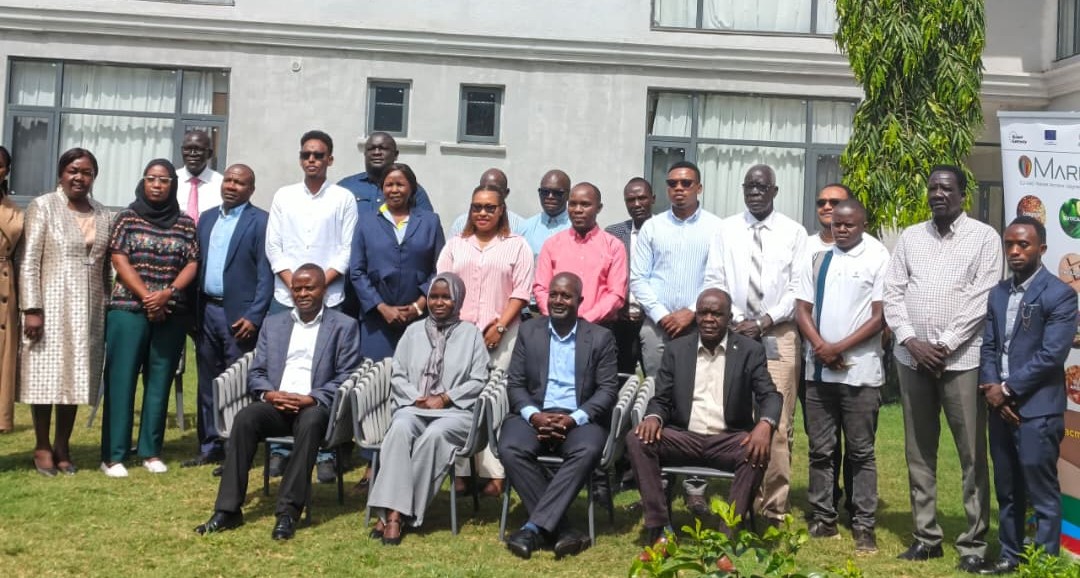
South Sudan has launched a major regional push to revive its gum arabic sector, signaling a strategic shift toward economic diversification as the country seeks alternatives to its oil-dependent economy.
The move comes as Juba hosts a five-day Regional Harmonization Meeting of the EASC/TC 005 on Food Additives from February 23–27, 2026, bringing together standards experts from across East Africa to develop unified regional standards for gum arabic.
Officials say the effort is critical to restoring South Sudan’s competitiveness in global markets.
The meeting is jointly organized by the South Sudan National Bureau of Standards and the East African Community Secretariat, with delegates drawn from all EAC partner states.
Uganda and South Sudan are co-leading the Technical Committee on Food Additives to fast-track progress.
Despite its abundance in South Sudan’s woodlands, gum arabic remains largely underutilized due to weak quality systems and the absence of harmonized standards.
Experts say this has kept producers locked out of premium international markets.
Speaking at the opening session, Dr. Augustine Lokule Bongo of the University of Juba warned that without clear quality assurance mechanisms, the country cannot compete globally.
“Gum arabic is one of our strongest non-oil products, but without standards and quality assurance, we cannot compete internationally,” he said.
The initiative is receiving technical backing from the International Trade Centre through the European Union-funded MarkUp II programme, which focuses on improving market access for regional agricultural and natural products.
MarkUp II Programme Advisor Martin Kimanya said the lack of a regional standard prompted the programme to support South Sudan in spearheading the harmonization process.
“We wanted to support the region to develop a usable standard that facilitates trade within the EAC and beyond,” he told participants.
Regional experts say standardization will not only ease cross-border trade but also enhance food safety and help East African products command higher prices globally.
Dr. Moses Matowu of the National Agricultural Research Organisation Uganda noted that gum arabic is widely used as a food additive in juices, confectionery, ice cream, and chewing gum—making quality control essential.
By the end of the session, participants are expected to produce a draft regional standard for public review.
Stakeholders believe the outcome could unlock new export opportunities, strengthen intra-African trade, and boost incomes for rural communities that depend on gum arabic harvesting.
For South Sudan, officials say, the meeting marks more than a technical exercise it represents a deliberate move to build resilient, non-oil value chains and deepen integration into regional and global markets.