
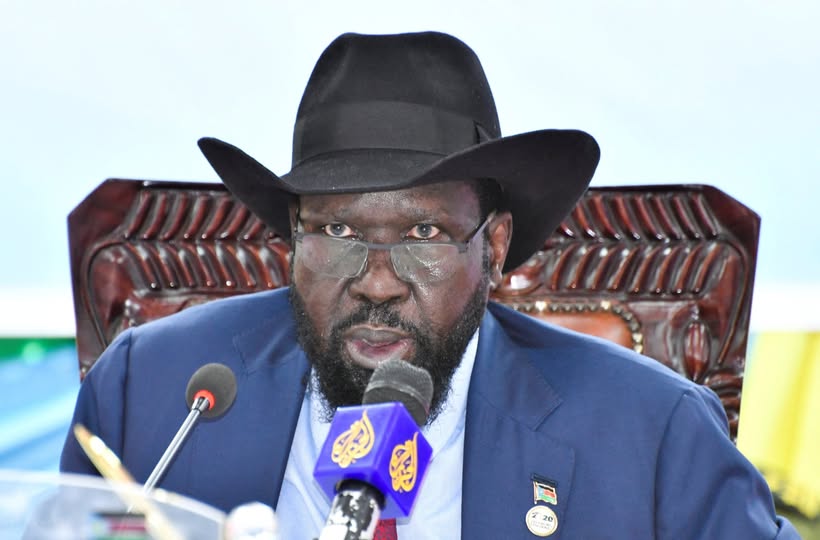
President Salva Kiir Mayardit has dismissed and appointed 11 members of the Transitional National Legislative Assembly (TNLA) in a move that reshapes the parliamentary representation of the main opposition SPLM-IO and deepens political tensions within South Sudan’s fragile transitional government.
The changes were made through a Republican Decree issued on 7 January, citing Article 106A(2)(a) of the Transitional Constitution and Section 38(1) of the Interpretation of Laws and General Provisions Act of 2006.
The affected seats are those allocated to the SPLM-IO under the 2018 Revitalized Agreement on the Resolution of the Conflict in South Sudan (R-ARCSS).
South Sudan’s bicameral legislature comprises 650 members, including 550 lawmakers in the TNLA and 100 members of the Council of States, drawn from the ruling SPLM party, opposition groups, former detainees and other political formations as stipulated in the peace deal.
According to decrees seen by Radio Tamazuj, President Kiir revoked the appointments of 11 SPLM-IO lawmakers loyal to detained First Vice President Dr. Riek Machar, who is currently facing treason charges before a special court in Juba.
Those removed include Joseph Malwal Dong, Kuong Dak Wie, Sandra Bona Malwal, Wieu Kun Kuiyang, Stephen Bol Ley, Hassan Zaid Kinnga, Zainab Khamis Lorumu, Gatkuoth Wat Joar, Pech Nyawele Bol, Zandia Julli Madit, and Jambiel Maani Jambiel.
Joseph Malwal Dong is a senior figure within the SPLM-IO, serving as the party’s focal person in Juba and a member of its Political Bureau, making his removal particularly significant within opposition circles.
In a separate decree, President Kiir appointed 11 new lawmakers drawn from the SPLM-IO interim leadership headed by Peacebuilding Minister Stephen Par Kuol.
The interim faction emerged in April 2025, following the detention of Dr. Machar, and has since been recognized by the presidency as the legitimate representative of the SPLM-IO within the government.
The newly appointed MPs include Elizabeth Kanyang Andrew, Nuer Diang, Buom Tai Gatluak, Zechariah Ater Joseph, Santino Riak Maker, Makuach Teny Youk, and Charles Wiyual Yoh, among others.
President Kiir’s camp argues that recognizing the interim SPLM-IO faction is necessary to ensure continuity in governance, advance implementation of the peace agreement, and prepare for the general elections scheduled for December 2026.
However, the Machar-loyal SPLM-IO Political Bureau in Juba has strongly condemned the decision, describing it as a unilateral violation of the 2018 peace agreement.
In a statement dated 12 January, the group said the removal of 11 MPs alongside the earlier dismissal of three SPLM-IO cabinet ministers forms part of a broader campaign to purge the opposition from key power-sharing structures.
The statement, signed by Joseph Malwal Dong in his capacity as chairperson for foreign affairs and focal person of the SPLM-IO Political Bureau, warned that such actions risk undermining trust among the peace partners and destabilizing the transition.
The parliamentary shake-up comes against the backdrop of recent amendments approved by the presidency and cabinet to key provisions of the 2018 peace agreement.
The changes delink the December 2026 elections from the permanent constitution-making process, a national census and other institutional reforms, and remove clauses stating that the peace agreement takes precedence over the constitution.
Critics, particularly within the Machar camp, say the amendments and recent decrees reflect a pattern of centralizing power ahead of elections, while supporters argue they are pragmatic steps to break political deadlock after years of missed timelines.
The 2018 peace agreement signed by President Kiir, Dr. Machar and other political leaders has suffered repeated delays, with elections postponed several times.
While the government maintains that December 2026 is now a firm date, Machar loyalists contend that recent decisions were taken without inclusive consultations, raising fresh questions about the credibility of the transition and the sustainability of the peace process.