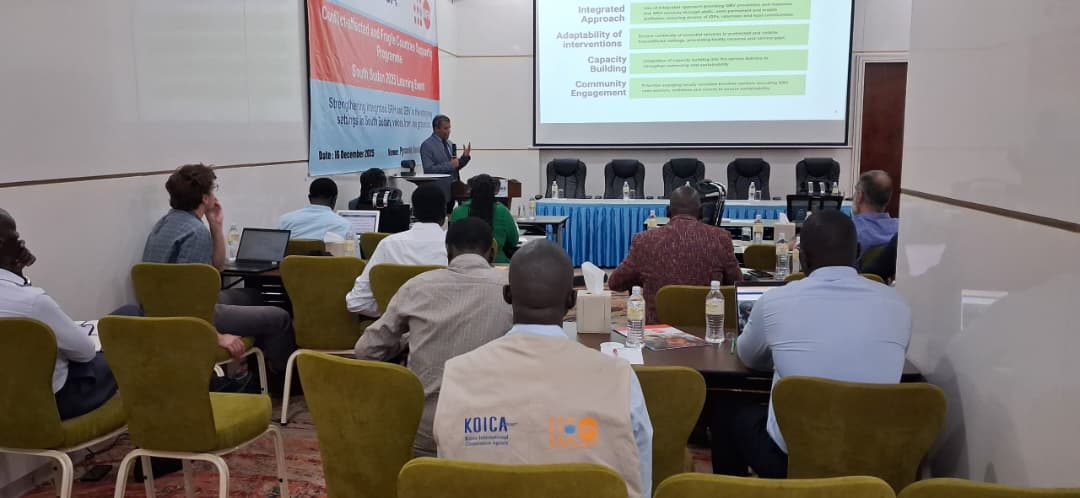
Policymakers, humanitarian actors, youth representatives, and development partners gathered in Juba this week to assess progress and persistent gaps in the delivery of sexual and reproductive health (SRH) services and protection from gender-based violence (GBV) in emergency settings across South Sudan.
The meeting, the KOICA–UNFPA 2025 Annual Learning Event, was held at the Pyramid Hotel under the theme “Strengthening Integrated SRH and GBV Services in Emergency Settings in South Sudan: Voices from the Grassroots.”
It brought together officials from relevant government ministries, civil society organizations, UN agencies, and international partners to reflect on what is working, what is not, and what must change as humanitarian needs continue to rise.
More than a decade after independence, South Sudan remains gripped by protracted conflict, displacement, economic instability, and climate-related shocks that continue to undermine access to basic services.
The situation has been further strained by the arrival of more than 2.8 million refugees and returnees from neighboring Sudan, placing immense pressure on fragile health and protection systems.
Women, adolescent girls, and young people remain disproportionately affected.
Maternal mortality rates in South Sudan are among the highest globally, while gender-based violence remains widespread yet significantly underreported due to stigma, insecurity, and limited access to services particularly in displacement sites and hard-to-reach areas.
For many communities, lifesaving SRH and GBV services remain out of reach because of long distances to facilities, insecurity along travel routes, weak infrastructure, and limited information.
Despite the challenges, participants highlighted tangible gains achieved through the KOICA-funded Conflict-Affected and Fragile Countries Supporting Programme (CFP), implemented by UNFPA in partnership with government institutions and local organizations.
In 2025 alone, the programme reached 53,792 people with integrated SRH and GBV prevention and response services.
These included mobile clinics, community outreach activities, referrals, psychosocial support, and youth engagement initiatives aimed at reaching populations in areas where health facilities are non-functional or inaccessible.
Implementing partners emphasized that integrated service delivery linking health care with protection and psychosocial support has helped restore trust and dignity for survivors and vulnerable groups.
“These services go beyond medical care,” one partner told participants. “They are about safety, dignity, and ensuring women and young people know where to seek help during crisis.”
A key highlight of the discussions was the growing role of youth-led initiatives supported under the programme.
Youth groups have been actively involved in peer education, community awareness, referrals, and addressing harmful social norms that fuel violence and limit access to SRH services.
Participants noted that when young people are meaningfully engaged, they become trusted messengers within their communities, helping to break silence around GBV and promote timely access to care.
Unlike traditional donor review meetings, the learning event placed strong emphasis on grassroots perspectives. Community representatives and frontline service providers shared practical lessons on enabling access to SRH and GBV services in emergency contexts.
Among the key challenges identified were service disruptions due to insecurity, limited availability of youth-friendly SRH services, funding constraints affecting programme continuity, and logistical barriers during seasonal flooding.
Climate-related stocks were cited as an emerging threat, increasing displacement and protection risks for women and girls while disrupting service delivery.
Government representatives underscored the importance of aligning humanitarian interventions with national priorities and strengthening coordination between humanitarian and development actors.
They also called for sustained investment in local systems to ensure long-term impact.
As discussions turned toward 2026 and beyond, participants stressed that gains made through integrated programming must be protected and scaled up.
Lessons from the CFP will inform future planning, with a focus on expanding community-based responses, strengthening referral pathways, and ensuring youth participation remains central.
The meeting concluded with a shared call for continued partnership, flexibility, and sustained commitment in a context where humanitarian needs continue to outpace available resources.
For many participants, the event served as a reminder that behind every statistic is a person navigating crisis and that solutions shaped by the voices of affected communities can transform humanitarian assistance from short-term relief into lasting impact.