
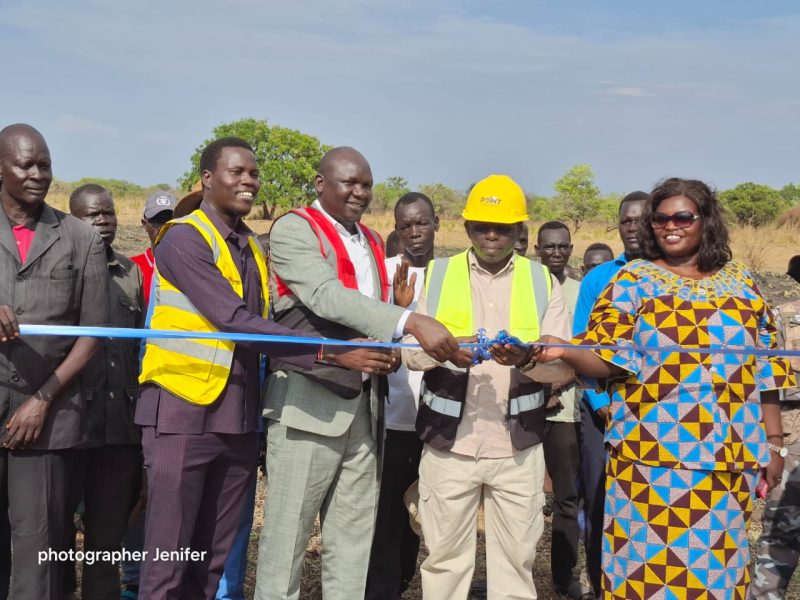
Authorities in Central Equatoria State have launched the construction of a water reservoir in Central Mundari of Terekeka County, a project aimed at reducing cattle migration and preventing conflict between pastoralist and farming communities.
The initiative was officially launched in the Reggo and Rijong area by state and county leaders, with support from the United Nations Mission in South Sudan (UNMISS) under its Quick Impact Projects program.
Speaking during the launch, State Minister of Peacebuilding Jacob Aligo said the project seeks to address water shortages that have long forced cattle keepers to migrate to neighboring areas.
“We came here to launch the construction of a water reservoir which was initiated last year,” Aligo said.
“Water scarcity has been one of the major factors pushing cattle herders to migrate, and this often leads to conflict with other communities.”
Aligo added that providing reliable water sources within the county will help reduce seasonal movement of livestock and improve stability in the area.
State Minister of Agriculture, Environment and Forestry Lily Kafu said the project will also contribute to climate change adaptation and environmental protection in the region.
“South Sudan, like many African countries, is experiencing the effects of climate change,” Kafu said.
“This water catchment will help reduce migration of both people and cattle while supporting agriculture and environmental restoration.”
She added that improved water access could encourage communities to expand farming activities and tree planting.
The reservoir project is being implemented by Salaam Junub Organization as part of peace resolutions reached during local dialogue processes aimed at addressing cattle-related conflicts.
Executive Director Bush Buse said the reservoir will cover about 3,200 square meters and store up to 20 million liters of water, enough to support livestock during the dry season.
“The water stored here could sustain around 5,000 cattle and between 10,000 and 15,000 goats for up to four months,” Buse said.
“This will help reduce seasonal migration to counties like Juba, Lainya, Morobo and Yei.”
However, he emphasized that more projects will be needed to fully address water shortages across the county.
“This is only the beginning,” Buse said. “If partners want to reduce recurring conflicts in Central Equatoria, more reservoirs and environmental restoration initiatives will be necessary.”
Terekeka County Commissioner Emmanuel Loku Lodu welcomed the project, saying it could help reduce tensions caused by cattle movement into farming areas.
“When cattle move in search of water, they often destroy farms and create disputes,” Lodu said.
“By keeping cattle closer to water sources here, we can improve security and protect farmers’ livelihoods.”
Local authorities expressed hope that the success of the reservoir will pave the way for additional water infrastructure projects across other parts of Terekeka County.