
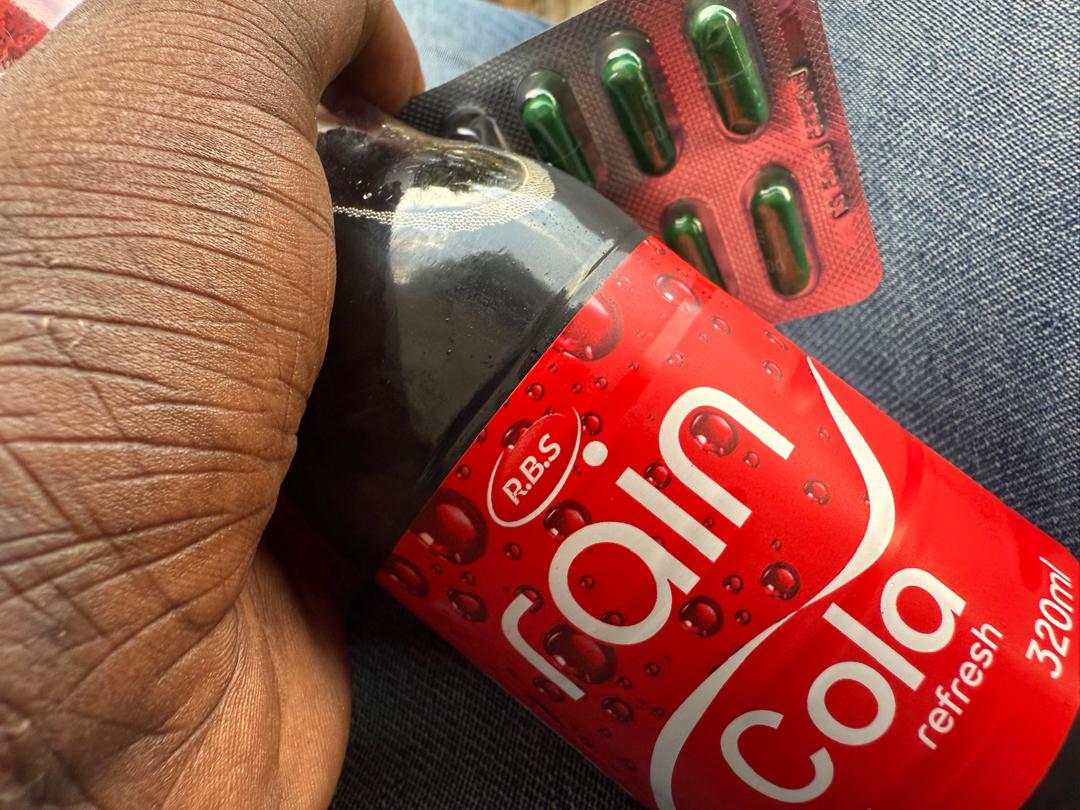
Nelson Mandela (not his real name) holds the handlebars of his boda boda, his eyes focused but distant. At 26, he is one of many young men in Juba battling not just the brutal competition of the city’s transport sector, but a growing addiction to Tramadol.
For Nelson, the drug isn’t merely about getting high, it is about survival in the crushing economy. Since being introduced to it by a friend in 2023, he has relied on it just to function.
“When I take the Tramadol, I lose appetite, I don’t feel hungry,” Nelson shares. “It also makes me not to get tired when I am doing some work. Sometimes the Tramadol makes me work even the whole day.”
He swallows three or four tablets at once. The drug silences the world around him, he doesn’t feel like talking and doesn’t want to hear noise.
But this chemical stamina comes at a deep human cost. Nelson describes a cycle of social isolation and physical dependence.
“If I take, I don’t feel like talking with anybody… if I don’t take, I feel weak, headache… Sometimes, it makes the body shiver.”
He is the face of a silent epidemic. Across Juba, young men in physically punishing jobs, rickshaw drivers, laborers, motorcycle taxi riders, are self-medicating with Tramadol, an artificial opioid meant for moderate to severe pain (post-surgical) to numb pain and push through exhaustion. They have repurposed a post-surgical painkiller into a productivity tool and an escape the harsh economic reality.
Peter Moses (real name withheld), a 22-year-old rickshaw driver, tells a similar story. He knows the drug is a painkiller, but for him, it is fuel. The unforgiving potholes of Juba’s roads hammer his body, leaving him in pain by midday. Introduced to the drug by friends, he now consumes up to eight tablets a day to cope.
“The reason I started was to reduce the pain,” he explains. “For us who ride every day, you feel body pain.”
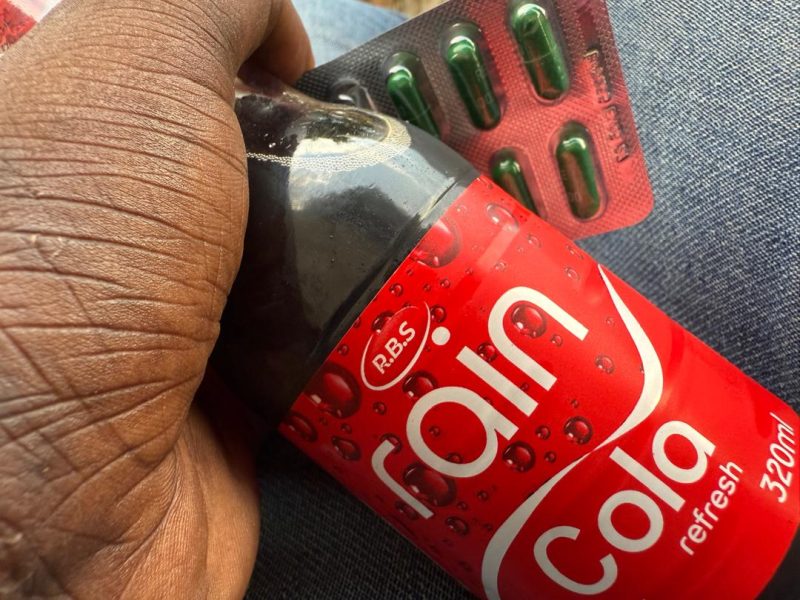
He describes a ritual that has become routine among users. “I don’t swallow it with capsule case. I get the powdered granules, pour them into tea or water, and drink. It makes me concentrate. It helps me work hard.”
But the price of this productivity is high on his body. Moses admits to feeling sharp pain beneath his belly button alongside persistent headaches.
“I want to leave it because I want to get married,” he says, hinting at a fear common among users that the drug will rob them of their fertility and their future.
While youth view Tramadol as a tool for labor or excitement, Dr. Luka Dut, Secretary General for the South Sudan Doctors’ Union, argues that current misuse is a biological catastrophe in motion.
“Tramadol is one of the most abused drugs by teenagers and boys in their early twenties. Mostly, we observe that among boys and among some children,” Dr. Dut explains. “They take it for enjoyment.”
Dr. Dut warns that this unregulated consumption has diverse effects on the body, ranging from drowsiness to hypertension, however, the medical reality is often far uglier.
“One of the severe forms of adverse effects is hypotension. Someone may become hypotensive and then, most of the time, they die,” Dr. Dut says. “When somebody takes an overdose of Tramadol… they really don’t know that they need treatment at this particular time. They may remain down and then they die.”
He notes that while the maximum recommended dose is 300mg taken in divided doses throughout the day, young men are consuming massive amounts at once.
“They may end up taking 300mg at once. Which is lethal,” Dr. Dut warns. “Long-term complications include physical dependence and addiction. You may realize that most of the young men, when they become addicts, they neglect their physical appearance… they don’t take their personal hygiene seriously.”
Beyond the individual health risks, Dr. Dut fears that this health crisis is having a ripple effect on the country’s economy.
“Somebody who is addicted to Tramadol is not of benefit to the economy, is not productive. If you have a lot of people who are not productive in your society, then your Gross Domestic Product is going to drop.”

The enforcement void
The supply chain fueling this crisis is open and aggressive. While in some areas in South Sudan the drug is distributed under strict regulations, Tramadol is surprisingly affordable and readily available throughout Juba. A pack of ten tablets costs approximately 5,000 South Sudanese Pounds, with clinics and pharmacies serving as primary distribution points.
“We don’t always buy from the clinics,” Nelson says. “There are other dealers without medical backgrounds in the residential areas who buy from the clinics and sell them.”
Under South Sudan’s Drug and Food Control Authority Act (2012), only licensed pharmacists, doctors, dentists, or veterinarians are permitted to prepare, prescribe, or dispense restricted medicines.
However, the reality on the streets tells a different story.
“Due to the high demand, there is a lot of money in it,” Nelson explains. “These clinics are making money out of it. You just go and give them money, they will give you.”
Dr. Dut acknowledges the gap between policy and practice. “As a doctors’ union, we really don’t regulate. We are not a regulatory body. We have seen it being given over-the-counter,” he admits.
He calls for ethical responsibility among dispensers but recognizes the difficulty. “We have to live up to our ethics so that we cannot sell Tramadol and other prescription-only medicines to children, regardless of how much they are paying us.”
Broken social fabric
Beyond the clinics and the streets, the crisis is tearing at the social fabric of Juba. Ador Akoi, a project development officer at the South Sudan Human Rights Defenders Network (SSHRDN), attributes the surge in usage to a breakdown in family structures and state support.
“First of all, we are a huge family where a father has almost like 30 kids, taking care of all these kids is not easy,” Ador explains. “So, you find many kids are neglected… Secondly, many young people right now are loitering around with no jobs.”
He argues that the government has partly contributed to this crisis by failing to create a conducive environment for the youth, creating a dangerous link between drug abuse, mental health, and violence.
“We have issues to do with mental stress and anxiety that is so much higher among the young people… waking up in the morning and spending almost 12 hours doing nothing,” Ador says. “So, you find most young people engaging themselves in Tramadol to ensure that they forget the stresses of the day.”
This escapism has a violent side effect in the society. Ador notes that Tramadol instills a ‘no fear attitude’ that fuels gang violence.
“It promotes that uncontrollable anger amongst our youth. Tramadol abuse makes a lot of young people not to feel the pain and not feel like they want to be able to think without the fear of repercussion.”
Currently, the security response appears to be failing to curb the misuse.
“You realize that there is a failure of our security system… some kids that are actually in the gangs are freely roaming, but most people that have been arrested, some of them might not even be the gang members,” Ador observes.
While police in states like Western Equatoria and Jonglei have launched campaigns, threatening three-year sentences for abusers, the supply from unregulated clinics and shadow dealers continues unabated.
Call to action
The abuse in South Sudan is not an isolated incident but part of a larger, continental trend. While there are no comprehensive, nationwide prevalence statistics for the country, the Pharmaceutical Society of South Sudan has issued repeated warnings about the growing misuse of Tramadol, often alongside morphine and alcohol, particularly among the youth in Juba.
This reflects findings from a 2022 United Nations Office on Drugs and Crime (UNODC) report, which highlighted high diversion and misuse across sub-Saharan Africa, a major concern also flagged by the World Health Organization (WHO).
From Nigeria to Ghana to Libya, Tramadol has become the ‘opioid of the overlooked, smuggled in vast quantities and sold as a cure for the hardship of manual labor and a lotion for hopelessness.
In Juba, it finds fertile ground in a nation still healing from conflict, with a massive youth bulge and limited opportunities. The drug promises superhuman endurance, but as Nelson and Moses attest, it delivers only dependency, draining a generation of its future one pill at a time.
The solution, however, cannot be fought on a single front. It requires a concrete, multi-stakeholder strategy that bridges the gap between law enforcement, healthcare, and community support.
For the government and police, activist Ador says the crackdown cannot simply be about arrests, it must target the unregulated supply chains and enforce the 2012 Drug and Food Control Authority Act to stop pharmacies from prioritizing profit over safety.
Furthermore, Ador urges the government to look beyond policing and improve the health sector, “in particular things to do with establishing mental health facilities.”
At the community level, Ador suggests the answer lies in restoring social cohesion and investing in social infrastructure.
“My appeal will be for community elders to work closely with each other and put aside these political ideologies… and try to bring this madness to a stop.”
For Dr. Dut, it is a collective responsibility to ensure the abuse of tramadol is put to an end. “It is upon ourselves to protect our children from abuse,” Dr. Dut states. “They are our next generation… But we are now allowing them to be consumed by this drug abuse.”
This story is reported with a grant from Journalists for Human Rights under the ‘Tackling Mis/Disinformation Project,’ funded by the Peace and Stabilization Program of the Government of Canada.