The Troika Capitals, comprising the United States, the United Kingdom, and Norway have renewed pressure on South Sudan’s leaders, warning that the country is sliding dangerously back toward widespread conflict due to the continued failure to implement the Revitalized Agreement on the Resolution of the Conflict in South Sudan (R-ARCSS).
In a joint statement issued more than seven years after the signing of the peace deal, the Troika recalled that the agreement was meant to end years of brutal conflict that followed South Sudan’s independence and to place the country on a path toward stability, democratic governance, and prosperity.
While the agreement initially raised hopes among South Sudanese and the international community alike, the Troika said those hopes have largely gone unfulfilled.
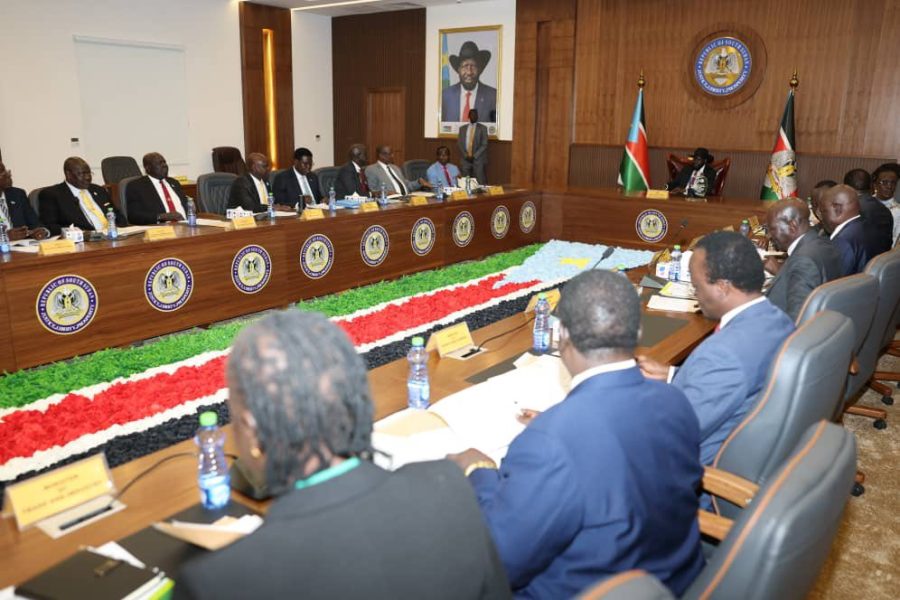
According to the statement, President Salva Kiir is meant to be leading a transitional government of national unity under the R-ARCSS.
However, the Troika noted that the government has failed to live up to this mandate, citing persistent violations of power-sharing arrangements, lack of meaningful progress on key provisions of the peace deal, and continued unilateral political and security reshuffles that undermine trust and stability.
The Troika also expressed deep concern over governance and economic mismanagement, saying public resources continue to be misused while civil servants go unpaid for months.
Despite South Sudan’s significant oil revenues at independence, the country has since fallen to become the world’s poorest and one of its most corrupt, the statement said.
As a result, international donors are now spending far more on providing basic services such as health care, education, and humanitarian assistance than the transitional government itself.
Most alarmingly, the Troika warned of a resurgence of armed conflict across several parts of the country. It cautioned that a return to violence on the scale witnessed in 2013 and 2016 would be catastrophic for the people of South Sudan and would further destabilize the wider region, which is already under strain from ongoing conflict in neighboring Sudan.
“For the good of the people of South Sudan and for the sake of regional stability, South Sudan’s leaders must urgently reverse course,” the Troika said, calling on all parties, particularly the SPLM-IG and SPLM-IO to immediately cease hostilities, return to the nationwide ceasefire, and resume sustained, leader-level dialogue.
The Troika further demanded an end to aerial attacks against civilians, the release of political detainees, and the proper use of public revenues to pay public sector salaries and fund essential services, including health and education.
It also urged the transitional government to stop interfering in the work of humanitarian organizations and international partners.
Particular concern was raised over restrictions placed on the United Nations Mission in South Sudan (UNMISS), including obstruction of peacekeepers’ movements and delays in granting departure clearances.
The Troika described such actions as unacceptable and said they must cease immediately.
In concluding, the Troika called on South Sudan’s regional neighbors and international partners to present a united front, stressing that “enough is enough.”
The statement emphasized that only through concrete actions to restore peace, uphold the R-ARCSS, and rebuild trust with citizens and the international community can South Sudan regain global support, attract investment, and earn international respect.