Authorities in Unity State have called for sustained commitment from the government and development partners to continue supporting communities affected by conflict and flooding across the state.
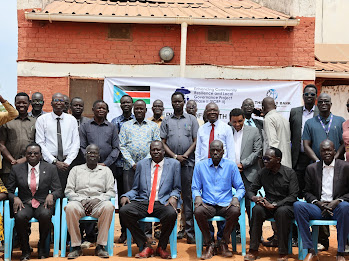
The appeal was made during a two-day engagement workshop held in Bentiu, where stakeholders emphasized the urgent need for continued assistance to communities facing a growing humanitarian situation caused by both armed conflict and climate-related disasters.
At the launch of the workshop, Acting Governor of Unity State, Tot Dhiaydor Turoal, said the gathering is vital for strengthening cooperation between different levels of government and development and humanitarian partners.
He said the workshop provides an important platform for stakeholders to review achievements, discuss challenges, and coordinate efforts aimed at supporting vulnerable communities across the state.
The acting governor also appealed to the Ministry of Finance and Planning and development partners particularly the World Bank to continue supporting the people of Unity State, noting that many communities remain in urgent need of humanitarian and development assistance.
“This project has contributed immensely to different communities and has achieved a lot of things. We, the government of Unity State, are grateful for this project because it has sustained the lives of many,” Turoal said.
The workshop aims to strengthen relationships among national ministries, state institutions, and county administrations while improving coordination among development partners working in the state.
One of the key objectives of the engagement is to support the state government in revitalizing the State Coordination Team (SCT), which serves as a formal mechanism for engagement, oversight, and follow-up under the Enhancing Community Resilience Project II (ECRP II).
Officials say the process will also help build consensus among stakeholders on validated Terms of Reference (TOR) and agreed coordination actions to improve the implementation of development programs in the state.
Droma Bank Dominic Kat, an Urban Specialist and Co–Task Team Leader from the World Bank, said the meeting provides an opportunity to identify coordination gaps, oversight challenges, and potential risks that could affect project implementation.
He stressed that strengthening coordination between national and local authorities is crucial for ensuring accountability, transparency, and effective delivery of development programs.
“Enhanced intergovernmental collaboration will be critical to delivering sustainable and resilient outcomes for the people of Unity State,” he said.
Meanwhile, Project Manager Guyson expressed appreciation to the state government particularly the Ministry of Local Government and Law Enforcement Agency for closely monitoring the project’s progress.
He also commended the World Bank for providing financial assistance through the Ministry of Finance and Planning, noting that the Project Management Unit remains committed to implementing the resolutions reached during the workshop.
“We want to make sure that the coordination of development projects in Unity State is properly and consistently done to ensure the resources put here are utilized,” he said.
The workshop has brought together representatives from national ministries, state ministries, and county governments to agree on practical actions aimed at strengthening information sharing, accountability, and joint planning for the effective implementation of development projects.
Michael Majok Agar, National Chairperson of the Local Government Board, said strengthening coordination at the state level is essential for improving accountability and ensuring effective service delivery.
“Through this workshop, we are revitalizing the State Coordination Team as a formal mechanism for engagement, oversight, and follow-up. This process ensures that state and county authorities work together, share information, and take joint responsibility for results,” he said.
The Enhancing Community Resilience Project II is a five-year initiative financed by the World Bank and implemented by the Government of South Sudan through the Ministry of Finance and Planning, in partnership with the Local Government Board and international organizations including International Organization for Migration, World Vision International, and International Rescue Committee.
The project is currently being implemented in six states and two administrative areas across the country and aims to improve access to basic services, strengthen flood resilience, and enhance institutional capacity for local service delivery and disaster risk management.
Officials say that by March 31, 2027, the project is expected to benefit more than 950,000 people through improved and reliable access to essential services.
Participants at the Bentiu workshop expressed hope that stronger coordination between government institutions and development partners will help ensure the successful implementation of the project and improve living conditions for communities across Unity State.