The United States has sharply criticized South Sudan’s leadership following the renewal of the mandate for the United Nations Mission in South Sudan (UNMISS), revealing that peacekeeping operations were obstructed hundreds of times in recent months.
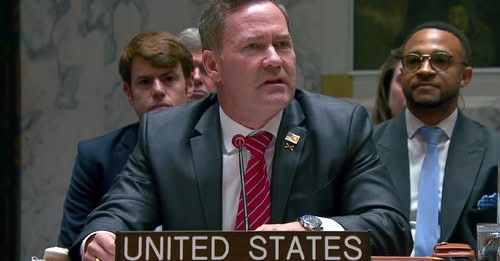
Addressing the UN Security Council, U.S. Ambassador Mike Waltz said the mission recorded more than 480 Status of Forces Agreement (SOFA) violations between October last year and March, describing the figure as evidence of systematic obstruction by the host government.
“These are not minor incidents,” Waltz said. “They represent repeated instances where peacekeepers were blocked, humanitarian access denied, flights disrupted, and operations forced to shut down—costing millions of dollars and undermining the mission’s effectiveness.”
The United States voted in favor of extending UNMISS’s mandate but made clear that its support is conditional on meaningful changes, both within the mission and from South Sudan’s leadership.
Washington is pushing for a streamlined mandate that prioritizes core responsibilities such as civilian protection, humanitarian access, and accurate reporting.
Waltz directly blamed the government of President Salva Kiir for what he described as a steady reversal of progress, accusing authorities of exploiting international support while failing to uphold commitments to peace.
“The core problem is a host government that actively undermines its commitments,” he told the Council, adding that continued obstruction raises serious concerns about the country’s willingness to cooperate with international partners.
The ambassador also painted a grim picture of the human cost of the ongoing crisis, citing displacement, violence, and restricted humanitarian operations.
He said ordinary South Sudanese continue to bear the brunt of insecurity despite years of peacekeeping efforts and international assistance.
Negotiations over the mandate renewal, he noted, had focused too heavily on minor technical adjustments while ignoring deeper structural challenges particularly tensions between the government and UNMISS that have persisted for more than a decade.
Waltz further questioned the credibility of South Sudan’s planned elections, pointing to delays in key reforms, lack of funding, and the absence of inclusive political dialogue.
He stressed that credible elections cannot take place unless the provisions of the 2018 peace agreement are fully implemented and political actors are allowed to participate freely.
He also warned that future U.S. support, including funding for electoral processes, would depend on whether South Sudan’s leaders commit their own resources to governance, public services, and democratic preparations.
“Peacekeeping missions are not meant to be permanent,” Waltz said. “They are meant to help countries stabilize and eventually stand on their own. That cannot happen if commitments continue to be ignored.”
The United States concluded by urging South Sudan’s transitional government to demonstrate genuine political will, warning that international patience is wearing thin as the country continues to struggle with insecurity and stalled reforms.