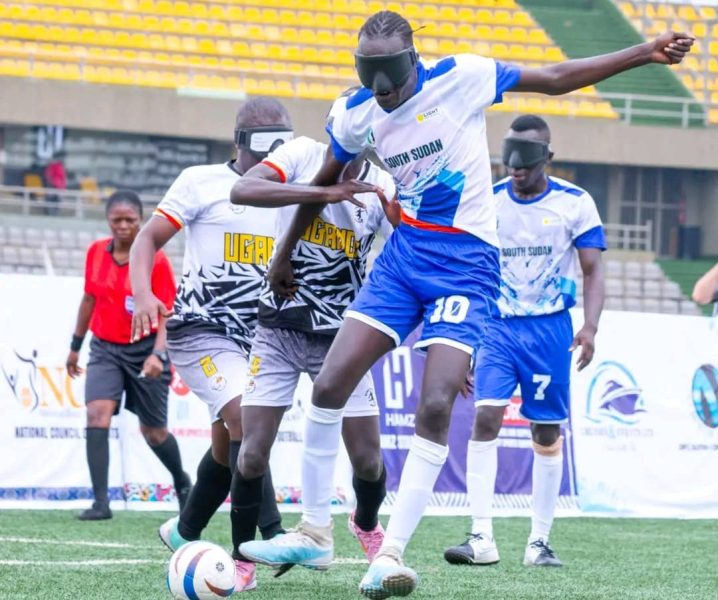
Their journey to Kampala began on a crowded bus, not by choice, but because there were no funds for flights. Even after winning a trophy that should have sparked national pride, they returned to Juba the same way: quietly, without fans, cameras, or officials to welcome them.
The National Bright Star Men’s Blind Football Team has long trained under harsh conditions worn-out boots, inconsistent meals, and balls stitched repeatedly, yet their determination to represent South Sudan has never wavered.
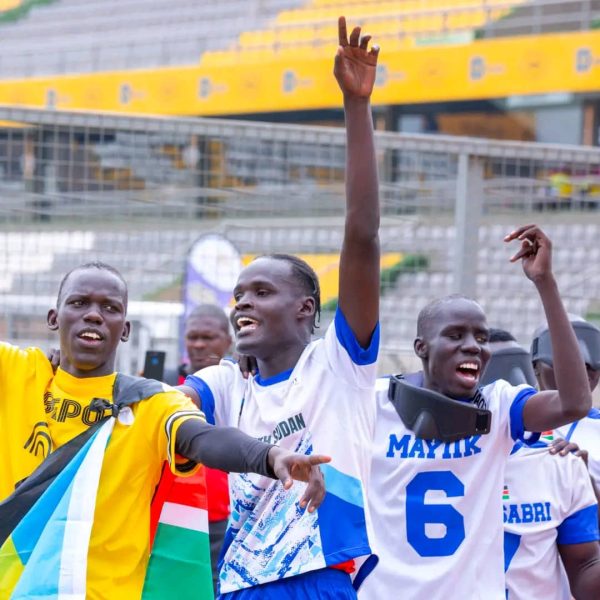
When they returned, they came back as history-makers. After defeating hosts Uganda 3–0 and outclassing Zimbabwe 2–0 in both the opening match and the final, the team earned the unthinkable, a spot for South Sudan at the 2028 Paralympic Games in Las Vegas and promotion to Africa’s Blind Football Division One.
They also brought back a trophy, a golden Hand for best goalkeeper, a golden player award, and golden Shoes for best scorer.
It was a victory any nation would celebrate. Yet at home, their story remained largely invisible. This is the truth behind South Sudan’s unseen victory.
Captain Martin Ladu still speaks with disbelief when recalling the moment history shifted.
“We didn’t expect to win, but we believed in ourselves. Our coaches encouraged us. We cooperated. That is why we succeeded in Kampala,” Ladu said in an exclusive interview with Standard Zone News.
Ladu played nearly every role on the field defending, creating, scoring. He assisted five goals, scored three, and delivered a breathtaking brace in the final. Yet behind his brilliance lies a harsher reality.
South Sudan does not have a single accessible, standard blind-football pitch. Their only training space, Dr. Biar Field, is hired through support from Light for the World.
“This team is not for Light for the World,” Ladu stresses. “It is a national team. It needs government support. We cannot go far without it.”
“Neglect didn’t stop us. We rose above it and succeeded,” he said.
For him, the victory should serve as a wake-up call for the government to recognize persons with disabilities as capable, valuable citizens deserving proper support and acknowledgment.
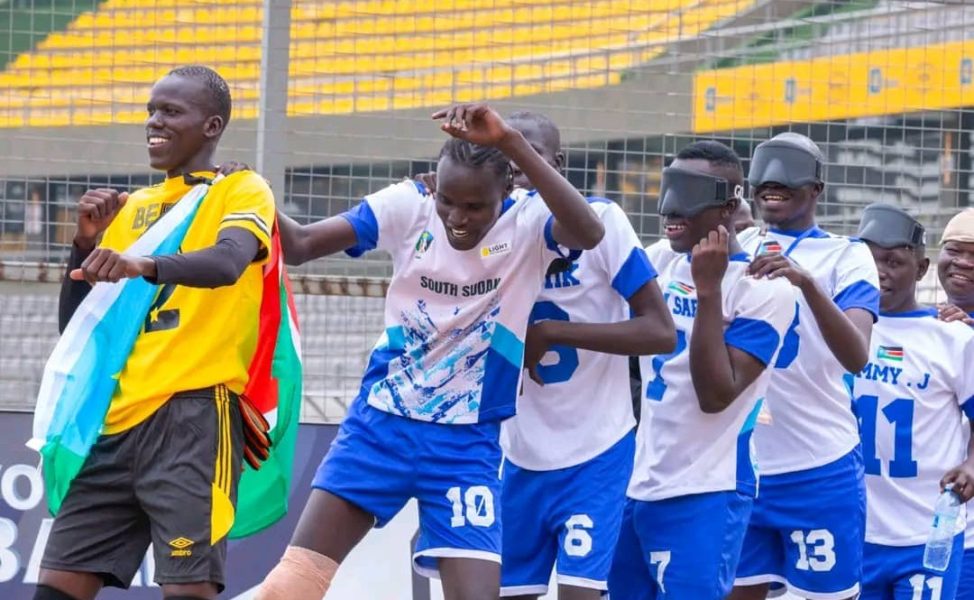
Goalkeeper Charles Bepo, who won the tournament’s Golden Hand after conceding zero goals, describes a journey defined not only by skill but by survival.
He recalls days without water, breakfast lines where players went hungry, and matches played only hours apart due to compressed scheduling.
“No matter the challenges, our target was to win. We told each other: don’t focus on the problems. Focus on why we came here,” he added.
It worked. South Sudan became the African Division Two Champion.
For the players, the hardest opponent wasn’t Uganda or Zimbabwe, it was invisibility.
Ladu felt the team deserved a warm, king-like reception, much like the national basketball side received after qualifying for the FIBA World Cup.
“We expected a strong reception similar to the basketball team. Ours is a historic trophy, the first of its kind and it deserves recognition,” he stated.
Coach Simon Akol Maduol reflected with emotion on the long journey his blind football team has endured, noting that the biggest challenges stem from society’s attitudes toward people with disabilities.
“From the start, we have faced more obstacles from people than from the sport itself,” he said.
“Many still doubt that blind football is possible, and some families stop their children from joining because of fear, stigma, or the belief that it’s a waste of time.”
He thanked Light for the World and media partners for helping raise awareness, which he believes is slowly shifting public perception.
However, he noted that the team continues struggling with limited resources, especially specialized balls that must be imported, as well as the absence of a safe, level playground suitable for blind athletes who rely heavily on sound.
Despite these hardships, Coach Akol emphasized the team’s resilience and commitment, saying they remain determined to grow the sport and prove what blind athletes can achieve.
For human rights advocate Edmund Yakani, who leads CEPO in advancing rights and inclusion, the team’s victory is both inspiring and revealing.
“This team received no government support. But their success proves that disability is not inability. If we invest inclusively, South Sudan will make great history. These results place our country on the African and global map.”
The players brought back more than medals, they brought a challenge to the nation. Will South Sudan finally recognize athletes with disabilities as national athletes, not an afterthought?
“If South Sudan invests inclusively in all its people, we can create a history we will all be proud of — and these results already speak across Africa and the world,” Mr. Yakani added
Chris Darius, Vice President of South Sudan’s National Paralympic Committee, says the victory should be a wake-up call.
“These players went through difficult challenges but chose to continue. This win should make the country rise and support them. Without partners like Light for the World and CEPO, this history would not exist.”
Indeed, the government did not sponsor their trip, their training, or their logistics. Civil society and international partners carried the entire burden.
A government responds, cautiously
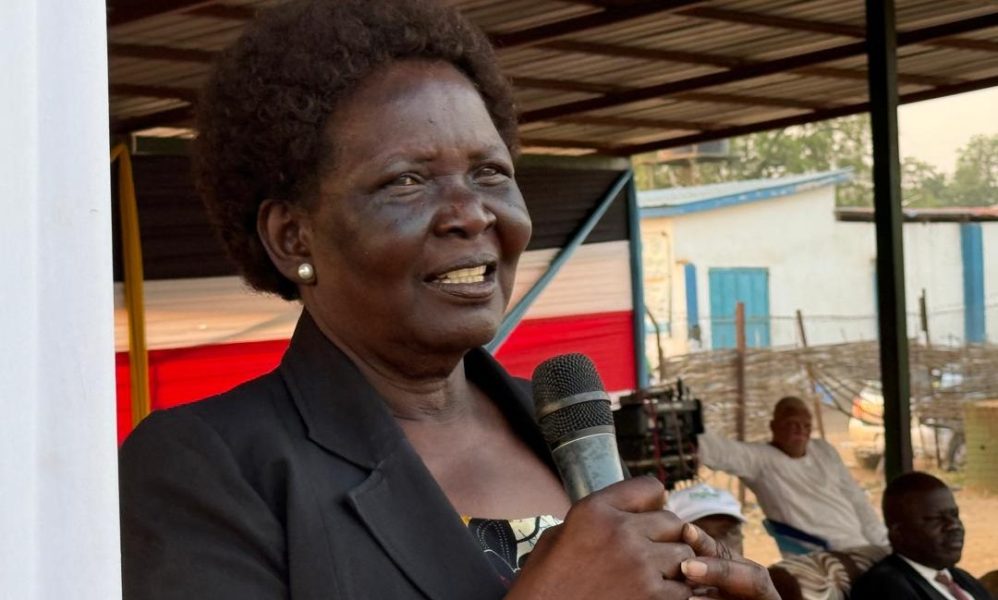
Joseline Samson, Director General at the Ministry of Youth and Sports, acknowledges that support has been lacking but insists it is not deliberate neglect.
“Yes, the ministry is aware of the challenges,” she says. “But the economic crisis has affected every sports body. Government has not abandoned them.”
She promises that going forward, the ministry will prioritize support for blind football “when resources are available.”
For many disability-rights advocates, however, this is a promise they have heard for years.
For sports reporters like Bullen Bala, covering disability sports comes with unique challenges.
“Disability sports often receive minimal support, and media focuses on events that attract bigger audiences, leaving the achievements of athletes like the Blind Bright Stars largely untold,” says sports reporter Bala.
As a result, the achievements of athletes with disabilities are frequently sidelined, their stories left untold despite historic accomplishments like those of the Blind Bright Stars.
More Than a Sports Achievement
The triumph of the Blind Bright Stars is more than a sporting victory, it shines a light on the deeper challenges facing persons with disabilities in South Sudan.
Their journey exposes a society where people with disabilities remain invisible in national planning, excluded from sports development and funding, and too often let down by broken promises in disability rights.
They are underrepresented in leadership and policymaking, left to fight for recognition and resources that should be theirs by right.
The team’s victory shows what happens when people are supported just enough to dream and hints at what more could be achieved with full inclusion.
It is for the youth inspired by their courage, for advocates pushing for recognition, and for decision-makers who determine whether athletes like Martin and Bepo get the resources they need.
Their victory, earned against a backdrop of neglect, shows how far determination can carry overlooked communities.
It also emphasizes why the government must start viewing persons with disabilities as essential citizens deserving investment and recognition.
South Sudan now has a blind football team standing among Africa’s best. They have earned a place at the Paralympics. They have raised the flag without the nation lifting them.
Imagine what they could do if that hand finally reached out.
Their journey is both a reminder and a warning: a nation that doesn’t support its heroes’ risks losing them. But a nation that embraces all its people, regardless of ability, writes a different history.
South Sudan’s blind football team has already done that. Now it is the nation’s turn to see them.
This story is reported with a grant from Journalists for Human Rights under the ‘Tackling Mis/Disinformation Project,’ funded by the Peace and Stabilization Program of the Government of Canada.