
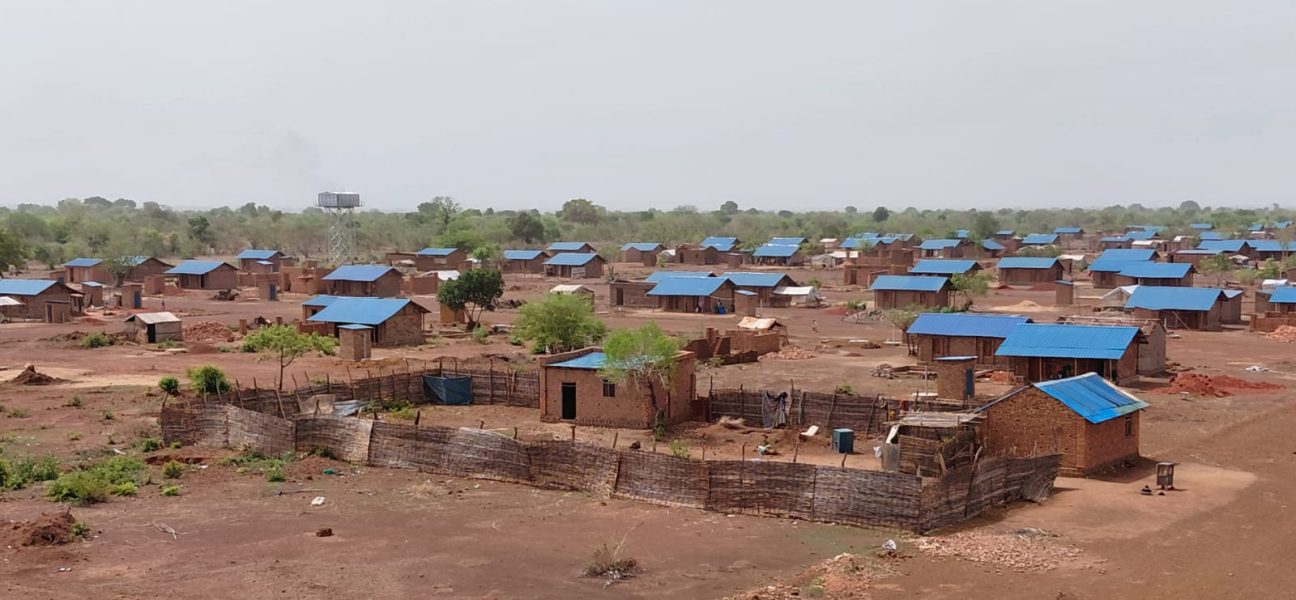
Authorities in Western Bahr el Ghazal State have officially closed the Protection of Civilians (PoC) site in Wau as hundreds of internally displaced families begin a new chapter in newly constructed homes in Khor Malang, Jur River County.
The closure follows the organized relocation of displaced households from the long-standing PoC site to a purpose-built residential area designed to provide safer, more dignified living conditions.
For many families, the move signals the end of years spent in overcrowded and uncertain camp environments.
Speaking during the handover ceremony in Khor Malang, state officials described the transition as a milestone in restoring normalcy and rebuilding lives disrupted by conflict.
Sheriff Daniel Sheriff, who welcomed dignitaries at the event, said the relocation reflects a broader commitment by the state government to move beyond emergency responses toward sustainable solutions.
“We have gathered here to witness the handover of these residential facilities to our internally displaced brothers and sisters,” he said. “This is a step toward dignity, stability, and a better future for our people.”
The newly established settlement includes more than just housing. Basic services such as clean water points, healthcare facilities, and a police station have been integrated into the site, transforming Khor Malang into a functional and secure community.
Authorities say these services are essential to ensuring that returnees not only resettle but also begin to rebuild their livelihoods.
The initiative aligns with a national directive by President Salva Kiir Mayardit to phase out PoC sites across the country and support the transition of displaced populations into permanent communities.
Western Bahr el Ghazal is among the first states to implement this policy, with officials highlighting the allocation of land and coordinated relocation as key achievements.
Humanitarian partners played a central role in the process. Representatives from the United Nations Mission in South Sudan (UNMISS) and the International Organization for Migration (IOM) attended the ceremony, underscoring the collaborative effort behind the project.
Muhammad Asar ul Haq, Head of Operations for IOM in South Sudan, said the development of Khor Malang was the result of years of planning and close cooperation between communities, government authorities, and international partners.
“I am deeply excited to see these buildings and the community here today,” he said.
“This project has taken three years to complete, and it reflects not only technical support but also strong community participation.”
He also acknowledged the role of UNMISS in facilitating land clearance and ensuring security, as well as the support of donors, including Norway, whose contributions helped bring the project to completion.
On behalf of the national government, Arop Mathiang Amiyock from the Ministry of Humanitarian Affairs and Disaster Management and the Relief and Rehabilitation Commission described the handover of more than 1,000 housing units as a foundation for long-term recovery.
“These keys open doors to safety, dignity, and the opportunity to rebuild livelihoods,” he said, calling for continued collaboration to expand similar initiatives across other parts of the country.
International partners echoed this sentiment, noting that Khor Malang represents more than a physical relocation.
Wasim Ul Haque, Head of Cooperation at the Embassy of Norway in South Sudan, said the transformation of the area stands as a symbol of resilience and partnership.
“This is not just a physical transformation, but a legacy built through shared commitment,” he said, recalling earlier visits to Wau when displaced families faced dire conditions. “Today, we are witnessing a new beginning.”
For residents, the transition brings both relief and cautious optimism. After years of dependency on humanitarian aid, families are now being encouraged to take ownership of their new environment, maintain the facilities, and foster peaceful coexistence within the community.
State authorities reaffirmed their commitment to supporting the settlement’s growth, emphasizing the need for sustained investment in services, infrastructure, and livelihood opportunities to ensure long-term stability.
The closure of the Wau PoC site and the relocation to Khor Malang reflect a broader shift in South Sudan’s approach to displacement from emergency protection toward durable, community-based solutions aimed at resilience and recovery.