
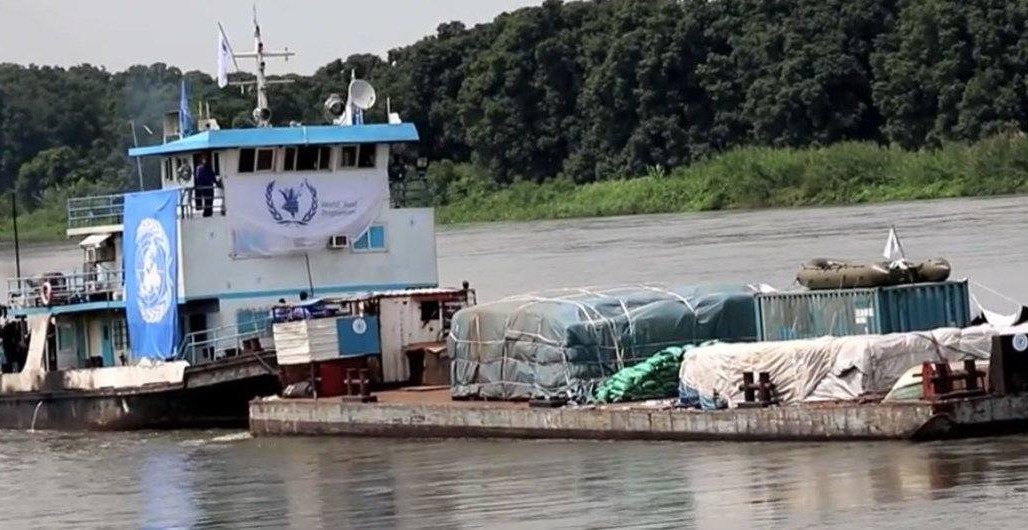
Western embassies and the European Union have condemned the attack and looting of a WFP river convoy in Upper Nile State, warning the incident threatens life-saving humanitarian operations.
In a joint statement, the embassies of Canada, France, Germany, Japan, the Netherlands, Norway, the United Kingdom, the United States, and the Delegation of the European Union said twelve WFP boats were attacked while transporting more than 1,500 metric tons of food destined for 73,000 vulnerable people in Baliet County.
“The convoy was carrying food assistance that could have fed 73,000 people for approximately two to three months,” the statement said.
“The looting of these supplies deprives families facing famine, malnutrition and displacement of critical support.”
The diplomatic missions urged South Sudan’s transitional government to act swiftly to recover the stolen food and other humanitarian resources taken from implementers during the attack.
“We call on the transitional government to take prompt action to recover the looted food and equipment,” the embassies said.
The donors described attacks on humanitarian operations as unacceptable, noting that such incidents directly threaten aid workers and disrupt emergency response efforts.
“Attacks on humanitarian and medical facilities are entirely unacceptable,” the statement said. “They violate commitments to protect those delivering assistance to people in need.”
The embassies also said government officials had previously assured aid agencies of security guarantees for humanitarian deliveries to Baliet County, commitments they say were not upheld.
“Transitional government officials broke promises to guarantee security for implementers delivering humanitarian assistance,” the statement noted.
Calling on South Sudan’s leadership at all levels, the donors urged authorities to create conditions that allow humanitarian agencies to operate safely and without obstruction.
“We call on South Sudan’s leaders, of all parties and at all levels, to ensure the unhindered delivery of assistance to people enduring famine, malnutrition, and conflict-driven displacement,” the embassies said.
The statement concluded with a broader warning, urging the government to support humanitarian actors rather than rely on emergency aid as a substitute for governance and accountability.
“As a recipient country, South Sudan should support those seeking to help its people in need and stop taking advantage of emergency assistance as a substitute for good governance and the appropriate use of public resources,” the embassies said.