Farmers in Yei River and Magwi counties have received climate-resilient seeds under a new agricultural initiative aimed at improving crop production and addressing persistent low yields in parts of South Sudan known for their fertile land.
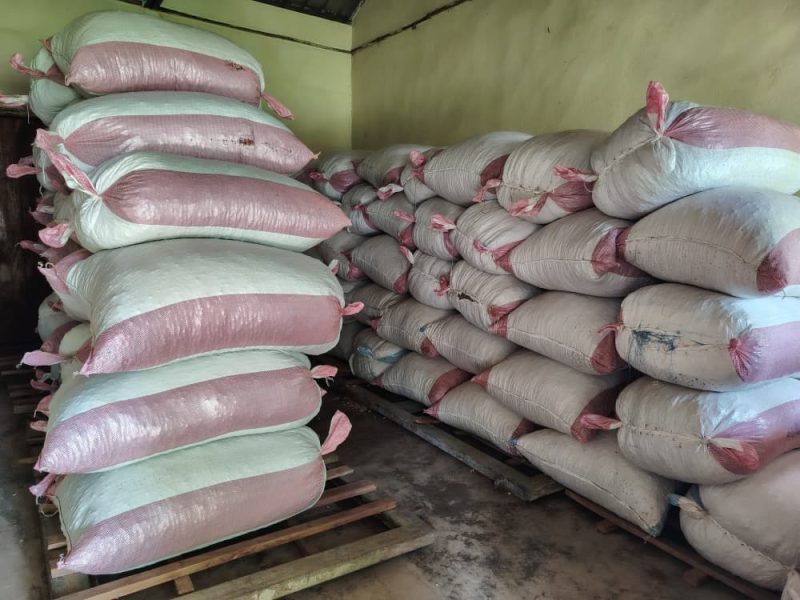
Under the initiative, eight metric tons of certified foundation seeds were distributed to 30 community seed multipliers across the two counties ahead of the planting season.
The seeds include maize, groundnuts, sorghum, soybean, and sesame varieties considered suitable for changing climate conditions and improved productivity.
Project officials said the initiative seeks to strengthen local food systems and help farmers adapt to increasingly unpredictable weather patterns affecting agricultural production.
“This intervention is intended to improve access to quality seeds and increase productivity among farming communities,” one agricultural officer involved in the project said.
“Farmers in these areas have fertile land and strong farming potential, but low-quality seed varieties continue to affect yields year after year,” the official added.
Agricultural experts involved in the project said many farmers in Yei and Magwi still rely on indigenous seed varieties that have gradually become less productive due to climate change, limited breeding programs, and poor seed preservation practices.
According to project coordinators, the certified seeds were sourced from Uganda’s National Agricultural Research Organisation (NARO), a regional agricultural research institution known for developing improved seed varieties.
In addition to seed distribution, selected community seed multipliers received training in seed multiplication, post-harvest handling, and agribusiness management.
Officials said the training is expected to help establish sustainable local seed systems by enabling trained farmers to produce and distribute improved seeds within their communities.
“We want farmers to move beyond subsistence farming and begin seeing agriculture as a business that can improve household incomes and food security,” a project coordinator said.
The program also includes field demonstrations and testing of different seed varieties in collaboration with county agricultural departments to assess their performance under local environmental conditions.
Agricultural officers noted that crop yields in the two counties remain significantly lower than in neighboring countries despite favorable soil and rainfall conditions.
According to project data, maize farmers in Yei and Magwi currently harvest an estimated six 100-kilogram bags per acre, while farmers in neighboring Uganda can produce between 15 and 28 bags from similar land sizes.
“This shows there is a major productivity gap that can be reduced through access to improved seeds and modern farming practices,” another agricultural expert said.
Local farmers welcomed the initiative, expressing hope that the improved seeds would help increase harvests and reduce food shortages experienced in recent years.
The intervention is being implemented through the Community Driven Rural Development (CDRD) project by Deutsche Gesellschaft für Internationale Zusammenarbeit (GIZ) South Sudan.
The Community Driven Rural Development project is implemented by GIZ South Sudan on behalf of the German Federal Ministry for Economic Cooperation and Development and is co-funded by the European Union and the Embassy of the Kingdom of the Netherlands.