
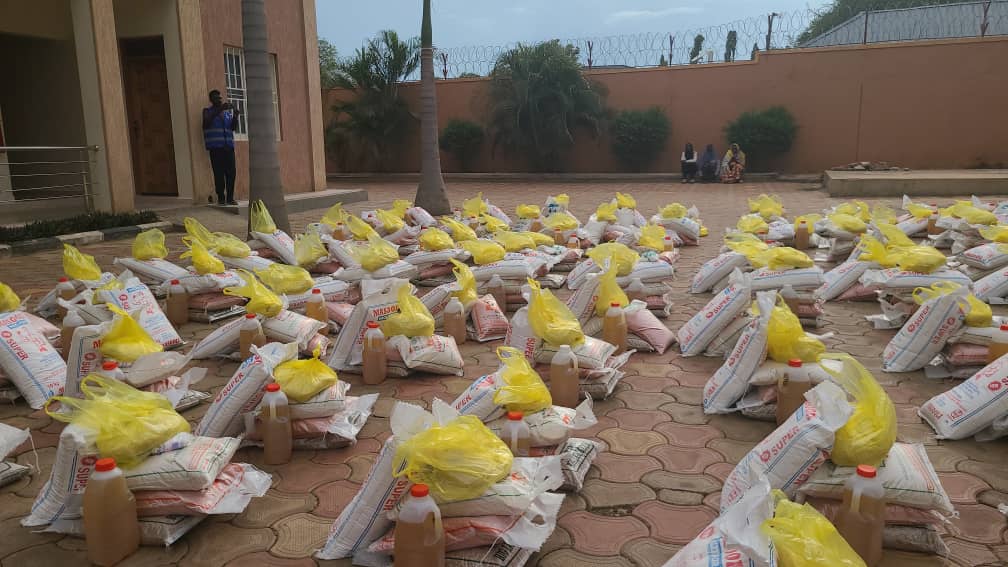
More than 500 Sudanese refugees living in Juba received food and essential non-food items on Friday as humanitarian organizations continue efforts to respond to the needs of families displaced by the conflict in Sudan.
The assistance was distributed at the South Sudan Council of Churches (SSCC) and included beans, sugar, salt, cooking oil and maize flour, alongside dignity kits.
The initiative was organized by the Strategic Initiative for Women in the Horn of Africa (SIHA Network), with support from the Girls and Boys Foundation and the Irene M. Staehelin Foundation.
The assistance comes as many Sudanese refugees in Juba continue to face economic difficulties and struggle to meet basic household needs amid rising living costs.
Speaking during the distribution, Jackie Bage, Country Coordinator of SIHA Network, said the organization was working with partners to ensure Sudanese refugees receive humanitarian assistance.
Bage said SIHA was coordinating with other organizations to respond to the needs of Sudanese refugees living in South Sudan.
She also urged refugees to remain united and support one another while living away from their homes.
Bage said SIHA would continue working with the Girls and Boys Foundation and the Irene M. Staehelin Foundation on initiatives aimed at supporting Sudanese refugees.
Alinda Brenda, Program Coordinator at the Girls and Boys Foundation, welcomed the partnership, saying collaboration among organizations is important in reaching vulnerable refugee communities.
Brenda said her organization was working with SIHA to support Sudanese refugees living in different parts of Juba.
She said some refugees in areas including Konyokonyo and Hai Cinema continue to face difficult living conditions and limited access to basic necessities.
Prof. Mohammed Adam, Executive Director of the Sustainable Development Organization, a refugee-led organization, said the assistance would help address some of the immediate needs of refugee families.
However, he said the quantities distributed remained limited compared with the scale of needs among the refugee population.
Some beneficiaries appealed for additional support from humanitarian organizations and other partners, saying worsening economic conditions have made it increasingly difficult for refugee families to afford food and other essential items.
The beneficiaries also called for unity and peaceful coexistence between the people of Sudan and South Sudan, citing the close social and cultural ties between the two communities.
For the refugees who received the assistance, the distribution provided temporary relief as they continue to cope with displacement and uncertainty following the conflict in Sudan.
