South Sudan will commemorate this year’s Martyrs’ Day without an official state-funded ceremony, with the government instead urging communities across the country to organise local remembrance activities amid ongoing economic constraints.
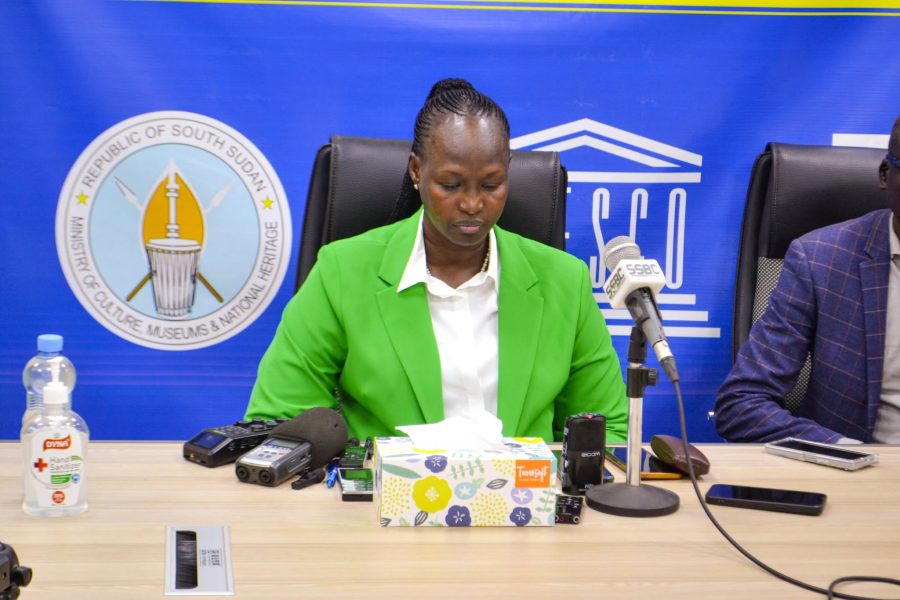
The Minister of Culture, Museums and National Heritage, Sarah Nyanath Elijah Yong, announced on Friday that no budget had been allocated for national celebrations marking the July 30 observance, citing the country’s financial difficulties and competing priorities, including preparations for the forthcoming general elections.
Speaking during a press briefing in Juba alongside the ministry’s Undersecretary, Dr. Julia Amon Wantok Ater, the minister said the absence of government-funded events should not diminish the importance of honouring those who lost their lives during South Sudan’s struggle for self-determination and independence.
Instead, she appealed to citizens, state and local governments, religious institutions, schools, civil society organisations, youth and women’s groups, traditional leaders and communities to lead peaceful commemorations in their respective areas.
The ministry encouraged South Sudanese to observe the day through candlelight vigils, prayers, moments of silence and memorial reflections in homes, churches, mosques, schools and public institutions.
Hon. Sarah called on every South Sudanese to light a candle on the evening of July 30, describing the gesture as a symbol of gratitude to the country’s fallen heroes and a commitment to peace, reconciliation and national unity.
“Financial constraints should not prevent us from honouring those who paid the ultimate sacrifice for the freedom of our country,” she said, urging citizens to commemorate the day with dignity, patriotism and a renewed sense of national purpose.
Responding to questions from journalists, the minister dismissed suggestions that the sacrifices made during the liberation struggle had been rendered meaningless by the country’s continuing political and economic challenges.
She argued that South Sudan’s internationally recognised sovereignty, national flag, constitution, passport and state institutions remain enduring achievements secured through the sacrifices of the martyrs.
“The responsibility now lies with the living to fulfil the vision of those who sacrificed their lives by building a peaceful, democratic and prosperous South Sudan,” Hon. Sarah said.
Looking beyond this year’s commemorations, the minister announced plans to erect memorial billboards across the country to honour both national and local liberation heroes, saying the initiative would help preserve their legacy for future generations.
She also revealed that the ministry is developing plans for a national museum dedicated to South Sudan’s liberation history, cultural heritage and historical artefacts, although the project remains at an early planning stage.
Addressing concerns over the welfare of families of fallen heroes, Hon. Sarah acknowledged that more support was needed but said the government continues to provide assistance through institutions responsible for veterans, war widows and orphans.
She concluded by calling on all South Sudanese to observe Martyrs’ Day peacefully and use the occasion to renew their commitment to reconciliation, constitutional order, national unity and lasting peace.
South Sudan observes Martyrs’ Day every 30 July to honour the men and women who lost their lives during the country’s decades-long struggle that culminated in independence in 2011.