South Sudan and the International Fund for Agricultural Development (IFAD) have launched a US$41.8 million agriculture project to improve food security and strengthen the livelihoods of more than 110,000 people.
The initiative seeks to tackle the root causes of food insecurity and rural poverty by increasing agricultural productivity, expanding market access and strengthening local institutions in some of South Sudan’s most vulnerable communities.
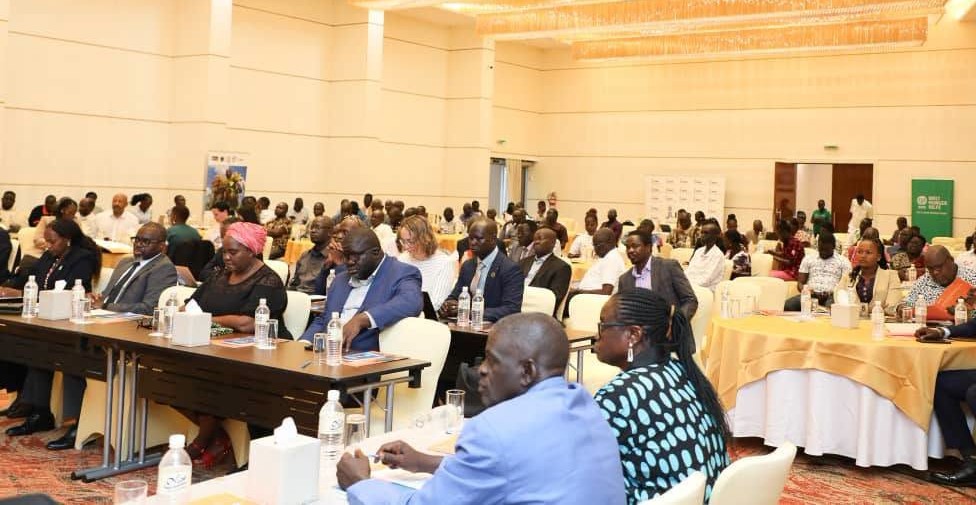
Speaking at the launch in Juba, IFAD Country Director Caroline Mwongera said the project would promote climate-resilient agriculture while supporting communities affected by fragility and recurring climate shocks.
“SADEP advances climate-resilient food systems, strengthens livelihoods in fragile settings, and places rural communities at the centre.
In a context like South Sudan, sustained and predictable financing is essential to translate these gains into long-term stability and food security,” she said.
The project will focus on developing sustainable sorghum and fisheries value chains, reducing post-harvest losses and improving farmers’ access to agricultural services, finance and markets.
In the fisheries sector, SADEP will support the government’s ambition of turning South Sudan into a fish-exporting country by 2027.
The programme will rehabilitate fisheries infrastructure, including landing sites, ice plants and storage facilities, while promoting modern fish production technologies and sustainable fishing practices.
The government has set a target of producing 200,000 tonnes of fish annually.
The project will prioritise areas with high levels of poverty and vulnerability, using a community-led approach designed to strengthen local ownership and social cohesion.
Women, young people and other vulnerable groups are expected to be among the main beneficiaries.
Around 18,700 households will also receive support to improve nutrition through the production of nutrient-rich crops and better management of natural resources.
The programme will further strengthen national and local institutions by providing technical training in seed production and fish handling, improving agricultural extension services, supporting climate-resilient policies and expanding rural infrastructure and market access.
Minister of Livestock and Fisheries Onyoti Adigo Nyikwec said the initiative aligns with the government’s strategy to reduce reliance on humanitarian assistance by investing in long-term agricultural development.
“This project advances our national priorities to transition from humanitarian dependence to resilient and productive food systems. In partnership with IFAD, SADEP will empower farmers, fishers, women, and youth to strengthen livelihoods, with a clear commitment to scale results nationwide,” he said.
The project is co-financed by the Global Environment Facility (GEF) with US$8.9 million through the Strengthening Adaptation through Institutional Building and Resilient Livelihoods in South Sudanese Agro-pastoral Landscapes (SABRELA) project.
It will be jointly implemented by the Ministry of Agriculture and Food Security, the Ministry of Livestock and Fisheries, the International Fertilizer Development Center (IFDC) and Welthungerhilfe (WHH).
The launch comes as South Sudan continues to face one of the world’s most severe food security crises, with recurrent flooding, conflict and economic challenges undermining agricultural production.
The government and its development partners hope the new investment will help strengthen rural economies and improve the country’s long-term food security.