Women in Goroyo 2–New Site, a community on the outskirts of Juba, have appealed to the Central Equatoria State Ministry of Health to urgently improve maternal healthcare by training Traditional Birth Attendants (TBAs) and establishing a public health facility with comprehensive maternity services.
The appeal is contained in a petition submitted through Global Voices Organization South Sudan, in which residents say the lack of accessible healthcare continues to expose pregnant women and newborns to preventable complications and deaths.
Presenting the petition on behalf of the community, Narumanga Julie said Goroyo 2 is home to women, children, older persons, youth and persons with disabilities, yet it has no functional public health facility capable of providing essential maternal and child healthcare.
She said expectant mothers are often forced to rely on Traditional Birth Attendants or travel long distances to Juba Teaching Hospital, frequently under difficult conditions and without reliable transport.
According to the petition, delays in accessing emergency obstetric and newborn care have contributed to avoidable maternal and infant deaths, birth complications and other medical emergencies.
The community cited the experience of a Traditional Birth Attendant who has assisted several women with complicated pregnancies despite lacking formal medical training and adequate equipment.
In one case, the attendant successfully delivered a baby during a breech birth, but both the mother and child suffered severe bleeding and required urgent referral to a health facility.
In another incident, a woman went into labour during heavy rainfall at night. Poor road conditions, limited transport and the distance to the nearest hospital delayed access to skilled care, resulting in the death of her baby.
Residents say such experiences underscore the urgent need to strengthen maternal and newborn healthcare services, improve emergency referral systems and establish an accessible health facility within the community.
The petition urges the government to provide formal training for Traditional Birth Attendants in safe delivery practices, infection prevention, identifying pregnancy-related danger signs and timely referral of complicated cases.
It also recommends supplying TBAs with clean delivery kits and basic medical equipment while establishing a structured referral system linking them with qualified health professionals.
Beyond immediate interventions, the community is calling on the government to include the construction of a fully equipped public hospital in Goroyo 2 in its long-term development plans.
The proposed facility would provide outpatient and inpatient care, laboratory and pharmacy services, emergency treatment and a 24-hour maternity unit staffed by skilled healthcare professionals.
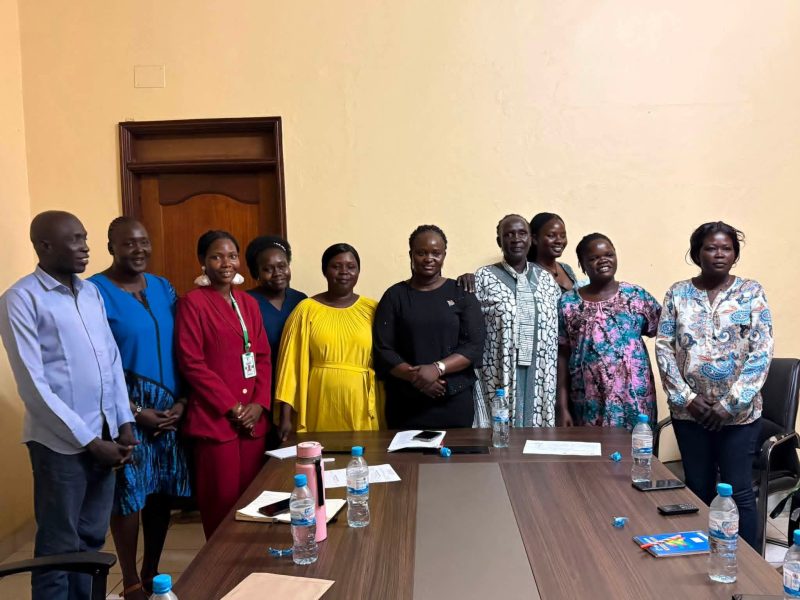
On August 4, officials from the Central Equatoria State Ministry of Health met representatives of the Goroyo 2 community, accompanied by Global Voices Organization South Sudan, to discuss the petition and possible solutions.
Speaking during the meeting, Women’s Chairperson Viola Francis Keji reiterated the community’s priorities, emphasizing the urgent need for trained birth attendants and improved access to healthcare services.
Responding on behalf of the ministry, the Director of Primary Health Care, Dr. Thomas, said the ministry works closely with communities to identify and address local health needs.
He announced that officials, together with the Juba County Medical Director, would conduct a comprehensive assessment of Goroyo 2 to determine the most appropriate interventions and medical support required.
The ministry’s Director General, Dr. James Wani, explained that constructing hospitals falls under the mandate of the National Ministry of Health. However, he encouraged the community to collaborate with the state ministry to strengthen the existing Primary Health Care Centre and improve healthcare services available locally.
Central Equatoria State Minister of Health Joyce Bakwa Agole commended the Goroyo 2 community and Global Voices Organization South Sudan for engaging the ministry through dialogue to address public health concerns.
She encouraged Traditional Birth Attendants to pursue additional training with the goal of becoming professional midwives and reaffirmed the ministry’s commitment to working with health partners to strengthen Primary Health Care Centres across the state.
The petition notes that improving maternal healthcare is consistent with Article 34 of South Sudan’s Transitional Constitution, which guarantees the right to healthcare, and aligns with Sustainable Development Goal 3, which seeks to reduce maternal and newborn mortality.