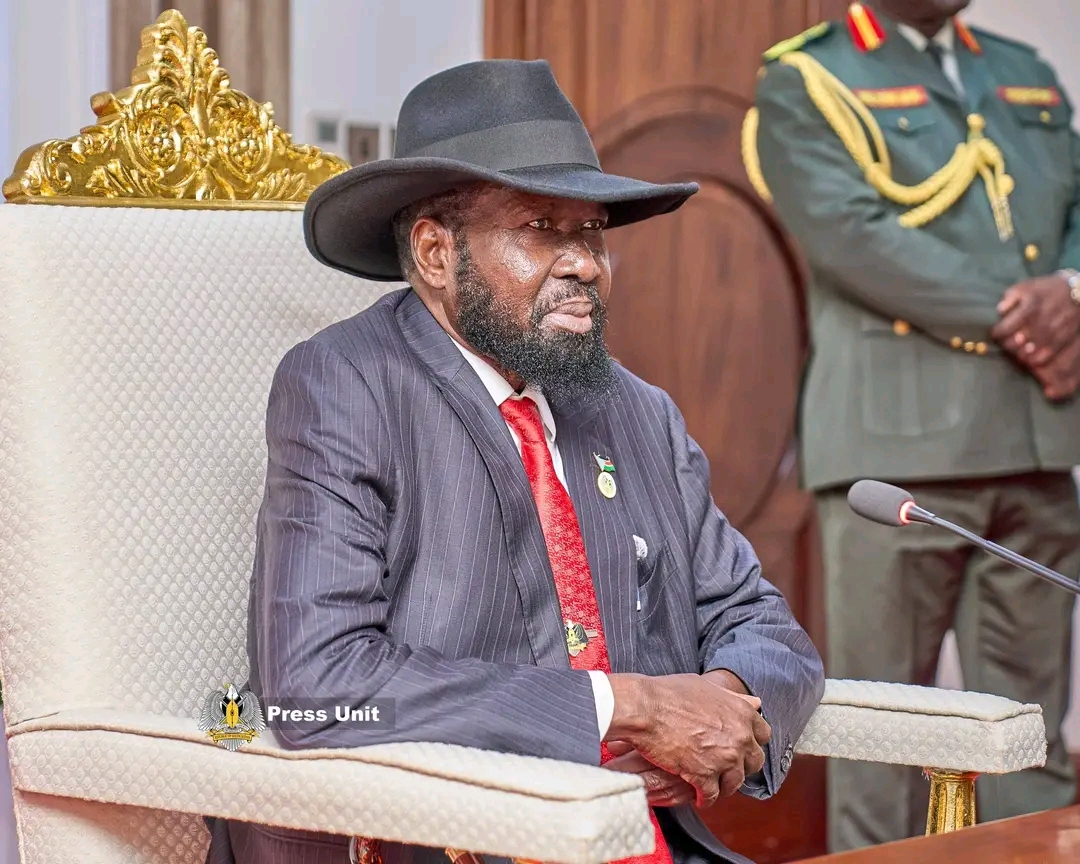
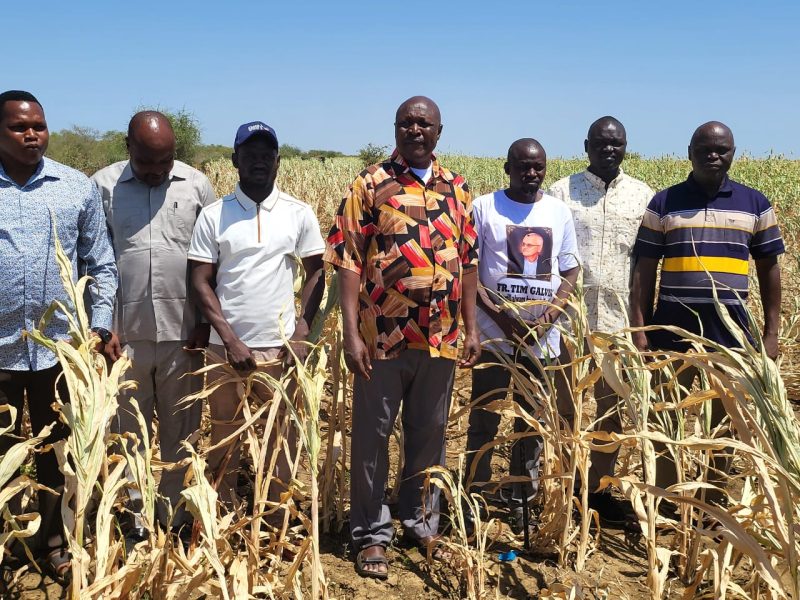
Governor Louis Lobong Lojore has called for an urgent humanitarian response as a prolonged dry spell ravages Eastern Equatoria State, threatening food security, livestock and access to water across several counties.
Speaking during a visit to a sorghum farm in Kapoeta South County, Lobong said the impact of the drought was becoming increasingly severe, with crops withering, rivers drying up and traditional sources of livelihood coming under pressure.
The governor said the situation was particularly alarming in Greater Kapoeta, an area that has traditionally served as an important food-producing zone for surrounding communities.
“When I went to Ngauro, which used to be a green place for Greater Kapoeta, what I found there was shocking,” Lobong said. “The Singaita River has dried up, water sources from the Didinga Mountains are disappearing, and now here in Kapoeta South the sorghum in this entire farm has completely withered.”
Lobong warned that the failure of the agricultural season could worsen food insecurity across Eastern Equatoria, where communities are already facing difficulties accessing food and water.
He appealed to the national government, development partners, humanitarian agencies and the international community to urgently scale up assistance, including food supplies, water provision, livestock support and livelihood interventions.
The drought has also disrupted pastoralist communities, with livestock reportedly moving across borders and into neighbouring areas in search of pasture and water.
Artisanal miners have similarly been affected as water sources used for mining activities continue to dry up.
The governor also expressed concern over reports of deaths linked to hunger and extreme hardship in some communities, including reported suicide cases in Lafon and parts of Torit County, and called for increased humanitarian attention to the affected areas.
Lobong acknowledged that a scientific assessment of the drought situation is still being conducted with development and humanitarian partners, but said the humanitarian needs were already visible on the ground.
“We should wait for the scientific assessment, but it is already very clear that our people are hungry and they need urgent intervention,” he said.
He said women, children and older people were particularly vulnerable because many households depend heavily on agriculture and livestock for food and livelihoods.
Lobong urged the national government and humanitarian partners to treat the drought as an immediate humanitarian priority, warning that further delays could deepen food insecurity and undermine livelihoods across Eastern Equatoria.