The Sudanese Armed Forces (SAF) are facing renewed international scrutiny over allegations that they developed, tested and potentially deployed chlorine-based chemical weapons during the war with the Rapid Support Forces (RSF).
The allegations are based on a large cache of purported military intelligence material obtained and reported on by The Washington Post and The New York Times.
The cache reportedly contains military documents, photographs, videos and intercepted communications that shed new light on an alleged covert effort by the Sudanese military to develop, test and stockpile chlorine-based munitions.
According to the reports, the programme emerged in 2024 as the army sought ways to break a military deadlock around Khartoum, where RSF forces controlled large areas of the capital.
Records cited by The New York Times identify Brigadier General Tariq Hussein as a central figure in the alleged programme from July 2024.
Intercepted communications reportedly show him discussing chlorine-filled warheads and circulating designs for explosive munitions capable of dispersing the chemical agent.
One reported design involved a warhead containing roughly 15 kilograms of chlorine alongside explosives.
Messages attributed to Hussein allegedly indicate that production began in July, with the weapons intended to cause casualties through both blast fragmentation and exposure to chlorine.
On 22 July, an Antonov cargo aircraft reportedly departed Merowe Airport, north of Khartoum, for a weapons test.
Hussein later described the trial as a complete success and shared video footage of a desert explosion, reportedly claiming that the munition had struck its target and released gas.
Brigadier General Amir Idris, identified in the records as a supervisor of military drone operations, reportedly responded: “Top Secret.”
The communications also allegedly reveal technical problems within the programme. In one incident, workers reportedly discovered dead insects and scorpions inside a hangar following a chlorine leak, highlighting the dangers of handling concentrated chlorine.
Securing sufficient supplies was another reported challenge. The New York Times said 20 chlorine cylinders were transported across a neighbouring border in August 2024, with Hussein reportedly estimating that they could produce about 1,100 munitions.
The records further allege that additional chlorine was taken from the Al-Manara water-treatment plant in Omdurman.
In an August 26 voice message, Hussein reportedly told Idris that cylinders had been taken from the facility.
The allegation is particularly significant because chlorine supplied to water-treatment plants is intended for civilian use, including emergency water purification during cholera outbreaks.
The International Committee of the Red Cross told The New York Times that it had supplied 30 chlorine cylinders to the facility in 2023, while CARE reportedly delivered another 35 during 2024 and 2025.
UNICEF said it had supplied chlorine to six water-treatment plants in Khartoum, including Al-Manara, during the same period, but had no record of its supplies being diverted or misused.
By October 2024, Hussein reportedly claimed that about 300 chemical munitions had been produced, with most stored at Merowe Airport.
The leaked communications also contain claims of battlefield use. In September 2024, Hussein reportedly referred to RSF fighters at the Al-Jaili oil refinery north of Khartoum, saying: “They drank the gas.”
The claim broadly coincided with an RSF accusation that the army had fired “toxic” missiles at the facility. Footage circulated online at the time reportedly showed men inside the refinery wearing oxygen masks.
However, the communications and contemporaneous claims do not independently establish that chlorine weapons were used at the site.
Experts cited in the reporting have stressed that an on-the-ground investigation would be needed to determine what chemical agents, if any, were deployed and who authorised their use.
The allegations come against the backdrop of earlier U.S. action.
In May 2025, Washington announced sanctions after determining that Sudanese forces had used chemical weapons during the conflict in 2024. The measures took effect on 20 July 2025.
Sudanese authorities have repeatedly rejected the accusations, denying that the country produces, possesses, stockpiles or uses chemical weapons.
They have also reaffirmed Sudan’s commitment to the Chemical Weapons Convention.
The latest disclosures have raised further questions about senior military leadership.
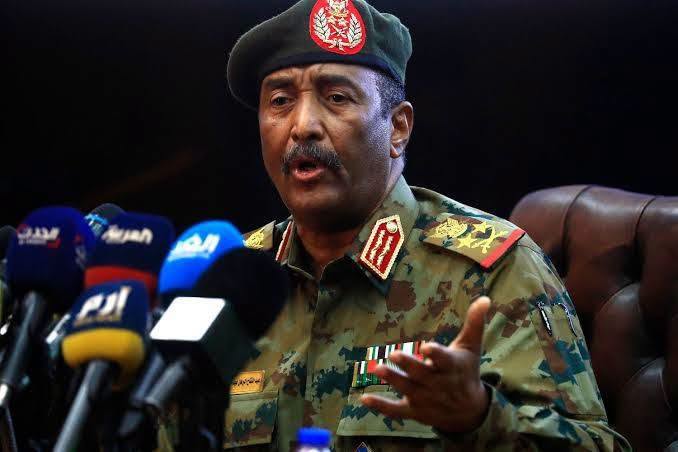
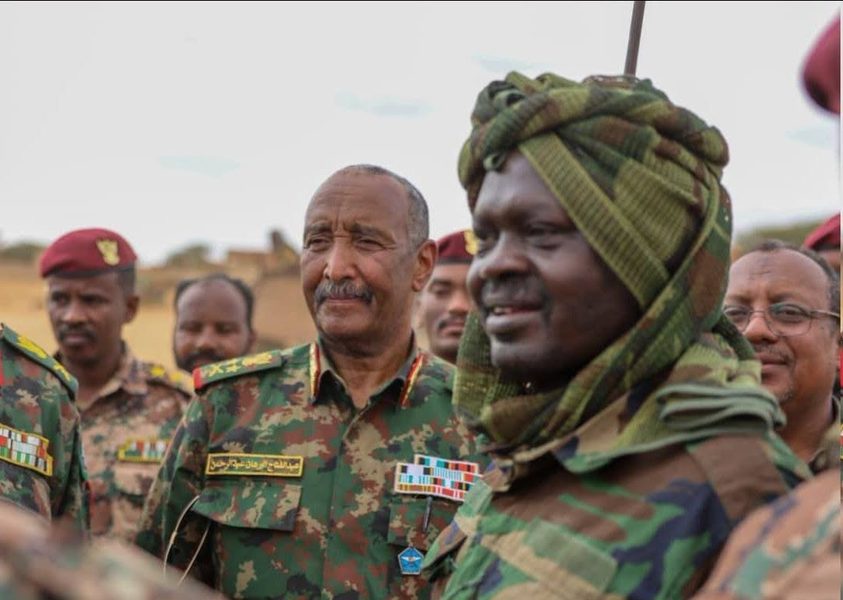
According to The New York Times, intercepted communications reportedly show army chief General Abdel Fattah al-Burhan instructing Hussein to remove evidence linked to the alleged operation after U.S. officials became aware of suspected chemical-weapons activity.
Hussein was later reportedly appointed as an adviser to an internal committee examining the U.S. allegations.
Washington subsequently imposed sanctions on Hussein over allegations related to the importation of explosives used in bomb production, while U.S. sanctions against Burhan in January 2025 cited allegations that he had knowledge of chemical-weapons activity.
Both Burhan and Sudanese authorities have rejected the accusations.
Arms experts cited by the two newspapers said the material provides significant indications of an alleged chemical-weapons programme, but stressed that the evidence requires independent verification.
Sudan’s Emergency Lawyers have called for an international investigation, including safe and unrestricted access for experts to suspected sites, weapons fragments, other physical evidence and witnesses.
The latest disclosures add substantial detail to allegations that have already triggered U.S. sanctions, but key questions remain unresolved: whether chemical weapons were actually used in combat, where they were deployed, how extensive the programme was, whether civilian chlorine supplies were diverted and who ultimately authorised the alleged operation.
If independently confirmed, the development, stockpiling or use of chemical weapons would constitute a serious breach of international law and Sudan’s obligations under the Chemical Weapons Convention.