Adolescents in Yambio are facing gaps in access to reliable information about sexuality, puberty and reproductive health, with community leaders and health officials calling for greater involvement from parents, schools and local authorities.
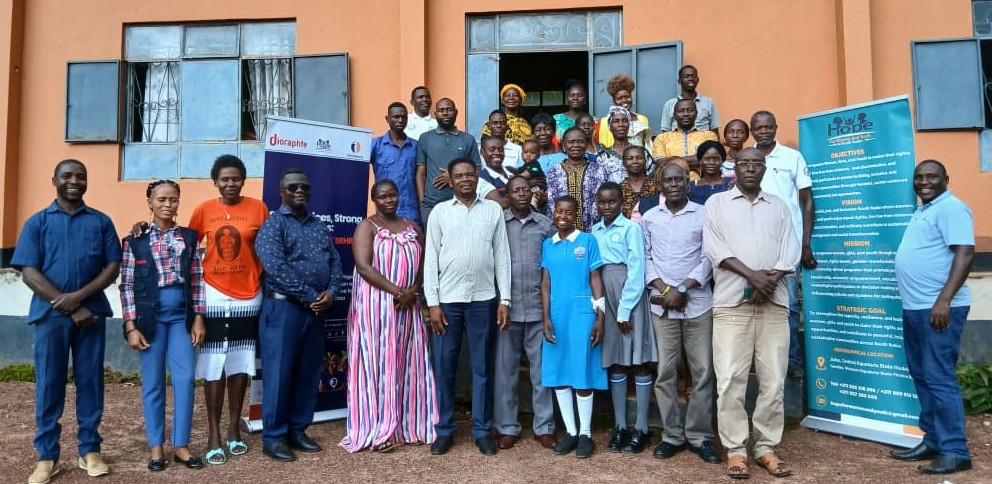
The concerns emerged during a community dialogue attended by 35 participants, including community leaders, government officials, teachers, students, pupils, parents and caregivers.
The meeting was organised by Hope for Women and Youth in South Sudan under a sexual and reproductive health and rights (SRHR) project supported by the Strategic Initiative for Women in the Horn of Africa (SIHA).
Jacob Ginaba, Sub-Chief of Kuzee Boma, said young people need appropriate information before they reach adulthood so they can better understand issues affecting their health and wellbeing.
“We are here today to learn how to protect our children and teach them Comprehensive Sexuality Education when they are still at the teenage age,” Ginaba said.
He urged parents and community members to take greater responsibility for guiding adolescents and addressing harmful practices, including child marriage and gender-based violence.
Ginaba also called for communities to pay closer attention to marriages involving young people and intervene where necessary.
Health authorities say information gaps are compounded by limited access to health services.
Tereza Dominic Dabi, Director for Reproductive Health at the Western Equatoria State Ministry of Health, said inadequate health education and long distances to health facilities remain barriers, particularly for pregnant women seeking antenatal care.
She said funding constraints have contributed to a reduction in the number of functioning health facilities in some areas, while shortages of medicines and services can further affect people living far from health centres.
Dabi said community dialogues can help close some of the information gaps by allowing participants to take knowledge back to their communities.
“I am so excited to see the communities attending this training for SRHR,” Dabi said.
She also highlighted misconceptions around family planning, saying some people primarily associate it with taking medicines or tablets rather than understanding it as a process through which families make informed decisions about the size and future of their families.
Christine Faida, Executive Director of Hope for Women and Youth in South Sudan, said discussions about sexuality and reproductive health can remain sensitive because of traditional norms and social perceptions.
She urged parents and caregivers to provide adolescents with age-appropriate information and create spaces where young people can ask questions about puberty, pregnancy and reproductive health.
“We are here today for a community dialogue on issues affecting sexual reproductive health and rights,” Faida said.
For some participants, the dialogue provided information they had not previously received.
Amida Cosmos Dungra, a learner at ABC Academy YMCA Nursery and Primary School in Yambio, said the discussions improved her understanding of puberty and ways girls can protect themselves from sexual violence.
She said she plans to share what she learned with other girls at her school and, where possible, with pupils in other schools.
Participants also called for similar discussions to reach communities that were not represented at the meeting.
Faida said the organisation has observed changes in community attitudes since the project began, but funding constraints continue to limit the reach of SRHR programmes.
The project was initially scheduled to run from June to February 2027, but financial delays pushed implementation to August.
Faida said the organisation intends to complete the project in February 2027 while working to make up for activities affected by the delayed start.
The Yambio meeting is the first of two planned community dialogues under the project.
The discussions highlighted a challenge that extends beyond awareness: adolescents need both reliable health information and access to services, while parents, schools and communities need the tools to provide appropriate guidance.
The organisers say the next challenge is ensuring that information discussed during the dialogue reaches young people and families beyond the meeting room.