
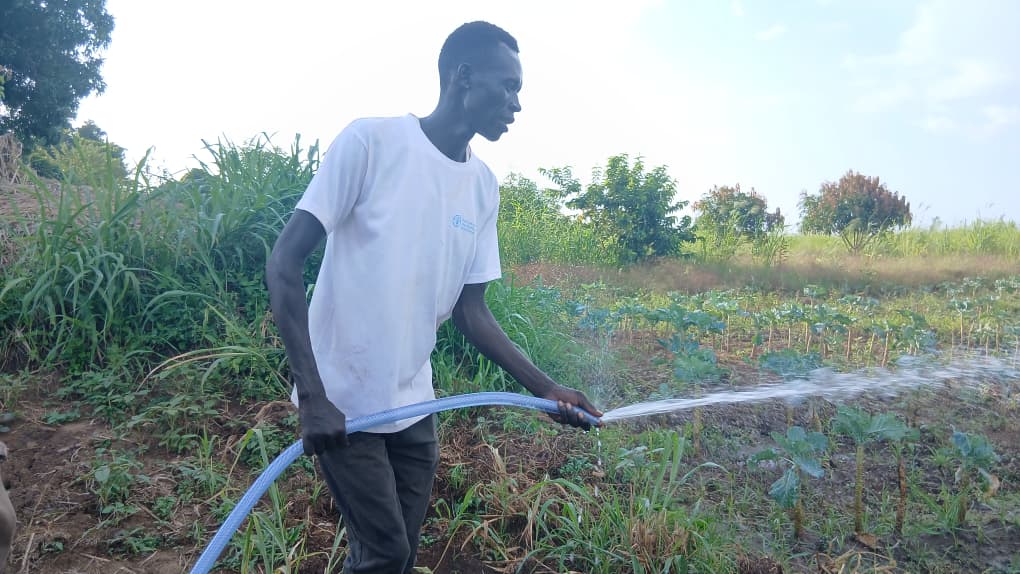
For farmers in Torit, unreliable rainfall is increasingly turning agriculture into a gamble, with prolonged dry spells threatening harvests and limiting efforts to expand cultivation.
But new irrigation equipment is offering some farmers a way to keep their fields productive beyond the rainy season.
Five farmer groups operating along the Kinate River and nearby streams are expected to benefit from the irrigation support.
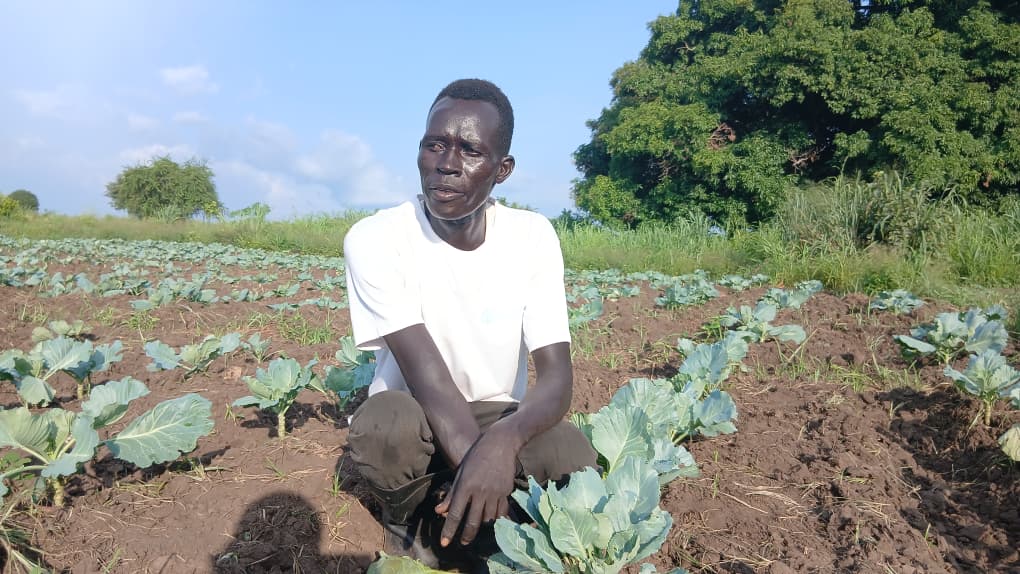
For Ian James Racisto and fellow farmers in Torit, unpredictable rainfall and prolonged dry spells are making it increasingly difficult to keep their fields productive.
“The small amount of rainfall this year has affected most of this place with drought,” Racisto said.
Racisto is a member of the Garden of Life farmer group, which was established in 2021 with a small piece of land and only a few members.
The group has since expanded to about five hectares and now has 30 members, including 15 women and 15 men.
“We started it in 2021. The farm was very small. We started it and we were few in number,” Racisto said.
“Now the farm has already reached five hectares, and we are trying to boost production, although it is slowly due to climate change.”
The farmers now grow watermelon, tomatoes, eggplant, chili, cucumber, maize and green pepper. Some crops are first raised in nursery beds before being transplanted to the fields.
But as the group seeks to increase production, unreliable rainfall remains a major obstacle.
That is where new irrigation equipment is expected to help.
Through its Pathway to Self-Resilience project, Global Voices has distributed treadle irrigation pumps and agricultural equipment to farmer groups in Torit, Eastern Equatoria State, to strengthen food production, improve livelihoods and help farmers adapt to changing weather patterns.
Five farmer groups operating along the Kinate River and nearby streams are expected to benefit from the support.
A Global Voices representative said the irrigation equipment would allow farmers to continue cultivating beyond the rainy season.
“This will help them to practice agriculture throughout the year, to support their livelihood, and also the local consumption of these food items,” the representative said.
Groups cultivating larger plots are expected to receive four treadle pumps, while those working on smaller areas will receive two.
For Garden of Life, the equipment comes as the group prepares for another stage of expansion.
Racisto said the farmers expect watermelon and tomatoes to be ready for harvesting within about two months, with the produce destined for local markets.
But he said the treadle pump also has limitations, particularly when used across large areas.
“We have seen the work of it. It is okay, but it is a little bit tiresome,” he said.
The group plans to expand its cultivated area from five hectares to about seven hectares between 2026 and 2027.
Racisto said the farmers would need more efficient irrigation technology, including solar-powered systems, to support the planned expansion and reduce the physical demands of watering the fields.
Global Voices said its project combines climate-smart agriculture, community-led resilience, preparedness and emergency response.
During the project’s first year, the organization worked with the Food and Agriculture Organization (FAO) to distribute seeds to 36 farmer groups, reaching 1,029 people.
The seeds included watermelon, tomatoes, okra, cabbage, collard greens, sorghum and maize. Farmers also received tools such as hand sprayers, spades and hoses.
The project is also encouraging farmers to plant fruit trees, including avocado, jackfruit and guava, to diversify livelihoods and strengthen their resilience to climate change.
The irrigation pumps are distributed by Afroganic Seed Company, which said the equipment is locally assembled in South Sudan. The company has an agreement with Nova Farming Industry, a South Sudan-based manufacturer of treadle pumps, and said it can provide spare parts and additional equipment.
For farmers in Torit, irrigation is offering a way to reduce their dependence on unpredictable rainfall.
But the experience of Garden of Life also shows that access to pumps alone may not be enough. Reliable water sources, appropriate technology, training and continued investment will remain important as farmers seek to expand production.
For Racisto and his fellow farmers, the ambition is to grow more food and supply local markets while building farms that can survive even when the rains fail.