
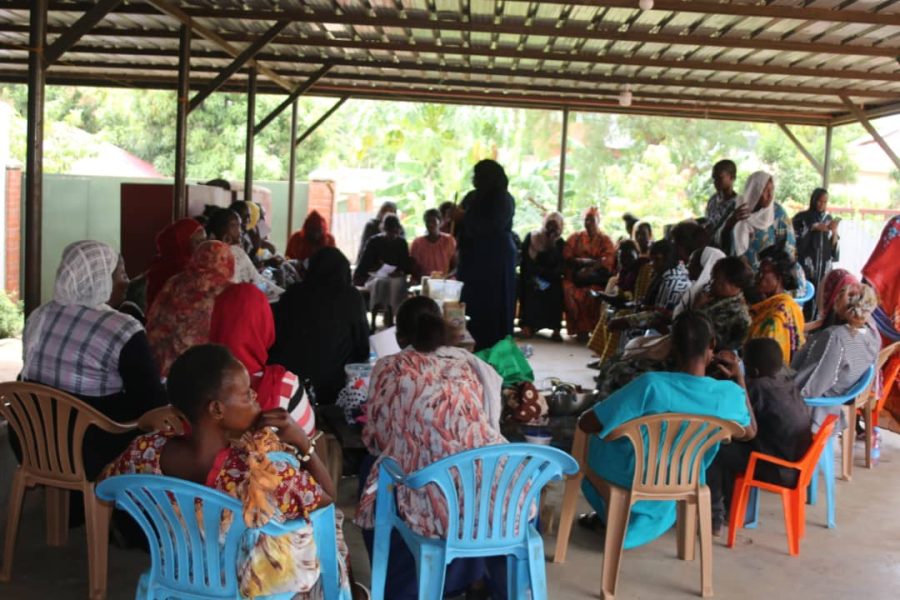
Refugee women in Juba are learning baking and other small-business skills as part of efforts to help them earn income and support their families.
Forty-five women from refugee and host communities recently took part in a one-day training in Nyakuren, Juba, under a six-month livelihood project run by the Community Action for Identity and Community Development (CACED).
The project aims to reach 70 women, with the remaining 25 expected to receive training next month.
Participants were trained in making products including bread, cakes and pies, with organisers hoping the skills will help women start or expand small businesses.
George Tadeo Mundir, CACED’s coordinator, said the programme was designed specifically to strengthen women’s ability to generate income.
“We targeted women specifically, refugees and host community,” he said.
The project is supported by the UN refugee agency, according to Mr Mundir, with about $12,000 allocated for the six-month programme.
‘We will do business and help the family’
Among those taking part was Selma Makin Tomba, a refugee from Banat Nuba who said she came to South Sudan because of conflict.
Now living in Juba, Ms Tomba already makes bread, pies and ice cream. She said she hoped the training would help her improve her skills and turn them into a more reliable source of income.
“We will help the family. We will do business,” she said.
Ms Tomba, who has four children, said she also wanted to pass the skills on to them.
“I can teach my children how to make bread and pies,” she said.
For her, earning an income is closely linked to her children’s education and future prospects.
She said she wanted her children to have better opportunities despite the difficulties facing refugee families.
Ten years in Juba
For 66-year-old Madiha Kamil, finding ways to earn money has been a long-term necessity.
Ms Kamil said she had lived as a refugee in Juba for about 10 years and had six children to support.
She earns money through small-scale activities, including making and selling ice cream, which she said helps her pay school fees.
“I have six children. I’m working to pay for their school fees,” she said.
But she described life as a refugee as difficult, particularly for families trying to cover rent, education and other basic expenses.
Ms Kamil said some refugees also faced difficulties finding employment because of their status.
“Sometimes you can work, but they see you as a refugee,” she said.
She called for more organisations to provide vocational and livelihood training, saying women need opportunities that can help them become economically independent rather than relying solely on assistance.
Skills need support to become businesses
CACED says training is only one part of the challenge.
Mr Mundir appealed for additional support from international organisations to expand livelihood programmes and provide more opportunities for vulnerable communities.
“We want more support from other international organizations to support us to implement such activities for our people in South Sudan,” he said.
For participants, access to start-up capital, equipment, raw materials and markets could determine whether the skills learned during the training develop into sustainable businesses.
Ms Kamil said more vocational programmes were needed for women and young people, including training in different trades that could generate income.
She also highlighted the financial difficulties faced by refugee families whose children complete secondary school but cannot afford further education.
“We need better training,” she said.
The CACED project will run for six months, with the remaining beneficiaries expected to undergo training in the next phase.
For women such as Ms Tomba and Ms Kamil, the hope is that the programme will provide more than a temporary skill — and give them a practical route towards earning an income, supporting their families and becoming more economically independent.