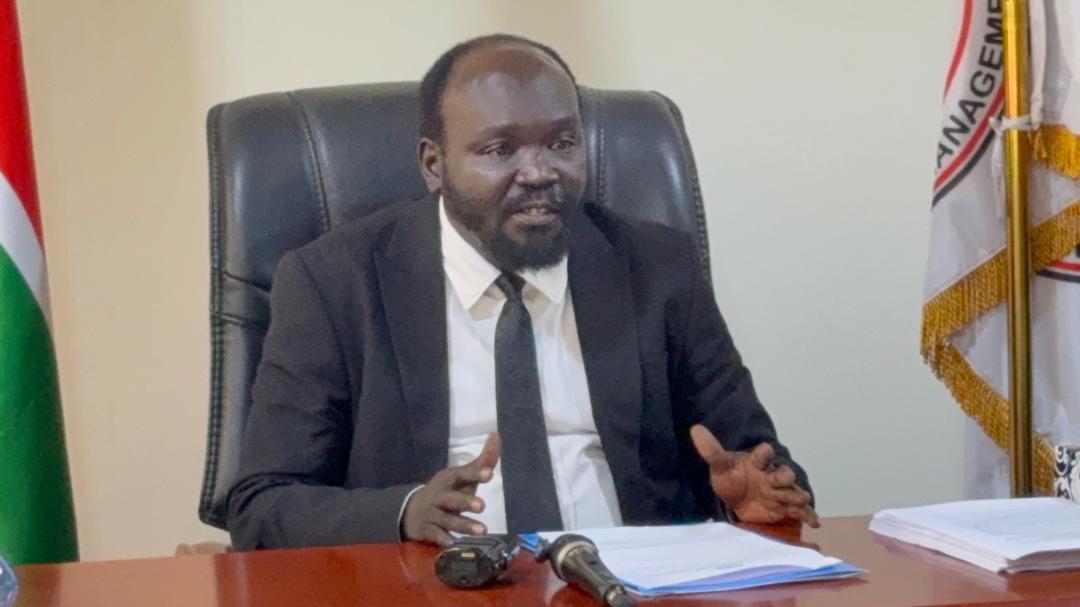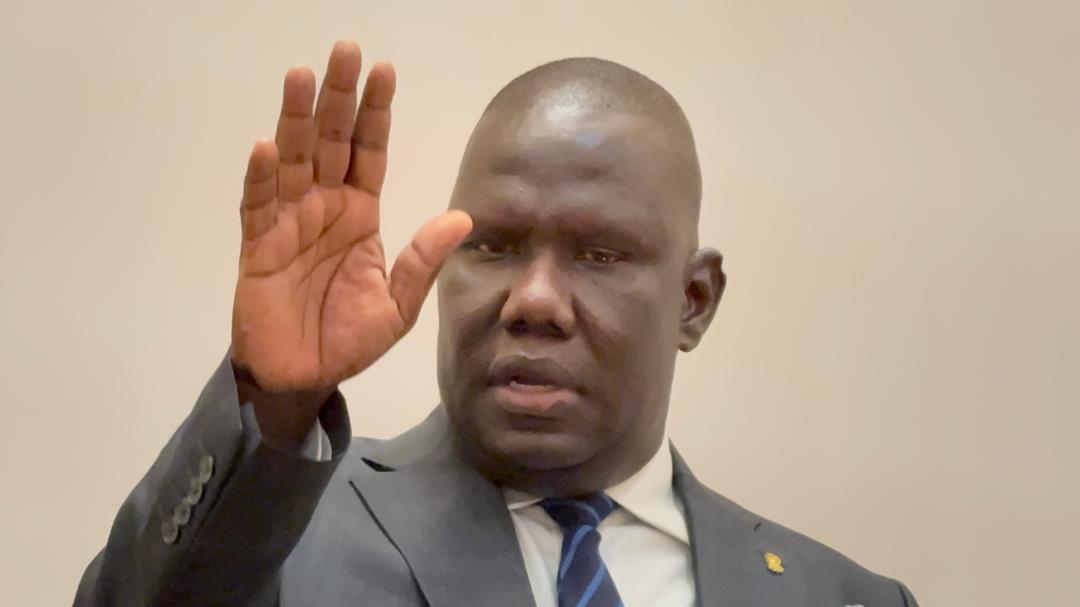

Presidential aspirant Kornelio Kon Ngon has given the National Elections Commission (NEC) 72 hours to reverse its decision to postpone South Sudan’s general elections to February 11, 2027, warning that he will take the commission to court if it fails to reinstate the original December 22, 2026, polling date.
Kon, a former third deputy speaker of parliament and candidate of a faction of the National Alliance of Political Parties (NAPP), issued the ultimatum during a press conference in Juba on Wednesday, describing the revised electoral timetable as unconstitutional.
“As the Alliance, we give the commission 72 hours to cancel the timetable and revert to the original date. After 72 hours, we will go to court if they don’t cancel it,” Kon said.
The NEC announced the revised electoral timetable on November 14, moving the elections from December 22, 2026, to February 11, 2027, a shift of 51 days.
The commission said the adjustment was necessary to allow more time for outstanding electoral preparations, including candidate nominations, submission of candidates’ lists and the printing of ballot papers.
However, Kon argued that the commission had no constitutional authority to change the election date, insisting that the December 22 schedule was established under the Transitional Constitution and the Elections Act 2012, as amended in 2026.
He maintained that any extension of the electoral timeline would require another constitutional amendment rather than a unilateral decision by the elections body.
“Amendment No. 13 to the constitution gives the president the authority to form a caretaker government for only three months, and the transitional period must end with elections, which should be conducted two months before the end of the transitional period,” he said.
Kon further argued that September 22, 2026, marked the end of the transitional government, following the dissolution of its executive and legislative institutions and the formation of a caretaker administration.
He said the caretaker government was established to temporarily administer the country for three months with limited powers and that its mandate could not be extended without legal amendments.
The presidential aspirant also questioned the NEC’s reliance on provisions of the Elections Act to justify the revised timetable.
NEC spokesperson Josephine Achiro Fortelo previously said the commission had invoked Article 57(1)(c) of the National Elections Act 2012, as amended, which she said empowered it to adjust the electoral timetable.
But Kon argued that Article 60 of the same law deals with election-related disruptions, including insecurity and states of emergency in particular areas, rather than postponing general elections before voting takes place.
He insisted that neither the commission nor the president had the authority to alter the constitutionally prescribed election date without following the required legal procedures.
Kon also accused the commission of failing to consult political parties before announcing the revised timetable.
He said political parties attended a consultative meeting with the NEC in Juba on Thursday, November 12, but no proposal to postpone the elections was presented during the discussions.
According to Kon, the meeting ended with a dinner for political parties without any indication that the commission intended to change the electoral calendar.
He described the subsequent announcement as a violation of the constitution and electoral law, saying political parties had been waiting for an official explanation supported by clear legal provisions.
“The country needs another Amendment No. 14 to the Transitional Constitution if we are going to change the election date to February 11. So what happened is a violation of the constitution,” he said.
Despite his objections, Kon said that if the NEC faced practical challenges in conducting the elections on December 22, it should consult the presidency, political parties and other relevant stakeholders to identify a lawful way forward.
The commission’s revised timetable also coincided with the start of voter registration, which is scheduled to run from November 14 to 28 at 3,161 centres across South Sudan’s 10 states and three administrative areas.
Kon’s faction of the National Alliance of Political Parties is the second political group to challenge the legality of the postponement, following the United Sudan African Party (USAP), which also questioned the NEC’s authority to move the elections to February 2027.
The dispute adds to growing disagreements over the country’s electoral timeline, with the NEC maintaining that additional time is needed to complete preparations while political parties raise questions about the legal basis for the postponement.
Kon said his group would proceed with legal action if the commission failed to withdraw the revised timetable within the 72-hour deadline.