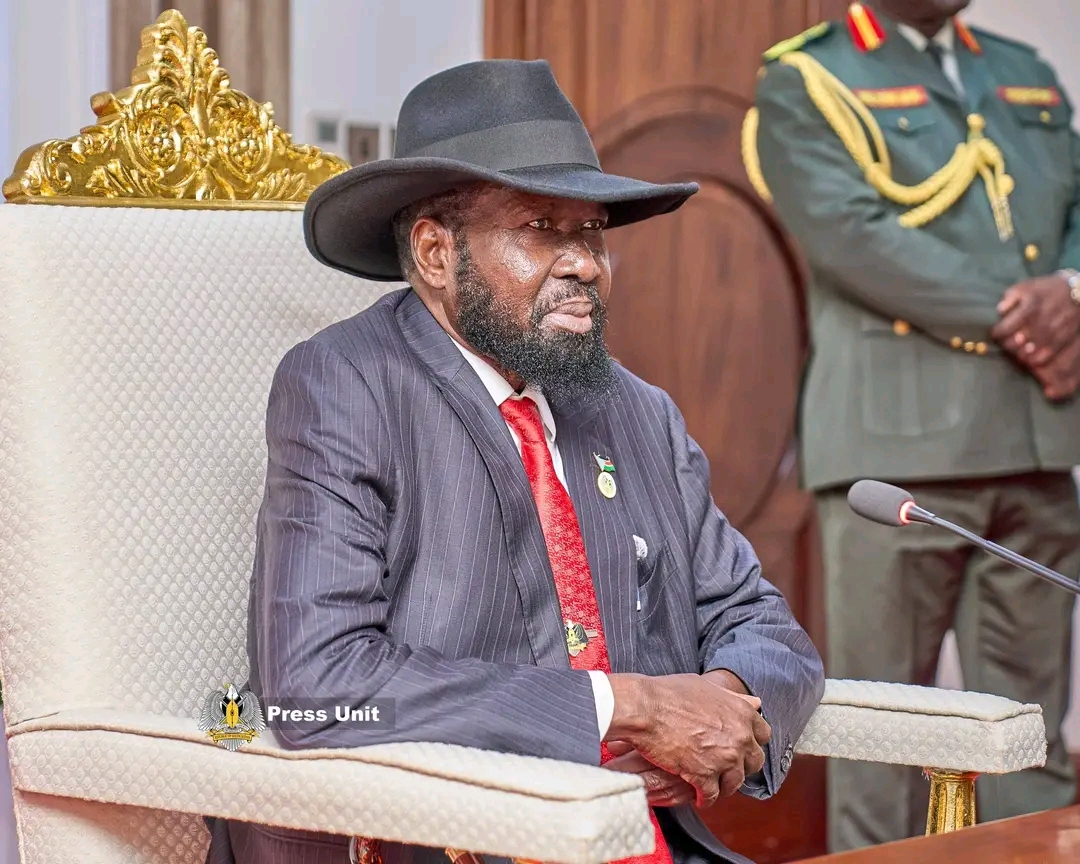
The office of the President Salva Kiir has rejected what it describes as external interference in South Sudan’s political affairs, insisting that the country’s political decisions must remain the responsibility of its people and national institutions.
In a press statement titled “South Sudan’s Peace Process: Sovereignty, National Ownership and the Path to Elections,” the presidency said it welcomes continued support from international partners, including the United States, Japan, Norway, Germany, the United Kingdom and Canada, but stressed that such partnerships must respect South Sudan’s sovereignty.
“Partnership does not mean accepting directives from other countries,” the statement said.
The presidency maintained that implementation of the Revitalized Peace Agreement remains a national commitment but should not become a basis for a perpetual transitional period.
It said South Sudan has made progress through political compromises, the establishment of transitional institutions and efforts to address outstanding provisions, and should now move toward a democratic process that allows citizens to choose their leaders.
The Office of the President argued that peace should create conditions for citizens to exercise their political rights and for legitimate elected authorities to govern.
It described the planned elections as essential to the people’s sovereign right to choose their representatives and determine the country’s political direction.
The statement said outstanding differences should continue to be addressed through dialogue rather than being used to suggest that no progress has been made.
The presidency said constitutional, judicial, security and economic reforms must be owned and driven by South Sudanese institutions and citizens.
While acknowledging that international partners can provide expertise and support, it insisted that political decisions belong to South Sudan and its people.
The Office of the President also defended South Sudan’s judicial institutions, saying legal proceedings should be allowed to follow their proper course.
It said judicial processes should not be pre-judged outside the courtroom and that political commentary should not replace due process.
The statement argued that respect for the rule of law also requires respect for judicial procedures and the outcomes of completed legal processes.
On security-sector reform, the presidency said the professionalization and unification of security institutions are important but must be undertaken through South Sudanese institutions and in accordance with national laws and political agreements.
The goal, it said, should be a professional, unified and nationally representative security sector rather than one dictated from outside.
The government acknowledged the need for stronger public financial management, transparency and accountability.
It said South Sudan has significant potential in agriculture, energy, infrastructure and tourism and can build a stronger economy if peace and stability are consolidated.
International partners, it added, can support capacity building and investment, but South Sudan must retain ownership of its economic transformation and determine how its resources benefit its people.
The presidency also welcomed Germany’s humanitarian and development assistance, while calling for international support that strengthens national institutions, encourages dialogue and supports democratic development rather than prolonging political uncertainty.
The Office of the President reaffirmed South Sudan’s commitment to peace, dialogue, reform and democracy, saying international engagement remains welcome on the basis of mutual respect, partnership and sovereignty.
“The measure of peace should not be how long South Sudan remains in transition, but whether it can move toward a stable political order in which its people freely determine their future,” the statement said.
The presidency concluded that South Sudan wants peace, reform and democracy and intends to pursue them through a process owned by the South Sudanese people.