
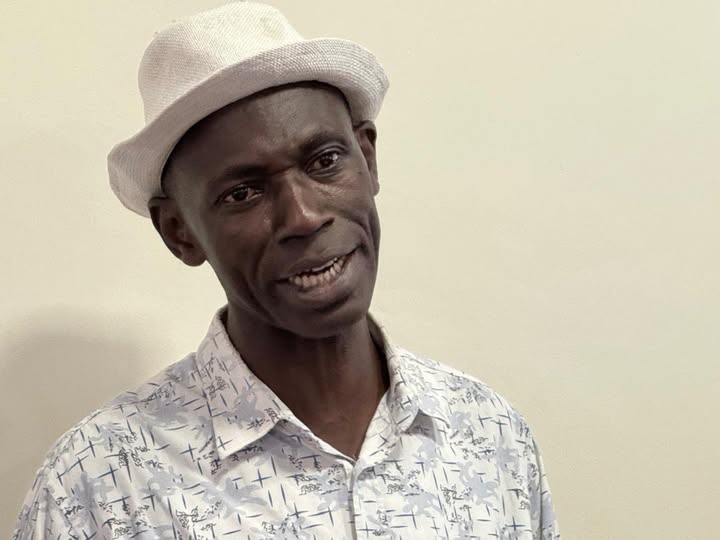
South Sudan civil society leader Edmund Yakani has called on the Intergovernmental Authority on Development (IGAD) to follow its decisions on South Sudan with concrete action, saying regional commitments will have little impact if they are not implemented.
Yakani, the Executive Director of the Community Empowerment for Progress Organization (CEPO), welcomed a recent IGAD communiqué on South Sudan but urged the regional bloc to ensure that its resolutions translate into meaningful political engagement.
He said the communiqué of IGAD’s 74th Extraordinary Session of the Council of Ministers had responded to concerns raised by civil society and reinforced the need for the parties to recommit to the 2018 peace agreement.
“We are so impressed with that,” Yakani said, referring to IGAD’s reaffirmation of the peace agreement as the framework for taking South Sudan from conflict towards peace.
He called on the government, parties that signed the 2018 agreement and other political groups to commit themselves to the decisions contained in the communiqué.
Yakani also urged IGAD’s leadership, including its Council of Ministers and Secretariat, to ensure that decisions adopted at official meetings are followed through.
He said civil society would monitor the implementation of IGAD and African Union decisions and assess whether regional bodies demonstrate the political commitment needed to support South Sudan’s transition.
“We have launched our tracking, monitoring or oversight role,” Yakani said, adding that civil society would follow the implementation of decisions made by IGAD and the African Union.
The 74th Extraordinary Session of the IGAD Council of Ministers was held in Djibouti on 15 September 2026.
In its communiqué, IGAD reaffirmed the Revitalised Agreement on the Resolution of the Conflict in South Sudan (R-ARCSS) as the “sole viable framework for peace” and said the December 2026 elections remain anchored in the agreement that established the transitional government.
The regional bloc also called for inclusive dialogue among the parties and stakeholders to restore confidence and establish a consensual pathway towards the elections.
IGAD directed its Ministerial Sub-Committee on South Sudan to intensify engagement with the government and other stakeholders and report back to the Council of Ministers.
It also called for sustainable funding for the Reconstituted Joint Monitoring and Evaluation Commission (RJMEC) and the Ceasefire and Transitional Security Arrangements Monitoring and Verification Mechanism (CTSAMVM).
Yakani said such decisions should now be followed by practical steps.
He also urged political leaders in South Sudan to use inclusive dialogue to build national consensus, warning that poor management of the transitional process could have serious consequences for civilians and livelihoods.
He said political leaders have a responsibility to pursue dialogue and use the peace agreement as an instrument for moving the country from violence towards peace.
Yakani further called for the upcoming meeting of the African Union’s Ad Hoc Committee on South Sudan, known as the AUC5, to address how recent AU and IGAD decisions can be operationalised.
South Sudan’s transitional process is based on the 2018 Revitalised Peace Agreement, which was signed by the government and opposition parties after years of civil war.
IGAD played a central role in the peace process and remains one of the agreement’s principal guarantors.
The agreement established the current transitional power-sharing arrangement and provided the framework for security, governance and preparations for elections.
The transition has faced delays and disputes over the implementation of key provisions, while South Sudan is now preparing for general elections scheduled for 22 December 2026.
IGAD has said the elections should remain anchored in the peace agreement and has urged the parties to reach a consensual political pathway through inclusive dialogue.
Yakani’s call comes as regional and national actors face renewed pressure to resolve outstanding political questions before the planned elections.